Agungi Lekki, Lagos: Area Guide
Expert Listing
·
·
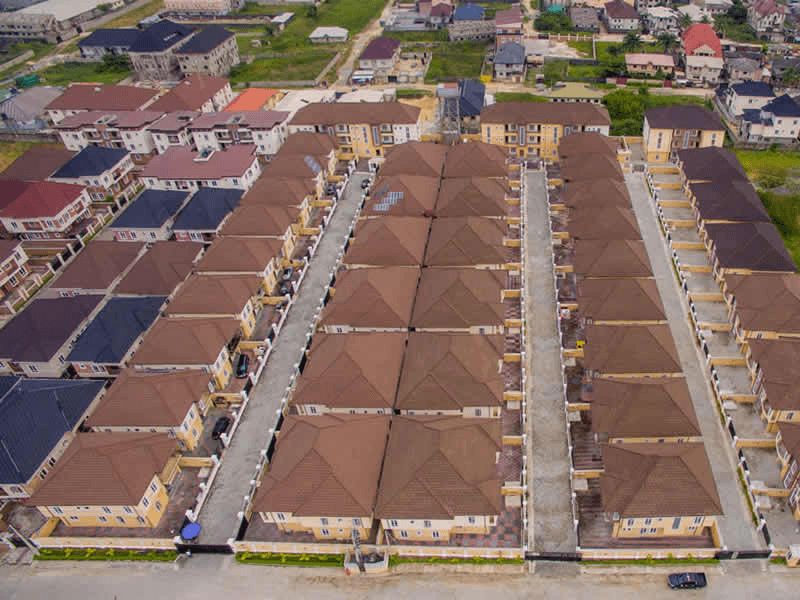
Agungi is the kind of address that rewards people who do their research. It sits within the Lekki Phase 2 corridor, close enough to the Chevron and Lekki Phase 1 zones to benefit from their infrastructure, and priced at a level that makes it one of the more accessible estate-format addresses on the Lagos Island corridor. For a specific profile of renter, it lands almost perfectly: Island access, quieter residential character, newer building stock, and annual rents that are meaningfully below what comparable apartments cost two or three exits further back toward the Island.
It does not have Circle Mall. It does not have the address weight of Lekki Phase 1 or the corporate heritage of Chevron. What it has is a growing, primarily estate-based residential community that has filled in over the past decade with a housing stock that is, on average, newer and better-finished than most Mainland alternatives at similar price points, and a position on the expressway corridor that makes daily life functional without being exhausting.
The trade-offs are real and worth being clear about. The expressway commute to Victoria Island is the Island commute. Flooding affects specific sections. The commercial layer within Agungi itself is still catching up with the residential density. And the area’s rapid development over a relatively short period means estate quality is uneven in ways that require careful research before committing.
This guide gives you the full picture.

What Is Agungi?
Agungi is a residential area within the Lekki Phase 2 corridor, situated along and off the Lekki-Epe Expressway in Eti-Osa Local Government Area. It lies broadly between the Chevron Drive junction and the Jakande roundabout axis, in the zone that most Lagos residents and agents classify as part of Lekki Phase 2 while also carrying its own sub-address identity.
The area developed primarily through private estate development over the past fifteen years, giving it a more uniform residential character than older, more organically developed Island addresses. The housing stock is predominantly apartment blocks and smaller gated estate compounds, with very little of the older standalone house typology that characterises parts of Lekki Phase 1 or the Mainland addresses.
Agungi is closely associated with adjacent areas including Chevron, Osapa London, and Ikate. The boundaries between these zones are not always clearly defined in the market, and listings described as “Agungi” can sometimes be in adjacent streets that an experienced agent might classify differently. Understanding the specific street and estate you are looking at matters more than the broad area name.
The Neighbourhood Feel
Agungi has a quiet, primarily residential feel that distinguishes it from the more commercially active sections of the Lekki-Epe corridor. The estate format that dominates the housing stock creates a gated, managed environment for most residents, which means street-level activity in the residential zones is low and controlled.
Away from the expressway, Agungi’s internal roads and estate corridors are calmer than most comparable Island addresses. There is less street-level commercial noise, less through-traffic, and a residential pace that appeals to families and professionals who want Island access without the density of Phase 1 or the commercial energy of the Chevron Drive strip.
The resident profile is broadly similar to Lekki Phase 2 generally: young families, mid-level professionals, people who have been priced out of Phase 1 and Chevron, and a growing number of residents who have chosen the area deliberately. The area skews younger than Phase 1’s more established resident community and has a stronger family demographic than the single-professional market that dominates some of the more commercial Island zones.
Key Streets and Estates
The main estate developments along and off the Chevron-Jakande expressway section are the primary residential format in Agungi. Several gated estate compounds have been developed in the area over the past decade, ranging from smaller boutique developments of 10 – 20 units to larger compounds with full facility infrastructure. The quality and management standard of these estates varies significantly.
The streets off the expressway leading into Agungi’s residential core range from well-paved, actively maintained estate roads to narrower, less developed access roads that reflect the area’s still-evolving infrastructure.
The Chevron Drive-adjacent section of Agungi is the most established part of the area, benefiting from proximity to Chevron’s more developed infrastructure. Properties here tend to be slightly better positioned and command a modest premium within the Agungi market.
Newer developments continue to be built across the Agungi corridor. Some of the best residential stock in the area is genuinely recent, with modern finishes, reliable generator systems, and estate management infrastructure that represents a step up from the area’s earlier wave of development.

Rent Prices in Agungi (2026)
Agungi sits at a price point that makes it one of the more accessible estate-format addresses on the Island corridor. Rents are below Chevron and Lekki Phase 1 for comparable property types, and broadly in line with or slightly above the general Lekki Phase 2 market:
The range within each category reflects real differences in estate quality, building age, and specific location within the Agungi zone. Newer, well-managed estate developments with reliable generator backup, treated water, CCTV, and professional facility management sit toward the upper end. Older standalone buildings or less well-managed estate compounds sit lower, and the difference in daily liveability between the two can be substantial.
Upfront payment expectations are one to two years, consistent with the Island corridor standard. Rental loan pre-qualification is worth arranging before starting your search if the lump sum is a constraint.
For current verified listings with real-time pricing and availability, browse apartments in Agungi on Expert Listing: https://expertlisting.ng
Flooding: What You Need to Know
Flooding is one of the most important research points for any Agungi rental decision, and it deserves direct treatment.
The Lekki-Epe corridor’s low-lying coastal terrain creates inherent flood vulnerability across the entire zone, and Agungi is not exempt. Certain sections, particularly lower-lying streets and estates with inadequate drainage engineering, flood during Lagos’s heavy rain seasons (April – July and September – October). The flooding in affected zones can be serious enough to render ground-floor units uninhabitable and access roads impassable for days after peak rain events.
The newer estate developments, many of which were built with drainage engineering as a deliberate design consideration, generally fare better than older or more hastily developed compounds. But even within the estate category, drainage quality varies. A well-designed estate on slightly elevated ground is a fundamentally different flood-risk proposition from a poorly drained estate in a low-lying section of the same street.
Expert Listing maps flood-risk signals for each listing against precise location data, so you can assess the specific apartment’s risk profile rather than relying on the estate agent’s characterisation of the area.
Safety and Security
Agungi’s safety profile is broadly good by Lagos Island standards, reflecting the estate-dominated residential format.
Gated estate living provides the most consistently secure environment: manned access, CCTV in common areas, and 24-hour security are standard in the better-managed estates. The residential character of the area, with relatively low street-level commercial activity, means less ambient security exposure than more commercially active zones.
The expressway-adjacent sections and the roads connecting to the Chevron Drive commercial strip carry more activity and require the standard Island corridor awareness. Within the estate residential zones, day-to-day security is not a primary concern for most residents.
Standard Lagos precautions apply: secure your vehicle, be alert on less-travelled roads at night, and avoid leaving valuables visible.
Commute and Getting Around
Agungi’s commute profile mirrors the broader Lekki Phase 2 corridor, with the expressway as the primary variable.
To Victoria Island: under light traffic, 30 – 45 minutes. During morning and evening rush hours, expect 1 – 2 hours each way on typical days and up to 2.5 hours on congested days. For daily VI commuters, this is the central trade-off of living in Agungi and should be weighed honestly against the rent saving.
To Lekki Phase 1 and Chevron: 10 – 20 minutes under decent conditions. Very manageable for workers in this section of the corridor.
To Ajah and Sangotedo: 15 – 25 minutes further along the expressway. Agungi works well as a base for workers in the deeper corridor zones.
To the Mainland: the Island-to-Mainland commute from Agungi is long. It is not the right base for regular Mainland commuters.
Uber and Bolt availability is reasonable, supported by the broader Phase 2 corridor demand. BRT services on the expressway provide a practical commute option for non-drivers heading toward the Island. Keke NAPEP handles internal roads and last-mile connections.
Schools
Agungi’s school options are growing but are not yet as deep as the Chevron or Lekki Phase 1 corridor.
Several private primary schools and nursery schools operate within the Agungi zone and its immediate surroundings. For secondary education and for families requiring international curriculum options, the nearest reliable choices are in Chevron and Lekki Phase 1, accessible within 15 – 25 minutes.
Greensprings School (Lekki campus) and the Chrisland Schools corridor campuses are among the well-regarded private school options accessible from an Agungi base. The school run logistics to these institutions from Agungi are manageable for most families.
The school infrastructure within Agungi itself is developing alongside the residential population. For current residents, the practical approach is to treat Agungi as a base from which to access the broader corridor’s school options rather than expecting a complete within-area school ecosystem.
Healthcare
Healthcare access from Agungi follows the pattern of the broader Phase 2 corridor: adequate for routine care within the area, with reliance on the Island hospital infrastructure for complex or emergency needs.
Several private clinics and diagnostic centres serve the Agungi and Phase 2 resident population for outpatient and routine care. For more serious needs, Reddington Hospital on Victoria Island is the practical first choice, approximately 35 – 50 minutes away under reasonable traffic.
Lifestyle, Food, and Retail
Agungi’s lifestyle infrastructure within the immediate area is limited, but it sits close enough to better-served zones that this is less of a practical constraint than it might be in a more isolated address.
Commercial activity within Agungi proper is primarily local convenience: pharmacies, small supermarkets, food joints, and service businesses that cover day-to-day needs. The restaurant scene within Agungi itself is modest.
Circle Mall, at the Jakande end of the Phase 2 corridor, is accessible from Agungi in 10 – 20 minutes and provides the full mall experience: Filmhouse IMAX, a well-stocked supermarket, food court, and retail brands. For Agungi residents, this is the practical mall rather than an occasional destination.
The Chevron Drive restaurant and commercial strip is similarly accessible at 10 – 20 minutes, providing the corridor’s better dining and lifestyle options for evening and weekend use.
The Lekki Conservation Centre is accessible from Agungi and provides one of the Island corridor’s better outdoor recreation options for weekend use.

Utilities: Power and Water
Power and water supply in Agungi follow the Island corridor pattern with building and estate-level quality as the primary variable.
Newer estate developments in Agungi generally have professional generator management: reliable backup, transparent fuel billing, and maintenance infrastructure that keeps downtime brief. Older or less well-managed estates and standalone buildings are more variable.
The recency of much of Agungi’s housing stock is a modest advantage here. Because a high proportion of available apartments are in buildings developed within the past ten years, generator and electrical infrastructure in those buildings tends to be more modern than in older Phase 1 or Mainland stock.
Water supply in quality estates is reliable through borehole and treatment systems. Confirm water source, supply reliability, and any associated monthly charges for any specific apartment before committing.
Generator levies and service charges in estate developments add N40,000 – N150,000 or more per month to the headline rent. Get the full monthly cost picture before signing.
Who Agungi Is Best For
Professionals working in the Chevron, Lekki Phase 1, or Lekki Phase 2 corridor. For workers whose daily commute destination is within this zone, Agungi’s expressway access is entirely practical and the rent saving versus Chevron or Phase 1 is real.
Families who want estate living on the Island corridor below Chevron pricing. Agungi’s estate-dominated housing stock delivers the gated, managed residential environment that families want, at price points consistently below Chevron for comparable property types.
Renters who want newer building stock as their baseline. The recency of Agungi’s development means newer buildings are proportionally more common here than in Phase 1 or most Mainland addresses.
VI commuters who have decided that the expressway trade-off is worth the rent saving. For professionals who have run the numbers and concluded that the Phase 1 to Agungi rent differential justifies the additional 10 – 15 minutes each way, Agungi delivers on that calculation.
What to Watch Out For
Estate management quality varies significantly. Agungi’s rapid development over a short period means the range of estate management quality is wide. Ask specifically about generator uptime, service charge structures, facility management responsiveness, and maintenance track record before committing.
Flooding on lower-lying estates and streets. More prevalent than the area’s recent development might suggest. Verify flood-risk at the individual listing level. The difference between a flood-safe and a flood-affected address in this zone can be significant and is not always visible from a dry-season viewing.
Limited within-area commercial infrastructure. Day-to-day essentials are available, but Agungi is not self-sufficient for lifestyle, dining, and leisure needs. Circle Mall and Chevron Drive are nearby but require a trip.
Loose address labelling. Agungi, Lekki Phase 2, Chevron, Osapa London, and Ikate are applied interchangeably by agents. Know specifically which street and estate you are looking at before spending time on a viewing.
Expressway rush-hour traffic. The Jakande roundabout and the Phase 2 expressway section back up in both directions during peak hours. Run the realistic peak-hour estimate for your specific route before committing.
Ready to Find Your Apartment in Agungi?
Every listing on Expert Listing is physically inspected and document-verified before going live. Location is mapped precisely against flood-risk data. Listings are removed the moment they are rented or sold.
Browse verified apartments for rent in Agungi on Expert Listing
Frequently Asked Questions
Is Agungi a good place to live in Lagos? Yes, for the right profile. Professionals working in the Chevron – Lekki Phase 2 corridor, families who want Island estate living below Phase 1 and Chevron pricing, and renters who prefer newer building stock will find Agungi delivers solid value. The trade-offs are the expressway commute to VI, limited within-area commercial infrastructure, and flooding risk on specific estates and streets.
How much is rent in Agungi in 2026? A 1-bedroom ranges from N850,000 to N1.6 million per year; a 2-bedroom from N1.4 million to N2.8 million. Newer, well-managed estates and those closer to Chevron Drive sit toward the upper end. Older or less well-managed compounds sit lower.
How far is Agungi from Victoria Island? Approximately 30 – 45 minutes under light traffic on the Lekki-Epe Expressway. During peak morning rush hour, expect 1 – 2 hours each way. For daily VI commuters, this is the primary trade-off of living in Agungi versus Phase 1 or Chevron.
Does Agungi flood? In certain sections, yes. Lower-lying estates and streets with inadequate drainage are vulnerable during Lagos rainy season. Newer estates on higher ground with engineered drainage fare better. Flood-risk must be verified at the individual listing level before committing.
What is the difference between Agungi and Chevron? Chevron is more established, more commercially developed, and carries a stronger address premium. Agungi is newer, quieter, less commercially active, and typically 15 – 25% less expensive for comparable estate-format apartments. The choice usually comes down to budget and whether Chevron’s commercial strip and address premium are worth the additional cost.
Is Agungi part of Lekki Phase 2? Agungi sits within the broader Lekki Phase 2 corridor and is often described as part of it. It also carries its own sub-address identity in the market. Both descriptions are used by agents and landlords, sometimes interchangeably.