Island vs Mainland: Which Is Better for Renting in Lagos?
Expert Listing
·
·
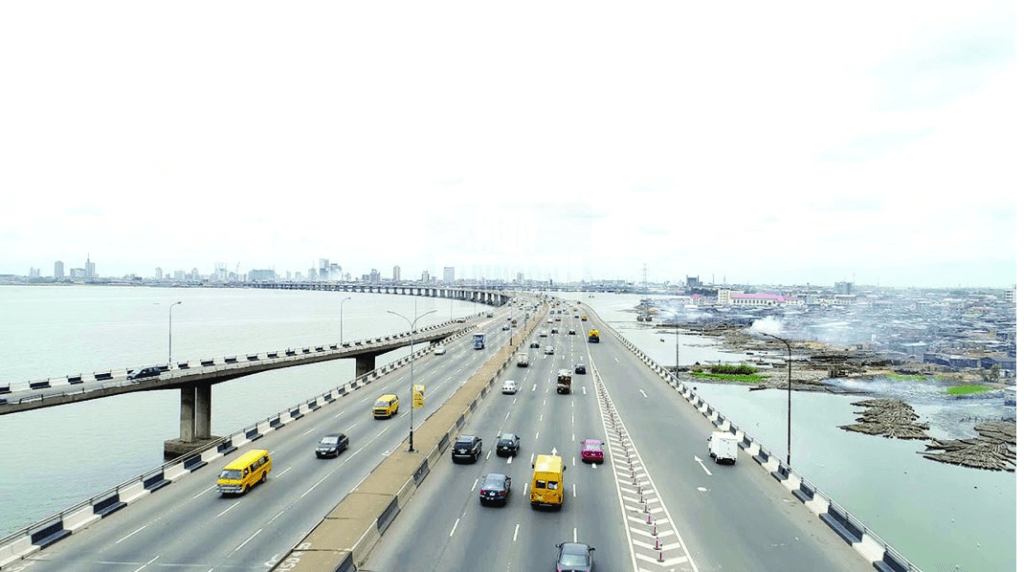
The choice between the “Island” and the “Mainland” is the fundamental divide in the Lagos rental market. For any resident, this decision is more than just a change of address; it is a choice of lifestyle, social identity, and, most importantly, a logistical strategy.
In 2026, as the city continues to expand toward Epe on one side and Badagry on the other, the boundary between these two worlds has become the defining factor in how Lagosians spend their time and money.
Most people frame this comparison incorrectly as a simple battle of prestige versus affordability. There is an outdated assumption that the Island is exclusively for the wealthy and the Mainland is only for the working class. However, the rise of luxury gated communities on the Mainland and the emergence of more affordable “new builds” in the far reaches of the Island (like Orchid and Sangotedo) have blurred these lines. The prestige of a Mainland GRA now often outweighs the reputation of a poorly managed Island estate.
The REAL question isn’t about which side is “better” in a vacuum, but where your “centre of gravity” lies. Your daily commute, the location of your children’s school, and your tolerance for the “hustle” are the true metrics. In a city where crossing the bridge at the wrong time can cost you three hours of your life, choosing based on a perceived status symbol rather than functional proximity is a recipe for burnout.
This guide provides a comprehensive 2026 data-backed comparison of the Island and Mainland rental markets. We will break down verified rent figures, analyse real-time commute data, and evaluate the social infrastructure of both regions to help you make an informed decision for the year ahead.

Browse verified apartments on the Mainland on Expert Listing
The Short Answer
If you work on the Island, whether in the corporate towers of Victoria Island or the tech hubs of Lekki Phase 1, renting on the Island is highly recommended. The cost of fuel and the mental toll of the daily commute from the Mainland have reached a point in 2026 where the “Island premium” on rent is often cheaper than the “commuter tax” on your health and vehicle maintenance.
If you work on the Mainland – including areas like Ikeja, Surulere, or Yaba – renting on the Mainland is the only logical choice. The Mainland offers a self-contained ecosystem with superior road connectivity to other parts of the country and a significantly lower cost of living regarding services and food.
If you work a hybrid or remote job, the choice becomes one of lifestyle. The Island offers a more modern, coastal, and “new Lagos” feel, whereas the Mainland provides a more grounded, culturally rich, and community-focused environment. Your decision here should be based on which social scene makes you feel more at home during your downtime.
If you are choosing between the two primarily on lifestyle or address grounds, this guide will help you understand the structural differences in infrastructure, security, and flood risks that define the two sides of the Lagoon.

Rent Comparison
Lagos rental prices in 2026 reflect the high inflation and increased cost of construction materials. While the Island generally commands higher prices, the Mainland’s premium pockets (like Ikeja GRA and Magodo) often outpace the middle-market offerings on the Island.
Mainland rent (2026):
| Property Type | Annual Rent Range |
| 1-Bedroom Flat | ₦1,200,000 – ₦3,500,000 |
| 2-Bedroom Flat | ₦2,500,000 – ₦6,000,000 |
| 3-Bedroom Flat | ₦4,000,000 – ₦12,000,000 |
| 4-Bedroom Duplex/Penthouse | ₦8,000,000 – ₦30,000,000 |
Want to live on the Mainland? Check our guide to renting an apartment on the Mainland
Island rent (2026):
| Property Type | Annual Rent Range |
| 1-Bedroom Flat | ₦3,500,000 – ₦7,500,000 |
| 2-Bedroom Flat | ₦5,500,000 – ₦12,000,000 |
| 3-Bedroom Flat | ₦8,000,000 – ₦25,000,000 |
| 4-Bedroom Duplex/Penthouse | ₦15,000,000 – ₦60,000,000+ |
Want to live on the Island? Check our guide to renting an apartment on the Island
The rent gap between comparable units is typically 50% to 80%. The Island premium is driven by a higher concentration of “serviced” estates where 24/7 power, treated water, and professional security are the baseline. On the Mainland, while these features are becoming more common in new developments, many residents still manage their own power and water, which keeps the headline rent lower.
The total cost of occupancy is a major factor. On the Island, service charges can add a 30% to 50% uplift to your annual rent. This includes the “diesel levy” for shared generators, which has become a significant expense in 2026. On the Mainland, service charges are generally lower or non-existent in traditional residential areas, though you must account for the personal cost of maintaining your own generator and water pumping system.

Commute Comparison
If you work on the Island:
Living on the Island means a commute of 15 to 45 minutes, depending on how far down the Lekki-Epe Expressway you reside. Commuting from the Mainland (e.g., Magodo or Surulere) to the Island involves the Third Mainland Bridge. In light traffic, this is 30 to 45 minutes; during peak hours (6 AM – 9 AM), this journey frequently takes 2 to 3 hours, as the bridge becomes a massive bottleneck for thousands of commuters.
If you work on the Mainland:
Living on the Mainland allows you to utilise a network of arterial roads. A commute from Surulere to Ikeja typically takes 30 to 50 minutes. However, if you live on the Island and work on the Mainland, you face the “reverse commute.” While theoretically against the flow of traffic, the afternoon return to the Island is often just as congested as the morning rush, with travel times averaging 1.5 to 2 hours.
If you work in a neutral location (e.g., Apapa or outskirts):
The Mainland has marginally better access because it serves as the gateway to the rest of Nigeria. It has better connectivity to the Lagos-Ibadan Expressway and the Lagos-Badagry Expressway. The Island is essentially a peninsula; once you are on it, your exit options are limited to the bridges, making it less ideal for those who travel frequently out of the state by road.
Verdict on commute: The Island is a commute paradise for Island workers, but the Mainland is the functional heart of Lagos transport for everyone else.

Lifestyle and Social Infrastructure
Mainland lifestyle:
The Mainland is the cultural soul of Lagos. It offers a more authentic “old Lagos” feel with established social clubs like the Lagos Country Club in Ikeja and Ikoyi Club (accessible to Island/Mainland borders). For shopping, Ikeja City Mall and Maryland Mall provide extensive retail options. Dining is grounded in tradition and community, with famous spots like Yellow Chilli and The Place offering a mix of local and continental flair. The scene is less about “clout” and more about established relationships.
Island lifestyle:
The Island is the cosmopolitan face of modern Nigeria. It is home to The Palms Shopping Mall and luxury retail hubs like Alara. The dining scene is dominated by high-end, “Instagrammable” venues such as Shiro, Z Kitchen, and Turaka. Nightlife is the Island’s speciality, with a dense concentration of lounges and clubs in Lekki and VI. The lifestyle is fast-paced, trendy, and revolves heavily around the “New Money” economy and expatriate social circles.
The honest gap is one of variety and modernity. The Island has a higher density of luxury amenities per square kilometre, while the Mainland offers more space, more affordable recreation, and a “homely” atmosphere that the Island often lacks.
Verdict on lifestyle: The Island wins for glitz and nightlife; the Mainland wins for community and cultural depth.

Flooding Risk
Flooding is the most significant environmental challenge for Lagos renters. The Island, being largely reclaimed land at sea level, faces a higher systemic risk. During the peak rainy seasons (April–July and September–October), areas in Lekki Phase 1, Agungi, and VGC often experience street-level flooding. This is compounded by the rising Atlantic tide, which can slow down drainage significantly.
The Mainland has a naturally higher elevation, but it is not immune. Specific areas like Surulere, parts of Iwaya, and low-lying sections of Ikeja face flash flooding when the city’s ageing drainage channels become blocked. However, because the Mainland is further from the sea, water generally recedes much faster than on the Island.
At Expert Listing, we verify the flood history of neighbourhoods. We map flood-risk signals at the listing level, so you aren’t surprised by a “lake” in front of your gate after the first heavy rain.
Verdict on flooding: The Mainland is generally safer from chronic flooding due to its higher elevation and inland location.
Safety and Security
Mainland security is often based on the “Gated Estate” model. Neighbourhoods like Magodo, Omole, and Gbagada Phase 2 have strict access control and community-funded security patrols. The security here is often communal and effective due to the high number of long-term residents who know their neighbours.
Island security is more institutional. Because of the presence of embassies, corporate headquarters, and high-net-worth individuals, there is a much higher concentration of private security firms and mobile police (MOPOL) presence. Most modern apartments on the Island are built as “fortresses” with high walls, electric fences, and 24-hour guard services. This gap matters most for those who require a highly visible security deterrent.
Verdict on security: Both offer secure pockets, but the Island provides more “high-end” institutional security for corporate and high-profile tenants.
Schools
For families, the Mainland offers many of the state’s most storied educational institutions. Greensprings School and Corona Schools have massive, well-equipped campuses on the Mainland. The Mainland is generally preferred for “boarding school” environments and schools with large athletic fields.
The Island hosts a newer breed of international schools, like the British International School and American International School of Lagos. These schools cater to a global curriculum and often have a more international student body. While the facilities are top-tier, the campuses are often more vertically oriented due to land scarcity.
Verdict on schools: The Mainland is better for traditional, sprawling campuses; the Island is better for elite, international-standard curriculum density.

Healthcare
The Island is home to some of the most advanced private medical facilities in the country. Iwosan Lagoon Hospital and Evercare Hospital Lekki offer specialised tertiary care, including advanced surgery and diagnostics. On the Island, you are rarely more than 15 minutes away from a multi-speciality private clinic.
The Mainland is the hub of both public and private medical excellence. It hosts the Lagos State University Teaching Hospital (LASUTH) and the Reddington Hospital in Ikeja. For many complex procedures, Mainland residents have the advantage of being close to the city’s primary teaching hospitals, which still house the country’s most experienced consultants.
Verdict on healthcare: Both regions offer world-class private care, but the Island has a higher density of modern, boutique-style specialist clinics.

Character and Feel
The Mainland feels like “True Lagos.” It is residential, bustling, and has a clear sense of history. On weekends, the Mainland is about “Owambes,” family visits, and quiet church or mosque services. It is a place where people put down roots for decades.
The Island feels like a “Work-in-Progress” city. It is glossy, aspirational, and highly transient. People move to the Island to make it, to show they have made it, or to be near the heartbeat of the modern economy. It is a place of high energy where the boundary between work and play is almost non-existent.
Verdict on character: The Mainland is for those who value stability and tradition; the Island is for those who want to be at the edge of the future.
The Decision Framework
Use this to make the call:
Choose the Mainland if:
- Your work or business is based in Ikeja, Apapa, or the Mainland suburbs.
- You prioritise lower rent and a lower general cost of living (food, services, fuel).
- You want a more traditional, community-focused neighbourhood with long-term residents.
- You are looking for more space, such as a large compound for children or pets.
- You want to avoid the psychological stress of the “Island flood” anxiety.
- You frequently travel out of Lagos by road or work near the International Airport.
Choose the Island if:
- You work in the financial, tech, or creative sectors based in VI or Lekki.
- You value a 24/7 serviced lifestyle where you don’t manage your own power or water.
- You want immediate access to the city’s best fine-dining, beaches, and nightlife.
- You are comfortable paying a 50%+ premium for proximity to the “centre of the action.”
- You prefer modern apartment living over traditional standalone houses.
- You want a high concentration of international schools and specialist private clinics.
If budget is the deciding factor, the Mainland is the winner. For the price of a standard 2-bedroom flat in a decent part of the Island, you can often rent a 4-bedroom detached house in a secure Mainland estate.
Ready to Search in Both Areas?
Every listing on Expert Listing is manually verified to ensure the property exists and is actually available. We map flood-risk signals at the individual listing level so you can avoid seasonal surprises. On Expert Listing, we remove properties the moment they are off the market, ensuring your search is efficient and frustration-free.
Frequently Asked Questions
Is the Island more expensive than the Mainland?
Yes, the Island is generally 50% to 80% more expensive for comparable properties. While you can find “affordable” pockets on the Island, the cost of service charges and general lifestyle expenses often makes the total cost of living significantly higher than on the Mainland.
How bad is the traffic from the Mainland to the Island?
During peak morning hours, the commute can take anywhere from 1.5 to 3 hours. The Third Mainland Bridge is the primary artery and is subject to extreme congestion. Many Mainland residents who work on the Island leave their homes as early as 5:00 AM to beat the rush.
Which area is safer for expatriates between the Mainland and the Island?
The Island is often preferred by expatriates because of the “institutional” security provided by serviced apartment blocks and the high density of diplomatic and corporate security patrols. However, gated estates on the Mainland like Magodo are also highly secure and popular with professional families.
Does it flood everywhere on the Island?
No, but flooding is more systemic on the Island due to its low elevation. While some streets are perfectly dry, others can become impassable after a two-hour downpour. It is essential to verify the specific street’s drainage before renting, a service that Expert Listing provides through listing-level data.
Where should I live if I work remotely between the Mainland and the Island?
If you work remotely, the Mainland offers more “value for money” in terms of space. However, the Island offers better access to “co-working spaces” and a more vibrant social scene for networking. The choice depends on whether you value a quiet, spacious home office or proximity to the city’s social hubs.
Which area has better hospitals, between the Mainland and the Island?
Both have excellent options. The Island has more “luxury” private hospitals like Evercare and Reddington (Lekki), while the Mainland has the city’s largest teaching hospitals (LASUTH) and established private icons like St. Nicholas and Eko Hospital.