Lekki Phase 1 vs Ikoyi: Which Is Better for Renting in Lagos?
Expert Listing
·
·
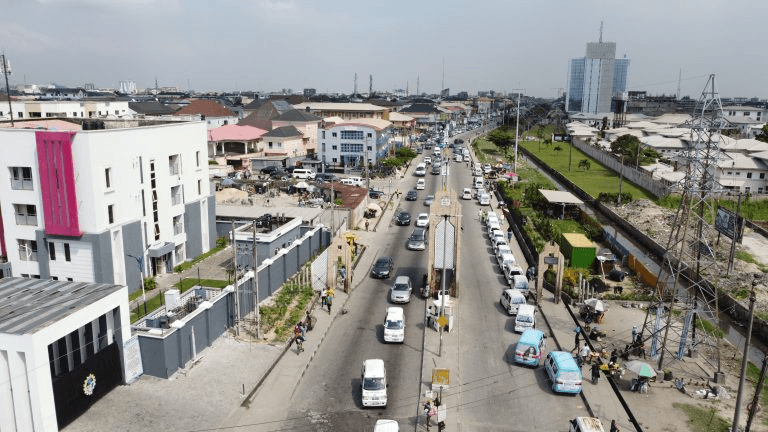
Choosing between Lekki Phase 1 and Ikoyi is the most enduring debate in the Lagos rental market. For years, these two neighbourhoods have stood as the primary choices for professionals, expatriates, and high-net-worth individuals moving to the Island. In 2026, the comparison remains relevant because both areas represent the pinnacle of Lagos living, yet they offer fundamentally different value propositions. While they are separated only by the iconic Lekki-Ikoyi Link Bridge, the lifestyle, financial commitment, and daily experience of living in either could not be more distinct.
Most people frame this comparison incorrectly by focusing solely on “prestige vs prestige.” They assume that because both are expensive, they are interchangeable.
This is a mistake. Prestige in Ikoyi is quiet, institutional, and rooted in “old money” and diplomatic presence. Prestige in Lekki Phase 1 is loud, commercial, and driven by the tech boom, entertainment industry, and “new money” entrepreneurs. Choosing between them based on status alone often leads to a mismatch between a tenant’s daily reality and their actual needs.
The real question you should be asking isn’t which area is “better,” but which one aligns with your work location, your household budget, and your tolerance for the “Lagos hustle.”
Your decision should hinge on whether you prioritise a serene, high-security residential enclave or a vibrant, mixed-use hub where you can work, eat, and party within a five-block radius. If you ignore the functional differences in drainage, commute patterns, and service charges, you may find yourself paying a premium for a lifestyle that doesn’t actually fit your routine.
This guide provides a data-driven breakdown of the 2026 rental landscape in both Lekki Phase 1 and Ikoyi. We will cover the current annual rent ranges for various apartment types, verify the social infrastructure that actually exists today, and analyse the technical aspects of living in these areas – from security profiles to flooding risks. By the end of this comparison, you will have a clear framework to decide which of these Island heavyweights earns your signature on a tenancy agreement.

Browse verified apartments in Lekki Phase 1 on Expert Listing
The Short Answer
If you work in or on Lekki Phase 1, your best move is almost certainly to live within the area. The convenience of “Admiralty Way living” – where most offices, gyms, and restaurants are accessible within minutes – outweighs the prestige of a cross-bridge commute. Lekki Phase 1 offers a younger, more energetic vibe that suits professionals who want their social life and work life to overlap seamlessly.
If you work in or on Ikoyi, you should prioritise finding a home within Ikoyi’s various sub-estates, like Parkview or Old Ikoyi. While the commute from Lekki is physically short, the peak-hour bottleneck at the Link Bridge and the Falomo axis can turn a 5km trip into a 45-minute ordeal. Living in Ikoyi provides a level of evening serenity and security that Lekki Phase 1, with its heavy commercialisation, simply cannot match.
If you work on the Mainland, such as in Ikeja GRA or Maryland, Ikoyi is the more strategic choice. Residing in Ikoyi places you significantly closer to the Third Mainland Bridge, shaving off the additional 15 to 30 minutes required to navigate the Lekki-Epe Expressway toll points and internal Lekki traffic. Ikoyi serves as a more central “Island gateway” for those whose professional lives require frequent trips across the lagoon.
If you are choosing between the two primarily on lifestyle or address grounds, this guide will help you understand that you are choosing between “The Hub” and “The Enclave.” Lekki Phase 1 is for those who want to be at the centre of the action, while Ikoyi is for those who want to retreat from it. Understanding the specific rent gaps and infrastructure realities detailed below will ensure your choice is as practical as it is aspirational.

Rent Comparison
In 2026, the rent gap between Ikoyi and Lekki Phase 1 has stabilised, but the “Ikoyi Premium” remains significant. While Lekki Phase 1 has seen a surge in luxury “mini-estates” and high-rise apartments that rival Ikoyi in finishing, the underlying land value in Ikoyi continues to command a higher price point. This is largely due to the limited supply of new land in Ikoyi compared to the ongoing developments further down the Lekki peninsula.
Ikoyi rent (2026):
| Property Type | Annual Rent Range |
| 1-Bedroom Flat | ₦7,500,000 – ₦12,000,000 |
| 2-Bedroom Flat | ₦15,000,000 – ₦25,000,000 |
| 3-Bedroom Flat | ₦25,000,000 – ₦45,000,000 |
| 4-Bedroom Duplex/Penthouse | ₦50,000,000 – ₦120,000,000+ |
Want to live in Ikoyi? Check our guide to renting an apartment in Ikoyi
Lekki Phase 1 rent (2026):
| Property Type | Annual Rent Range |
| 1-Bedroom Flat | ₦4,500,000 – ₦7,000,000 |
| 2-Bedroom Flat | ₦8,000,000 – ₦15,000,000 |
| 3-Bedroom Flat | ₦15,000,000 – ₦28,000,000 |
| 4-Bedroom Duplex/Penthouse | ₦25,000,000 – ₦55,000,000 |
Want to live in Lekki Phase 1? Check our guide to renting an apartment in Lekki Phase 1
The percentage gap for comparable luxury units is approximately 40% to 60%. An ultra-modern 3-bedroom apartment in a serviced Lekki Phase 1 estate might go for ₦22 million, while a unit with similar square footage and amenities in Ikoyi will easily cross the ₦35 million mark. This premium is commanded by Ikoyi’s superior zoning laws, which prevent the kind of chaotic commercial-residential mixing seen in Lekki, and its proximity to the Lagos business districts and diplomatic missions.
It is vital to note that the “headline rent” is rarely the final cost. In both areas, but especially in Ikoyi, service charges can add a 25% to 40% uplift to your annual spend. These fees cover 24/7 power (often with steep diesel deposits), uniform security, waste management, and facility maintenance (pools, gyms, elevators). In Lekki Phase 1, while service charges are common in newer estates, older standalone houses may offer lower overheads but require you to manage your own security and power logistics, which often proves more expensive and stressful in the long run.
Commute Comparison
The commute between these two areas is defined by the Lekki-Ikoyi Link Bridge, a transit artery that is as beautiful as it is prone to congestion. In 2026, traffic management has improved, but the sheer volume of vehicles moving between the residential heart of Lekki and the commercial offices of Ikoyi and Victoria Island remains a daily challenge.
If you work in or on Lekki Phase 1:
Living in Lekki Phase 1 means a commute that can often be measured in minutes or even footsteps. Under light traffic, you can move from the residential “Right Side” to the commercial “Left Side” (Admiralty Way) in under 5 minutes. However, if you live in Ikoyi and work in Lekki, you are moving against the typical “morning rush,” making the trip across the bridge relatively smooth (15 minutes). During evening peak hours, the return trip to Ikoyi can take 35 to 50 minutes due to the bottleneck at the bridge tolling area and the Falomo roundabout.
If you work in or on Ikoyi:
Working in Ikoyi while living there offers the most elite commute in Lagos – often a 10-minute drive through quiet, tree-lined streets. Conversely, if you live in Lekki Phase 1 and work in Ikoyi, you are in the heart of the morning struggle. A trip that takes 12 minutes at 11:00 PM can easily take 60 minutes at 7:30 AM. The traffic direction is heavily biased toward Ikoyi and Victoria Island in the morning and back toward Lekki in the evening.
If you work on the Mainland:
Both areas offer relatively good access to the Mainland via the Third Mainland Bridge, but Ikoyi has the geographical edge. From Ikoyi (Old Ikoyi or Parkview), you can reach the bridge ascent in 5 to 10 minutes. From Lekki Phase 1, you must first navigate the Lekki-Epe Expressway or the Link Bridge, adding a minimum of 20 minutes to your journey during peak hours. Residents of Lekki Phase 1 often face the “double toll” reality – paying both in time and money – to reach the Mainland.
Verdict on commute: Ikoyi offers superior connectivity to both the Mainland and the business districts, while Lekki Phase 1 offers an “all-in-one” lifestyle that reduces the need for long commutes entirely.

Lifestyle and Social Infrastructure
The social landscape of 2026 sees Lekki Phase 1 as the undisputed capital of Lagos nightlife and casual dining, while Ikoyi maintains its position as the home of exclusive clubs and high-end, intimate gastronomy.
Ikoyi’s lifestyle is curated and private. It is the home of the Ikoyi Club 1938, an institution for golf and networking, and the Lagos Motor Club. For dining, venues like Botanikka and Phoenix by Pitstop offer sophisticated, quiet environments for date nights or business dinners. Retail is centred around boutique experiences and the Falomo Square Mall, which remains a hub for high-end essentials and social brunching at Brisk. The fitness scene is dominated by premium hotel gyms and specialised studios that emphasise privacy over crowd size.
Lekki Phase 1 is a vibrant, 24-hour ecosystem. Admiralty Way is lined with an exhaustive variety of restaurants, from the Afro-fusion at Danfo Bistro to the high-energy vibe of the Circa Non-Pareil rooftop. Fitness enthusiasts favour the i-Fitness Gym on Gabby Adeosun Street, which is one of the most active social hubs in the area. For shopping, Prince Ebeano Supermarket and the Lekki Palms Mall (just outside the Phase 1 gate) provide everything from groceries to international brands. The area is also the gateway to the Lekki Conservation Centre, providing a rare touch of nature.
The honest gap between the two is accessibility. In Lekki Phase 1, the social scene is “on the street” – you can see the energy as you drive by. In Ikoyi, the best experiences are often tucked away behind high walls or require memberships. Lekki is for the extrovert who loves variety; Ikoyi is for the person who values exclusivity and a slower, more deliberate social pace.
Verdict on lifestyle: Lekki Phase 1 leads in variety and convenience, but Ikoyi remains the benchmark for exclusive, high-standard social experiences.
Flooding Risk
Flooding remains a critical technical consideration for any Island resident. In 2026, while government drainage projects have mitigated some of the worst perennial issues, the low-lying nature of both neighbourhoods means seasonal rain requires vigilance.
Ikoyi generally has a higher elevation than Lekki Phase 1, particularly in the “Old Ikoyi” sections. However, certain areas like Osborne Foreshore and parts of Bourdillon Road can experience flash flooding during the peak Lagos rainy seasons of April-July and September-October. The drainage systems in Ikoyi are older but often more robustly integrated into the municipal grid, meaning water typically recedes faster than in newer developments.
Lekki Phase 1 has a well-documented reputation for flooding, particularly on the “Right Side” (the residential streets further from the lagoon). Streets such as Fola Osibo, Emma Abimbola Cole, and parts of Admiralty Way frequently see water pooling that can impede vehicular movement. This is often attributed to the rapid, sometimes unregulated commercial construction that has outpaced the original drainage capacity. Many residents in Lekki Phase 1 have adapted by choosing apartments on higher floors and ensuring their estates have independent, elevated pumping systems.
At Expert Listing, we recognise that flooding is the number one concern for tenants. It is why we map flood-risk signals at the individual listing level, ensuring that our users can see if a property is in a known “hotspot” before they book a viewing. We always advise that flood risk must be verified at the individual listing level, as a single well-engineered house can stay dry even if the neighbouring street is submerged.
Verdict on flooding: Ikoyi is technically safer due to its higher elevation, but both areas require street-level verification during the rainy season.
Safety and Security
Security is the primary driver of the Ikoyi rental premium. The neighbourhood benefits from its proximity to government institutions, military zones (such as the Dodan Barracks vicinity), and the high concentration of diplomatic residences. This creates an environment of constant, subtle surveillance. Many of Ikoyi’s most desirable homes are located within gated estates like Parkview or Banana Island, which employ multi-layered security protocols including biometric access and 24-hour armed patrols.
Lekki Phase 1 is also a secure neighbourhood, but its security is more fragmented. Being a gated community itself, it has controlled entry points (the main gate at Admiralty Way and the Link Bridge entrance). However, because it is so heavily commercialised, there is a constant flow of non-residents throughout the day and night. Security in Lekki is primarily managed at the “mini-estate” or individual house level. Residents who prioritise safety typically opt for serviced apartments within smaller, internally gated compounds that offer their own private guards and CCTV monitoring.
The security gap matters most for high-profile individuals and families with young children. While Lekki Phase 1 is safe for the average professional, those who require institutional-grade security or a “buffer zone” from the public often find the more restrictive, residential-only nature of Ikoyi’s sub-estates to be more suitable for their peace of mind.
Verdict on security: Ikoyi offers a more institutional and cohesive security profile, whereas Lekki Phase 1 relies on private, localised estate security.
Schools
For families, the proximity to high-quality education is often a non-negotiable factor. Both areas host some of the most prestigious international and private schools in West Africa, though the “vibe” of the school run differs between them.
Ikoyi is home to St. Saviour’s School, a long-standing institution with a reputation for academic excellence. Also serving the area is the Corona Schools, which has been a staple of Nigerian elite education for decades. These schools are deeply integrated into the Ikoyi social fabric, often making the morning school run a short, localised trip within the neighbourhood.
Lekki Phase 1 serves as the hub for a newer generation of high-achieving schools. British International School (BIS), located just on the edge of the area, is one of the most sought-after secondary schools in the country. For primary education, Meadow Hall School is a prominent choice for Lekki residents, providing a balanced curriculum. The school infrastructure in Lekki is extensive, but the morning traffic near school zones can be a significant hurdle for parents.
While both areas have excellent options, Ikoyi tends to have a more concentrated “legacy” school infrastructure. Families in Lekki often have more choices in terms of variety and modern facilities, but they must account for the additional commute time required to navigate Lekki’s internal traffic during drop-off and pick-up hours.
Verdict on schools: Ikoyi offers more convenient “legacy” options, while Lekki Phase 1 provides a wider variety of modern international schools.

Healthcare
Access to world-class medical care is a cornerstone of Island living. Residents in both Ikoyi and Lekki Phase 1 are within a short radius of some of the best private hospitals in Nigeria, ensuring that emergency and routine care are always within reach.
Lekki Phase 1 is served by the Reddington Lekki Hospital, a 5-star facility that provides comprehensive specialist services and 24/7 emergency care. Another key provider is the Evercare Hospital, located a short drive away in Lekki, which offers advanced surgical and diagnostic capabilities. Ikoyi residents have long relied on the First Consultants Medical Centre, famous for its high standards and historical significance in Lagos healthcare. Additionally, the St. Nicholas Hospital, which has a specialised clinic in Ikoyi, remains a premier choice for many.
The travel time between these areas and their respective major hospitals is generally under 15 minutes, provided there is no extreme traffic. However, Lekki Phase 1 residents often benefit from having a higher density of smaller, specialised clinics – such as dental and eye centres-scattered along Admiralty Way, making routine medical errands highly convenient.
Verdict on healthcare: Both areas are exceptionally well-served by top-tier private hospitals with no clear “winner” in medical quality.

Character and Feel
The “feel” of these two neighbourhoods is perhaps where the contrast is most striking. Walking or driving through them at different times of the day reveals two very different versions of Lagos.
Ikoyi feels like a quiet, established residential park. During working hours, the main arteries are busy with corporate commuters, but the residential inner streets remain largely silent and serene. On evenings and weekends, Ikoyi can feel almost deserted in parts, which is exactly what its residents value. It is a neighbourhood of high walls, manicured greenery, and a sense of privacy. It suits the established professional or the family that wants to disconnect from the city’s chaos once they pull into their driveway.
Lekki Phase 1, by contrast, feels like a “city within a city.” It is a high-energy, mixed-use environment where a multi-million naira mansion might sit right next to a trendy co-working space or a popular lounge. During the day, it is a bustling commercial hub; in the evening, it transforms into the heart of the Island’s social scene. It is vibrant, sometimes noisy, and always active. This suits the “new Lagos” professional – someone who finds energy in the movement of the city and wants the convenience of having everything from a tailor to a late-night pharmacy within reach.
Ultimately, the choice is between the “quiet prestige” of Ikoyi and the “convenient energy” of Lekki Phase 1. One is an enclave; the other is a hub. Neither is objectively better, but they serve very different personalities and lifestyle goals.
Verdict on character: This is entirely subjective; Ikoyi is for those seeking a retreat, while Lekki Phase 1 is for those seeking a lifestyle of active convenience.
The Decision Framework
Use this to make the call:
Choose Ikoyi if:
- You work in a corporate headquarters or diplomatic mission located within Ikoyi or Victoria Island.
- Your household budget allows for a ₦25M+ annual rent for a standard family-sized flat.
- You prioritise high-level institutional security and a “legacy” address above all else.
- You prefer a quiet, residential environment with minimal commercial noise.
- You need the fastest possible access to the Third Mainland Bridge for frequent travel to the Mainland.
Choose Lekki Phase 1 if:
- You work within the Lekki-Ajah axis or run a business that thrives on the “new economy” energy.
- You are looking for modern luxury apartments with high-end finishes, but at a 40% lower price point than Ikoyi.
- You want a “walkable” lifestyle where gyms, restaurants, and shops are all within a 5-minute radius.
- You enjoy being at the centre of the Lagos social and entertainment scene.
- You are comfortable managing your lifestyle within a mixed-use, high-activity urban environment.
If budget is the deciding factor, Lekki Phase 1 is the clear recommendation. You will almost always get “more house” for your money in Lekki, often with more modern amenities and newer construction, while still enjoying the status and convenience of an Island address.
Ready to Search in Both Areas?
All listings on Expert Listing are verified by our team before going live to ensure they are currently available and accurately described. We understand the specific challenges of Island living, which is why flood risk is mapped at the individual listing level for every property we showcase. Once a property is rented or sold, the listing is immediately removed, saving you from the frustration of chasing “ghost” apartments.
Frequently Asked Questions
Which is more expensive, Ikoyi or Lekki Phase 1?
Ikoyi is significantly more expensive, with a rent premium of roughly 40% to 60% over Lekki Phase 1 for comparable properties. While a luxury 3-bedroom flat in Lekki Phase 1 averages ₦22 million, a similar unit in Ikoyi can range from ₦30 million to ₦45 million, depending on the specific estate. This higher cost is driven by Ikoyi’s prestige, superior zoning, and its status as the “Old Money” heart of Lagos.
How far is Lekki Phase 1 from Ikoyi?
The two areas are separated only by the Lekki-Ikoyi Link Bridge, making the physical distance very short (approximately 5 kilometres from heart to heart). Under light traffic conditions, you can drive from one to the other in less than 10 minutes. However, during peak hours, the bridge and its surrounding roundabouts can become a major bottleneck, extending the commute to 45 minutes or more.
Does Lekki Phase 1 flood more than Ikoyi?
Generally, yes. Lekki Phase 1 has a lower average elevation and a higher density of commercial development that has, in some sections, outpaced the original drainage infrastructure. While parts of Ikoyi, like Osborne Foreshore, also experience seasonal flooding, Lekki Phase 1 is more widely known for street-level water pooling during the heavy rain months of June and July.
Is Ikoyi safer than Lekki?
Ikoyi is widely considered the more secure neighbourhood due to the presence of government installations, military barracks, and diplomatic missions. It is primarily residential, allowing for more cohesive security management. Lekki Phase 1 is also a gated and safe community, but its high volume of commercial activity and non-resident traffic makes its security profile more fragmented and reliant on individual estate measures.
What is the best area in Lagos for expats?
Ikoyi remains the traditional choice for expats due to the high concentration of diplomatic residences, international schools like St. Saviour’s, and exclusive clubs. However, Lekki Phase 1 has become increasingly popular for younger expats and tech professionals who prefer a more modern, active social scene and the variety of “new Lagos” restaurants and entertainment hubs.