Banana Island, Ikoyi, Lagos: Area Guide
Expert Listing
·
·
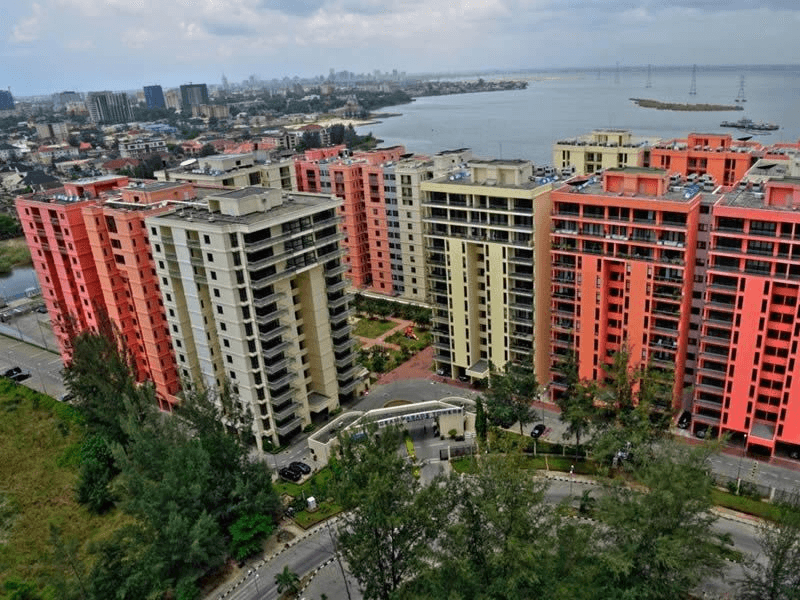
Banana Island is not an address you approach with modest expectations or a mid-range budget. It is Nigeria’s most expensive residential address – recognised across the continent for what it actually delivers: genuine infrastructure, documented security, and a proximity to Victoria Island and Lagos Island that no comparable development in West Africa can match at the same quality tier.
Expatriate executives, multinational corporations leasing senior staff housing, and ultra-high-net-worth Nigerian residents choose this man-made island for specific, concrete reasons that go beyond prestige signalling.
What separates Banana Island from other premium addresses in Lagos is the consistency of its planning.
Underground electrical systems, a central sewage treatment plant, an interlocked road network, and access controlled through a single manned entry gate create a built environment that is structurally different from anywhere else in Nigeria – not by reputation, but by design.
That standard is maintained by BIPORAL (Banana Island Property Owners and Residents’ Association, Lagos), the estate management body that enforces rules across all 536 plots.
The trade-offs are equally real and worth naming directly.
Entry-level rent begins at ₦15,000,000 annually for a one-bedroom unit. Service charges and generator levies add several million naira per year on top of headline rent.
The approach roads at the Turnbull/Banana Island Road junction are documented flash-flood points during Lagos’s rainy seasons. And a recent 2026 ban on short-let rentals has closed an income avenue for investors.
This guide covers all of it.

What Is Banana Island?
Banana Island is a man-made island administered under the Eti-Osa Local Government Area (LGA) of Lagos State. It sits off the foreshore of Ikoyi, approximately 8.6 kilometres east of Tafawa Balewa Square, and connects to the rest of Ikoyi via a dedicated access road that links to the existing road network near Parkview Estate.
Its distinctive curved shape spans approximately 1.63 million square metres and is divided into 536 plots of between 1,000 and 4,000 square metres, most arranged along cul-de-sacs to limit through-traffic and reinforce the residential character.
The island was developed by the Lebanese-Nigerian Chagoury Group in partnership with the Federal Ministry of Power, Works and Housing and operates as a planned, mixed-use development with dedicated residential, commercial, and recreational zones.
On the residential side, planning permission is capped at three storeys – a restriction that preserves the low-density character of the estate. BIPORAL administers security, communal facilities, waste management, and estate levies on behalf of residents.
Major corporate occupants, including Airtel Nigeria and the Ford Foundation Nigeria, maintain offices in the island’s mixed-use commercial zone, giving it a dual residential and business identity that is unique among Lagos’s premium addresses.
The Neighbourhood Feel
Banana Island is one of the quietest urban addresses in West Africa, which, in Lagos, is a substantive statement.
The cul-de-sac layout makes through-traffic structurally impossible, pedestrians move without competing with commercial vehicles, and the waterfront position creates consistent air flow and cooler evening temperatures than the denser parts of Ikoyi.
The only significant noise source is the occasional generator operating during grid transitions on an already premium-tier power supply.
The resident population is small and demographically homogenous: Nigerian billionaires, senior corporate executives, diplomats, and multinational-company assignees.
Estate rules enforced by BIPORAL maintain visual order and a cleanliness standard that is genuinely uncommon in Lagos. Community interactions are formal; this is not a neighbourhood where spontaneous street-level socialising defines the atmosphere.
The closest price-point comparisons are old Ikoyi and prime Victoria Island, but the atmosphere is different from both.
Old Ikoyi has more established, leafier streets but less controlled access. Victoria Island has commercial energy that spills visibly into residential zones. Banana Island is deliberately insulated from both, which is precisely what its residents pay for.

Key Streets, Zones, and Estates
The Residential Cul-de-Sac Core (1st- 5th Avenues) The numbered avenue system – 1st through 5th Avenue, connected by named closes – forms the backbone of the island’s residential character. This is where the majority of detached houses, semi-detached duplexes, and residential apartment blocks are found, on generous plots that often accommodate private pools and gardens.
Third Avenue sees a concentration of terrace apartment listings, including high-demand 3-bedroom and 5-bedroom terrace products. The housing stock ranges from first-generation builds from the island’s development phase to newer constructions following demolition-and-rebuild cycles. Pricing in this zone spans the full Banana Island range.
Ocean Parade and the Waterfront High-Rise Zone. At one end of the island, 14 luxury tower blocks – Ocean Parade Towers – occupy the prime waterfront position with 180-degree panoramic views of the Lagos Lagoon. These developments include private health clubs, tennis courts, squash courts, and swimming pools.
Fully serviced 3-bedroom apartments in this zone reach ₦50,000,000 – ₦60,000,000 per annum, and waterfront-facing units command a clear premium over equivalent interior-facing stock. Ocean Parade is the part of the island that is internationally recognisable and houses the island’s highest-density executive rental demand.
The Lakepoint / Mixed-Use Commercial Zone (Entrance Area, 4th Avenue). The island’s entrance zone hosts the commercial strip: Lakepoint Towers (Grade A office space with lagoon views), corporate offices, the Banana Island Shopping Complex, and smaller convenience retail.
This is also where Airtel Nigeria and the Ford Foundation Nigeria operate. Residents closest to this zone have the best access to on-island services but experience the highest traffic levels within the estate. Older apartment stock in this zone sits at the lower end of the Banana Island price range.
Parkview Estate (Adjacent, Outside the Island Gate) Parkview Estate, immediately adjacent to the Banana Island access road, is functionally part of the same residential ecosystem without being inside the gated perimeter.
Many prospective Banana Island renters who face budget constraints end up in Parkview, which offers comparable security and estate standards, its own estate management, and access to the same retail, healthcare, and school infrastructure at a meaningfully lower entry cost.

Rent Prices in Banana Island
Banana Island is the most expensive residential address in Nigeria.
Old Ikoyi is the closest prestige comparison and is materially cheaper; Victoria Island’s premium serviced apartments approach the lower end of Banana Island pricing, but cannot replicate the security architecture or infrastructure standard.
Below Banana Island, Lekki Phase 1 and Parkview Estate are the realistic next-tier alternatives with gated-community credentials.
As of 2026, annual rent ranges in Banana Island are:
The top of each range is occupied by waterfront units in Ocean Parade and fully serviced apartments in newer developments with 24-hour power, concierge services, and lagoon views. The lower end of the 3-bedroom range – ₦30,000,000 – ₦35,000,000 – reflects older stock in the interior cul-de-sacs without premium estate amenities. Two-bedroom pricing is compressed because inventory is genuinely thin; the island’s stock skews toward 3-bedroom and above.
Caution deposits of 10% and agency fees of 10% of annual rent are standard market practice and represent substantial additional upfront cost at these rent levels.
Payment terms typically require one year upfront. Some landlords in the higher-bracket serviced category accept structured semi-annual arrangements, but this remains the exception. Newer managed developments increasingly structure two-year lease terms.
For current verified listings with real-time pricing and availability, browse apartments in Banana Island on Expert Listing.
Flooding: What You Need to Know
Flooding is a genuine concern on Banana Island, but the picture requires precision. The interior of the island – the planned residential estate itself – is engineered with effective drainage, an underground sewage system, and a design standard that has largely mitigated the surface flooding common across wider Ikoyi and Lagos Island.
The documented flood risk sits at the approach roads, not inside the estate. Banana Island Road and the Turnbull/Banana Island Road junction have repeatedly experienced flash flooding after heavy rainfall events.
Lagos State’s Commissioner for the Environment visited the site in July 2025 and confirmed that development activity on Banana Island Road had overwhelmed the existing tertiary drains. Drainage upgrade works – including the conversion of existing drains to secondary collectors to discharge stormwater through Mojisola Onikoyi into the lagoon – were ongoing as of mid-2025, with no confirmed completion date.
Lagos’s two main rainy seasons run from approximately April to July and September to October. During peak rainfall, the Turnbull junction can become impassable, trapping vehicles entering or leaving the island. The island’s man-made, lagoon-border position also places it within Eti-Osa LGA, which academic and government research classifies as high flood-risk territory overall.
As with every Lagos address, flood-risk verification at the specific listing level is essential. Neighbourhood reputation – even a well-earned one – is not a reliable proxy for a specific street’s drainage profile. Expert Listing maps flood-risk signals at the individual listing level so you are working with precise data, not general impressions.
Safety and Security
By Lagos standards – Island or Mainland – Banana Island’s security profile is well above average. The physical design of the island enforces this. A single controlled entry gate, manned continuously by BIPORAL’s security personnel, logs every vehicle and visitor.
CCTV cameras cover the entry point, exit point, and beach boundary. Armed patrols operate at all hours. Individual gated developments within the island add private security layers: manned lobbies, intercom systems, audio/video doorbells, and smoke detection systems in newer buildings.
The island’s security was tested in early February 2026, when eight robbery suspects were arrested after using a short-let apartment at George Residences on Femi Pedro Street as an operational base for thefts across the estate.
BIPORAL responded with an immediate, indefinite ban on short-let and Airbnb-style rentals, backed by the threat of estate privilege withdrawal and legal action for non-compliant owners. The incident revealed a real vulnerability – transient tenants who could not be vetted – but the institutional response was decisive. The short-let ban is now in force.
Outside the island perimeter, the standard Lagos Island precautions apply: awareness of surroundings late at night, secured vehicle access, and the general vigilance expected in any dense urban environment. The island itself is as close to self-contained, secure living as Lagos offers.
Commute and Getting Around
Banana Island’s commute profile is central to its value proposition. It sits within a genuine 15-to-20-minute drive of both Victoria Island and Lagos Island in light traffic – an advantage that almost no other premium residential address in the city can match at this infrastructure standard.
The trade-off is the single-entry, single-exit design, which creates a bottleneck at the Banana Island Road gate during peak hours.
To Victoria Island: via Bourdillon Road and Falomo Bridge – 10 – 20 minutes in light traffic; 30 – 45 minutes during weekday peak hours (typically 7 – 9 am and 5 – 7 pm).
To Lagos Island / Onikan: via Falomo Bridge through Obalende – 15 – 25 minutes in light traffic; 40 – 60 minutes at peak hour.
To Ikeja and Mainland commercial hubs: via Alfred Rewane Road and the Third Mainland Bridge – 30 – 45 minutes light traffic; 60 – 90 minutes or more during peak-hour conditions. The Third Mainland Bridge has no reliable off-peak window on weekday mornings.
Internal movement: Uber and Bolt operate reliably within and from the island. There are no danfo buses, BRT stops, or Keke NAPEP within the gated perimeter. BIPORAL operates an estate shuttle for internal movement. For commuters using public transport beyond the island, the nearest BRT corridor connects via Obalende after exiting through Ikoyi.
Schools
Banana Island’s school infrastructure serves early years and primary-age children well. Families requiring full secondary provision will need to factor in the wider Ikoyi corridor, where senior school options are concentrated within a short drive. The island and its immediate access road on Banana Island Road host a small cluster of reputable international institutions, with the broader Ikoyi ecosystem adding meaningful depth.

- Banana Island School – British national curriculum, pre-nursery to Year 6 (ages 15 months to 11 years); located at 227 Close, Banana Island Estate; registered with the UK Department for Education as a British school overseas
- Corona School, Ikoyi – established 1960; located at 6 Mekunwen Road, Ikoyi; Nigerian and global curriculum, primary level; one of Lagos’s most respected, long-standing institutions
- Brownsville College, Ikoyi – Cambridge-approved British International school covering primary through secondary levels, Ikoyi
- Lagoon School – British curriculum school on Banana Island Road, serving primary and secondary levels.
- Heritage House School – Montessori-based nursery and primary school, Cameron Road, Ikoyi.
- Le Poshe School – nursery and primary, Parkview Estate, Ikoyi.
Healthcare
Healthcare access from Banana Island is among the strongest of any residential address in Lagos, anchored by the concentration of private hospitals along the Ikoyi/Bourdillon Road corridor. The nearest major facility is one of West Africa’s most highly accredited private hospitals.
- Iwosan Lagoon Hospital, Ikoyi – 17B Bourdillon Road, Ikoyi; leading private multi-specialist hospital, JCI-accredited (Joint Commission International Gold Seal of Approval); covering cardiology, critical care, neurology, orthopaedics, obstetrics and gynaecology, neonatal care, and 24-hour emergency services; the primary referral point for Banana Island residents

- St. Ives Specialist Hospital – 53 Norman Williams Street, Ikoyi; multi-specialist covering general medicine, paediatrics, gynaecology, and fertility.
The genuine limitation worth noting: during heavy rainfall or peak-hour gridlock on Banana Island Road, emergency response time to Lagoon Hospital, Ikoyi – physically only a few minutes away – can be meaningfully extended.
Residents in the waterfront zone should factor this into emergency planning.
Lifestyle, Food, and Retail
Retail: Everyday shopping on the island centres on Hartley’s Supermarket, which covers groceries, fresh produce, and household staples for the island’s resident population. Oladimeji Shonubi Supermarket, also within the estate, provides a further option.
For imported goods, a wider FMCG selection, electronics, and clothing, residents typically use the SPAR supermarket in Ikoyi – part of the national Artee Group chain with a long-established presence in the area. The Ikoyi Shopping Complex on Gerrard Road handles pharmacy needs, dry cleaning, and convenience retail.
Restaurants and food. On-island dining options are limited. Chicken Republic operates on the island and serves as a practical daily food option. The full dining scene opens up five to ten minutes away along Awolowo Road, Ikoyi, and in Victoria Island, where the restaurant ecosystem includes Zolene Restaurant, The Roots bar and restaurant, The Village Grille, and a mature range of Lebanese, continental, and Nigerian cuisine.

Compared to Victoria Island, the immediate on-island dining selection is thin; residents who prioritise varied restaurant access should factor in the car dependency.
Malls: The nearest major retail mall is The Palms Shopping Mall in Lekki, approximately 15-25 minutes from Banana Island via the Lekki-Ikoyi Link Bridge. The Palms covers fashion, electronics, supermarket shopping, a cinema, and a food court.
Falomo Shopping Centre, closer at approximately 10 minutes away, provides local fashion, arts and crafts, and smaller commercial retail. The Banana Island Shopping Complex at the commercial entrance zone handles immediate convenience needs.
Community and recreation The Banana Island Club – a members-only institution within the estate – provides recreational and social facilities for resident members. The Banana Island Sports Field offers open outdoor space for football and community events. YouFine Art Arena on the island has hosted rotating contemporary African art exhibitions.
For broader recreational infrastructure, the Ikoyi Club 1938 is a short drive away, offering golf, swimming, lawn tennis, squash, a library, and bar facilities to members. The Lagos Motor Boat Club provides marina and boating access for those with waterfront interests.
Utilities: Power and Water
Power Banana Island falls under the Eko Electricity Distribution Company (EKEDC). Unlike standard Lagos infrastructure, the island’s electrical system is entirely underground, eliminating the overhead cabling that characterises most of Lagos.
The estate is classified under EKEDC’s Band A premium tariff tier, which provides 20-22 hours of grid supply daily, among the highest supply reliability in the city. BIPORAL maintains dedicated generating sets to power common-area facilities, street lighting, and CCTV during grid outages. Individual apartment blocks and managed estates operate estate generators with diesel reserves, with costs passed to tenants through service charges.
Water: An underground water supply network and a central sewage/treatment plant are part of the original island infrastructure. Individual developments supplement this with private boreholes and water treatment systems. Water supply on the island is broadly reliable – significantly more so than across wider Ikoyi.
Service charges. Headline rent is not the total monthly cost. BIPORAL levies cover communal security, waste management, street lighting, and estate maintenance. Apartment blocks add service charges for generator operation, building maintenance, and cleaning. Service charges in the ₦4,000,000 – ₦7,500,000 per annum range appear frequently in 3-bedroom serviced apartment listings.
The generator diesel is billed monthly on top. Get the full monthly cost picture – not just headline rent – before signing.
Who Banana Island Is Best For
Expatriate executives on corporate housing allowances, Banana Island’s infrastructure standard – underground power, 24-hour security, consistent road maintenance – matches what corporate housing policies specify for senior international assignees. Proximity to Victoria Island’s multinational office cluster makes it the default consideration for firms relocating senior staff to Lagos.
Nigerian professionals whose work is entirely within the Island corridor. For anyone whose daily movement covers Victoria Island, Ikoyi, Lagos Island, and Lekki, Banana Island’s commute profile is genuinely manageable. The economics make sense for this profile: you are paying for security and infrastructure that is not replicated at a comparable price point elsewhere.
Families with school-age children at the primary level, Banana Island School covers nursery through Year 6 on-island. Corona School Ikoyi, Brownsville College, and Lagoon School are within a short drive. The combination of controlled-access estate living, low-density residential streets, and proximity to quality international curriculum schools makes this a practical choice for families prioritising safety and primary education.
Professionals requiring documented privacy. The island’s single-entry design, CCTV coverage, BIPORAL oversight, and estate-rule enforcement create a living environment where privacy and controlled access are structural facts, not aspirations. Residents who treat privacy as a non-negotiable will find Banana Island’s architecture matches that requirement.
Long-horizon property investors with high capital tolerance. With only 536 plots and virtually all land developed, Banana Island has structural scarcity that supports price stability. For investors willing to absorb high service charges, manage the current short-let ban, and target long-term corporate tenants, the fundamentals are sound – provided expectations around short-term yield are calibrated realistically.
What to Watch Out For
The approach road, is a documented flash-flood point Banana Island Road, and the Turnbull junction have been flagged by the Lagos State government as repeatedly prone to flash flooding during heavy rainfall. During the April–July and September–October rainy seasons, the road into the island can become impassable regardless of how well the island’s interior drains. Investigate the status of the 2025 drainage upgrade works before committing.
Service charges are substantial and non-negotiable. A ₦36,000,000 headline rent can require ₦8,000,000 – ₦12,000,000 in annual charges, generator diesel costs, and BIPORAL levies on top. In some serviced buildings, service charges approach ₦7,500,000 per annum for a 3-bedroom unit, disclosed separately from rent. This is a structural feature of the market, not an agent tactic – and it must be budgeted for in full.
The single-entry design creates real peak-hour pressure. Excellent for security; problematic when heavy rainfall, a security incident, or abnormal traffic slows gate processing. The same design that makes Banana Island safe also means that everyone entering and leaving does so through one point. Calculate your departure window on weekday mornings accordingly.
Stale listings and upfront inspection fees are common. At this price level, agents position themselves as specialists, but the market is thin, and some listings circulate past their actual availability date. The island market standard includes upfront inspection fees – making it financially important to verify genuine availability before committing to a visit. Request confirmation of current availability in writing before scheduling.
The short-let income stream is closed. BIPORAL’s February 2026 ban on short-let and Airbnb-style rentals is in force and indefinite. Any investment thesis that depends on short-term rental yield from a Banana Island unit needs to be reconsidered.
The ban followed a robbery syndicate using a short-let unit as a base of operations, and BIPORAL has signalled no timeline for reversal.
Ready to Find Your Apartment in Banana Island?
Every listing on Expert Listing is checked before going live.
Location is mapped precisely against flood-risk data. Listings are removed the moment they are rented or sold – no ghost listings, no wasted trips.
Browse verified apartments for rent in Banana Island on Expert Listing.
Frequently Asked Questions
Is Banana Island on the Island or the mainland? Banana Island is on the Island – it is an artificial island off the foreshore of Ikoyi and falls under the Eti-Osa Local Government Area, placing it firmly within the Lagos Island LGA group. It connects to the rest of Ikoyi via a dedicated access road near Parkview Estate. Reaching the Mainland from Banana Island requires passing through Ikoyi and crossing the Third Mainland Bridge, which is a significant commute in peak-hour traffic.
Is Banana Island a good place to live? For the profile it serves, Banana Island is the most consistently well-managed residential address in Nigeria. It delivers infrastructure, security, and environmental order that is not replicated elsewhere in Lagos at any price.
The honest qualification is that it suits residents for whom budget is not a binding constraint, who commute primarily within the Island corridor, and who value controlled-access residential calm over neighbourhood variety. For anyone who needs lower costs, a more diverse social environment, or a short commute to the Mainland, it is a poor fit.
How much is rent in Banana Island in 2026? 2026 annual rent runs from approximately ₦15,000,000 for a 1-bedroom apartment to ₦90,000,000 for a large 5-bedroom duplex. 2-bedroom units are listed at ₦27,000,000 – ₦36,000,000. 3-bedroom apartments span ₦30,000,000 – ₦60,000,000 depending on whether they are older interior stock or fully serviced waterfront units. Service charges and generator levies add ₦4,000,000 – ₦10,000,000 per annum on top of headline rent – this is a mandatory cost of occupancy, not an optional upgrade.
How far is Banana Island from Victoria Island? In light traffic, Banana Island is approximately 10 to 20 minutes from Victoria Island via Bourdillon Road and Falomo Bridge. During peak hours – typically 7 to 9 am and 5 to 7 pm on weekdays – the same journey can take 30 to 45 minutes. The route is entirely within the Island corridor, which generally avoids the worst of Lagos traffic, though the Falomo Bridge approach and Ozumba Mbadiwe Avenue slow considerably during rush hour.
Does Banana Island flood? The interior of the planned estate is engineered with effective drainage that has largely protected it from the surface flooding common across wider Ikoyi. The documented flood risk is at the approach roads: specifically, Banana Island Road and the Turnbull junction, which have repeatedly experienced flash flooding during heavy rainfall. The Lagos State government initiated drainage upgrade works at this junction in 2025. Prospective renters should verify the completion status of those works and assess the drainage profile of the specific property and street before signing.
Who lives in Banana Island, Lagos? Banana Island houses Nigeria’s wealthiest residents. Aliko Dangote, Mike Adenuga, and public figures, including Davido, have been reported as property owners on the island, alongside senior diplomats, high-ranking executives of multinational corporations, and foreign assignees. Many properties are leased by corporations for senior staff housing rather than owner-occupied. BIPORAL’s strict access controls and the island’s deliberate low density keep the resident population small and tightly regulated – a community defined more by professional standing than by any single sector or nationality.