Oniru, Lagos: Area Guide
Expert Listing
·
·
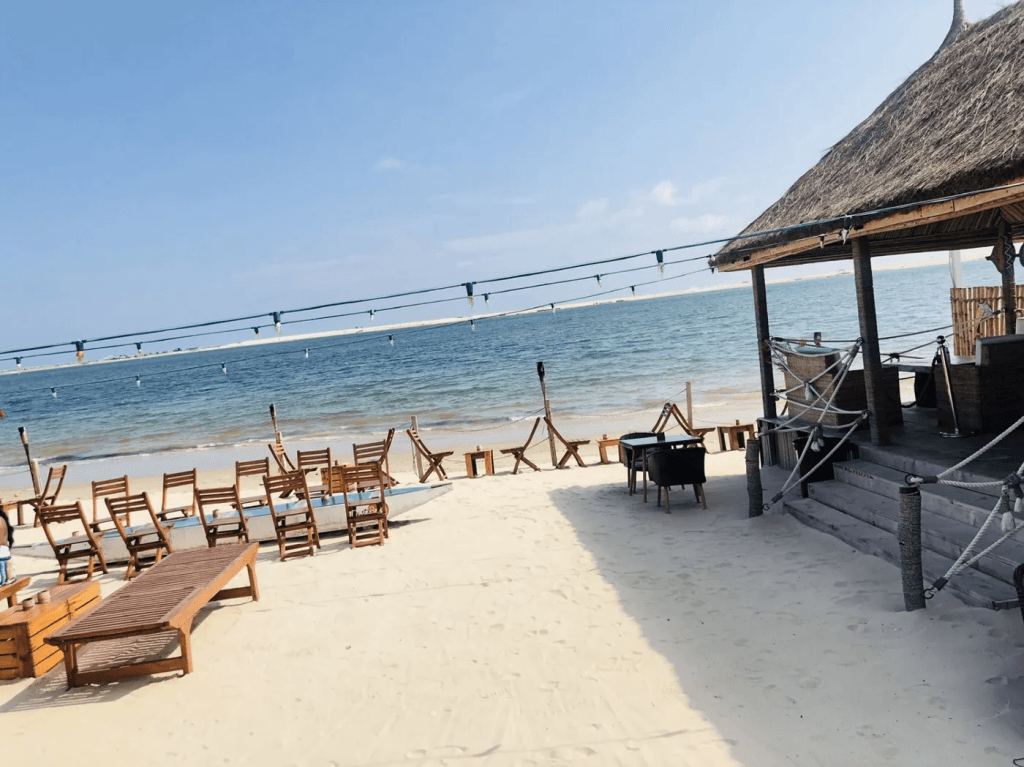
Oniru has earned its reputation honestly. Positioned between Victoria Island and Lekki Phase 1, it offers Island-side access at prices that sit below core Victoria Island but above the Lekki Phase 1 mid-range on the premium scale.
Professionals who work in Victoria Island or the wider Lekki corridor have noticed this positioning, and so has the developer community, which has committed significant capital to the area since the mid-2000s.
What distinguishes Oniru from comparable Island addresses is its combination of a coherent residential identity, beachfront character, and a self-contained commercial offering.
Unlike older parts of Victoria Island, where mixed-use commercial creep has diluted residential quality over decades, Oniru still functions primarily as a place people come to live.
The Landmark Village cluster, Oniru Beach, and proximity to Four Points by Sheraton give the area a leisure infrastructure that most Island-adjacent suburbs at this price tier cannot match.
The trade-offs are real and worth knowing upfront. Flooding during the rainy season affects specific zones. Grid power from EKEDC is inconsistent for non-estate units. Service charges and agency fees in premium buildings add substantially to headline rent figures.
The commute to the Mainland is among the most demanding in Lagos. This guide covers all of it honestly.

What Is Oniru?
Oniru falls under the Eti-Osa Local Government Area, and is administratively part of the Iru-Victoria Island Local Council Development Area.
It occupies the land corridor stretching from the Sandfill bus stop on the Lekki-Epe Expressway toward the Ikate boundary near the Lekki tollgate, bordered to the south by the Atlantic Ocean and to the north by Five Cowrie Creek and the Lagos Lagoon.
Victoria Island lies immediately to its west; Lekki Phase 1 to its east.
The area developed from land known as Maroko, a waterfront community demolished by the Lagos State Government in 1990 under General Raji Rasaki.
The land was allocated to the Oniru royal family as compensation, which is why the chieftaincy palace still sits within the estate and why the Oniru Royal Family remains the primary estate manager for the private estate component.
Oniru’s functional role in the city is residential and commercial, with a hospitality and leisure overlay. Its connection to the rest of the Island runs primarily through Ozumba Mbadiwe Avenue and Water Corporation Drive, both of which feed into the broader Victoria Island road network.
Mainland access relies on Alfred Rewane Road through Ikoyi and onward to the Third Mainland Bridge or Carter Bridge.
The Neighbourhood Feel
Oniru moves at a slower pace than Victoria Island proper, and that is much of its appeal.
Density is moderate rather than intense, and the resident mix leans toward established professionals, expatriates, and families who want Island access without the commercial noise of Akin Adesola Street.
The atmosphere sits somewhere between the old-money reserve of Ikoyi and the younger energy of Lekki Phase 1. Residents are concentrated in finance, oil and gas, tech, and consulting.
A notable expatriate presence from the diplomatic and multinational community is anchored in part by the proximity of the American International School of Lagos and British International School Lagos.
The growing short-let market has introduced a more transient population to the Landmark corridor, but the core residential estate retains its composed character.
Compared to Lekki Phase 1 at a similar price point, Oniru offers the Atlantic Ocean as a practical daily amenity. Errands are run at Prince Ebeano or Shoprite, evenings happen at Landmark or Oniru Beach, and the social life is anchored in a relatively small, consistent community.
For those who want density of choice and constant street-level activity, Oniru may feel contained. For those who value quality and coherence over volume, it delivers.
Key Streets, Zones, and Estates
Oniru Private Estate is the original gated community managed by the Oniru Royal Family and the Oniru Development Company.
Entry is controlled through manned gates, and the housing stock inside covers detached duplexes, townhouses, and low-rise apartment blocks on plots larger than anything comparable in Lekki. Rent here sits at the top of Oniru’s range.
The chieftaincy palace is located within the estate, expatriate families with children in BIS or AISL concentrate here, and the address itself carries weight in Lagos property conversations. Internal roads are interlocked and maintained to a standard that most comparable estate addresses in Lagos do not reach.
Water Corporation Drive and the Landmark Corridor form the commercial and lifestyle anchor of Oniru. This stretch hosts Landmark Village, a 9.4-acre mixed-use waterfront development housing the Landmark Event Centre, Hard Rock Cafe, Shiro Restaurant, Filmhouse IMAX Cinema, and Landmark Beach.
High-rise residential developments have multiplied along Water Corporation Drive, and serviced apartments here target short-let, corporate accommodation, and young professional markets. Buildings typically offer 24-hour generator power, pools, and gym facilities. The trade-off is noise: event nights at the Landmark Event Centre and beach club operations on weekends make this a lively rather than quiet corner of the area.
Prince Alaba Oniru Road and Oniru Royal Estate form the broader residential belt extending beyond the private estate. The housing mix covers older low-rise blocks, renovated apartments, and newer mid-rise builds with reasonable management. Coptic Hospital sits along Abila Road, and Healing Stripes Hospital operates on Prince Alaba Oniru Way within this zone.
Rent levels here typically sit in the mid-range of Oniru’s market, making it the practical entry point for professionals who want an Oniru address without the top-tier service charge commitment.
Oniru Market and Resettlement Area form the least expensive zone, most directly connected to the area’s Maroko history. The condominiums here are older, smaller, and significantly cheaper than the rest of the area. The environment is less manicured, drainage is less reliable, and flooding during heavy rain is a documented recurring concern in this specific zone.
This corridor also supplies a local commercial dimension that the private estate lacks, with Oniru Market serving the VI and Oniru axis with fresh produce and everyday goods.

Rent Prices in Oniru
Relative to core Victoria Island, Oniru’s rents are lower across all bedroom tiers.
Relative to Lekki Phase 1, they are broadly comparable for unfurnished stock and notably higher for fully serviced buildings with dedicated backup power.
2026 annual rent ranges in Oniru:
The top of each range reflects fully furnished, serviced units in the Landmark corridor or Oniru Private Estate with dedicated backup power, pools, gyms, treated water, and housekeeping services. The bottom of the 3-bedroom range reflects older buildings in the Resettlement zone.
New-build unfurnished units in managed mid-rise buildings typically price between ₦12,000,000 and ₦18,000,000 for a 2-bedroom. The private estate and Landmark corridor sit at the top of each band; the Royal Estate and Resettlement zones sit at or below the mid-point.
Landlords in this market require one to two years upfront. Agency fees at 10% and legal fees at 10% are standard, and service charges add ₦1,500,000 to ₦4,000,000 per annum on top of headline rent for managed buildings.
For current verified listings with real-time pricing and availability, browse apartments in Oniru on Expert Listing.
Flooding: What You Need to Know
Flooding is a genuine concern in Oniru, not a minor seasonal inconvenience. Eti-Osa LGA is classified as a high flood-risk local government area in geospatial research on Lagos State.
The Lagos State Commissioner for Environment has specifically cited Victoria Island, Lekki, and Oniru among areas affected following heavy rainfall events.
The area’s coastal position on reclaimed land adjacent to both the Atlantic Ocean and the Lagos Lagoon creates structural vulnerability that no drainage upgrade can fully eliminate.
The zones most exposed are the Oniru Resettlement area and parts of the Royal Estate, where open drainage channels are visible, and the terrain sits low relative to sea level.
Heavy rainfall during the rainy season, running from April through July and resuming from September through October, produces standing water on roads and in compounds in these zones. Flooding can render streets impassable for several hours following sustained downpours.
The Oniru Private Estate fares better, with interlocked roads, enclosed drainage channels on both sides of roads, and consistent maintenance standards enforced by estate management. Buildings with raised ground floor levels and internal water management systems reduce individual unit exposure further. But the broader Oniru area, as a low-lying coastal zone on reclaimed land, carries inherent rainy-season risk that varies at the street and property level rather than at the neighbourhood level.
As with every Lagos address, flood-risk verification at the specific listing level is essential.
Neighbourhood reputation, even a well-earned one, is not a reliable proxy for a specific street’s drainage profile. Expert Listing maps flood-risk signals at the individual listing level so you are working with precise data, not general impressions.

Safety and Security
Oniru’s security standing is above average relative to Lagos Island standards. The area has not been cited in Lagos-wide crime incident reports in a manner that should concern prospective residents.
The gated estate model limits uncontrolled vehicle and foot access to significant portions of the area, and the affluent resident profile reduces some of the economic-stress-driven crime vectors present in denser Lagos neighbourhoods.
Oniru Private Estate operates with manned entrance gates, mobile police presence near the palace, and high perimeter walls on individual properties.
CCTV is common in newer builds, and access to residential blocks is typically controlled by intercom or code systems. Smaller sub-estates and managed compounds throughout the broader area maintain their own 24-hour gate security.
The commercial strips along Water Corporation Drive and near Oniru Market require the standard urban awareness applicable throughout Lagos.
Phone theft near busy roads and the snatch-and-ride tactic remain consistent risks on all Island addresses. Late-night movement around the Landmark Beach zone requires awareness of higher footfall and mixed crowds on weekend event nights, when the complex draws visitors from well outside the neighbourhood.
Standard Lagos precautions apply: use ride-hailing apps, avoid displaying electronics in traffic, and remain alert near the market perimeter.
Commute and Getting Around
Oniru’s commute profile is one of its defining characteristics, and it cuts in two very different directions depending on where you work.
To Victoria Island via Ozumba Mbadiwe Avenue: 10 to 15 minutes in light traffic, 30 to 45 minutes during morning and evening peak hours. This is Oniru’s most compelling commute advantage, and most VI-based professionals treat it as a manageable daily journey.
To Lagos Island via Ozumba Mbadiwe Avenue, Falomo Bridge, and the Ikoyi corridor into CMS: 20 to 30 minutes in light traffic, 45 to 75 minutes at peak hours. Traffic builds sharply between 7 and 10 in the morning. The Lekki-Ikoyi Link Bridge, connecting Lekki Phase 1 to Ikoyi, is a useful supplementary route.
To Ikeja and Mainland commercial hubs via Alfred Rewane Road, Osborne, Ring Road, and the Third Mainland Bridge: 45 to 60 minutes in light traffic, 90 to over 150 minutes during peak hours.
This is the most punishing commute profile for Oniru residents. Island-to-Mainland traffic concentrates at the Third Mainland Bridge and Carter Bridge simultaneously, and delays exceeding two hours are not unusual on weekday evenings, particularly during the rainy season when flooding slows connecting routes.
Internal movement within Oniru relies almost entirely on private vehicles or ride-hailing apps. The Lagos motorcycle ban has removed Okada access throughout this zone. Keke NAPEP tricycles do not operate within the private estate. Bolt and Uber have reliable coverage throughout the day.
Danfo services run along the Lekki-Epe Expressway at the Sandfill corridor but do not penetrate estate roads. There is no BRT stop within Oniru; the nearest access is at the Sandfill bus stop on the Lekki-Epe Expressway.
Schools
Oniru has an exceptionally strong international school infrastructure for its footprint, placing it above comparable Lagos addresses for families with school-age children.
Two of the most recognised international institutions in Nigeria are located within the private estate itself, and additional strong options are within a short drive on Victoria Island.
- American International School of Lagos at 1 Landbridge Avenue, Oniru Private Estate: American curriculum, pre-school through Grade 12, fully accredited by the Council of International Schools and the Middle States Association, with an IB Diploma Programme and students from over 50 nationalities.

- British International School Lagos at 1 Landbridge Avenue, Oniru Private Estate: British-curriculum co-educational secondary school for ages 11 to 18, offering IGCSE and A Levels, with both boarding and day options on a campus described as one of the most modern in Lagos.
- The RiverBank School at 2 COD Road, Oniru Estate: a Christian, British-curriculum nursery, primary, and secondary school founded in 2009, with a strong community reputation for academic results and pastoral care.
- Corona School, Victoria Island, on Waziri Ibrahim Crescent, a short drive from Oniru: one of the oldest and most respected primary schools in Lagos, established in 1967 and recognised as the Best Primary School in Eti-Osa Local Government.
Healthcare
Oniru’s healthcare infrastructure is stronger than most comparably priced residential addresses in Lagos. The combination of hospitals directly within the estate and specialist facilities a short drive away on Victoria Island gives residents routine and emergency care options without crossing any bridge.
Within Oniru:
- Coptic Hospital at Plot 21, Block 11, Abila Road, Oniru Private Estate: a modern multi-specialist facility providing 24/7 inpatient and outpatient care, including orthopaedics, paediatrics, dental services, CT imaging, and laboratory services. It operates as a mission hospital, with affordability as a core design principle.
- Ave Maria Hospital at Block 14, Plot 7, Oba Idowu Abiodun Oniru Layout: a multi-specialist hospital with over 30 years of operation, covering general medicine, surgery, paediatrics, and emergency care.
- Healing Stripes Hospital at 6A/B Prince Alaba Oniru Way, serving the Royal Estate zone for routine care.
Within 5 to 10 minutes on Victoria Island: Reddington Hospital at 12 Idowu Martins Street, an internationally accredited multi-specialist hospital with full emergency services and strong cardiology and specialist referral capability.
The main limitation is the absence of a major public hospital.
All accessible options are private facilities, meaning healthcare costs depend entirely on personal insurance or employer HMO coverage.
Lifestyle, Food, and Retail
Retail: Prince Ebeano Supermarket on T.F. Kuboye Road, Oniru Estate, is the primary everyday grocery destination for residents. Ebeano’s Oniru outlet stocks both imported packaged goods and local staples through its Village Market model, handling most household weekly needs without a drive into core VI.
Shoprite and SPAR are accessible within 10 to 15 minutes on Victoria Island for broader household and food retail.

Restaurants and food: Oniru’s dining scene is anchored at the premium end. Landmark Village hosts Hard Rock Cafe, the first Hard Rock outlet in West Africa, and Shiro Restaurant, a well-regarded pan-Asian destination. Circa Non Pareil on Water Corporation Drive has a strong reputation for its rooftop setting and premium menu.
The broader Victoria Island dining scene is 15 minutes away and significantly expands the selection across cuisines and budgets. Oniru’s standalone restaurant count is modest compared to VI; the area relies on the Landmark cluster and VI proximity rather than its own diversified food strip.
Malls: Landmark Village on Water Corporation Road functions as the area’s in-neighbourhood entertainment and retail complex. With Filmhouse IMAX Cinema, Hard Rock Cafe, Shiro, the Landmark Event Centre, and Landmark Beach in one waterfront precinct, it draws an estimated 50,000 to 60,000 visitors weekly, making it one of the most visited leisure destinations in Lagos.
The Palms Shopping Mall on Victoria Island, a short drive away, provides a broader retail offering including fashion, electronics, and a Shoprite anchor.
Community and recreation: Oniru Beach and Landmark Beach are the most consistent community anchors. The Four Points by Sheraton on Prince Alaba Oniru Road offers hotel-grade gym and pool access to non-guests. The RCCG City of David campus on COD Road has a significant community footprint and is the institution behind The RiverBank School.
The area lacks large green parks and public sports facilities, which is a genuine gap for families with active children.
Utilities: Power and Water
Power: Oniru is served by the Eko Electricity Distribution Company (EKEDC), which has a service unit on New Market Road, Oniru, Lagos. EKEDC grid supply to the area is inconsistent: residents in older buildings and the Resettlement zone have reported prolonged outages, including a documented transformer fault affecting Prince Mustapha Oniru Street for several weeks.
During major Lagos-wide planned outages in 2025, parts of Victoria Island and Oniru were designated Band A zones with relatively prioritised grid supply.
For managed buildings in the private estate and Landmark corridor, the practical norm is 24-hour generator backup managed by building facilities teams, with diesel costs billed through the service charge or metered per unit.
Water: Borehole water with in-building treatment plants is standard in managed developments. Public mains supply is unreliable and is not the primary water source in any significant residential development in the area.
Service charges: Headline rent in Oniru is not the full annual cost. Service charges of ₦1,500,000 to ₦4,000,000 per annum, diesel deposits, caution deposits, and waste management fees are standard in managed buildings and add materially to the annual commitment. Get the full monthly cost picture, not just headline rent, before signing.
Who Oniru Is Best For
Professionals who work on Victoria Island or within the Lekki Phase 1 corridor. The 10-to-15-minute off-peak drive to VI and walkable proximity to much of VI’s financial and hospitality cluster make Oniru a near-ideal base for Island workers. No bridge crossings, no Mainland-to-Island bottlenecks.
Expatriate families with children in international schools. Both AISL and BIS are located within Oniru Private Estate. Living within walking distance of internationally accredited schools is a practical and security-relevant priority that this address uniquely satisfies in Lagos.
Mid-level executives and young professionals seeking Island quality below core Victoria Island pricing. Unfurnished 2-bedroom units from ₦12,000,000 per annum represent a genuine discount to comparable VI rates, and the community character is residential rather than commercial.
Corporate and high-net-worth residents for whom the address is a signal. Oniru Private Estate’s gated model, palace presence, and well-maintained environment check the boxes. The resident mix of finance executives, oil sector professionals, and diplomatic-community families reinforces the positioning without the deliberate exclusivity of Ikoyi.
Lifestyle-oriented residents for whom beachfront access and a curated social scene are non-negotiable. Landmark Beach, Oniru Beach, and the Landmark Village complex provide leisure infrastructure that most Lagos residential addresses cannot match. For residents who want their everyday environment to feel like a destination, Oniru delivers.
What to Watch Out For
Flooding in the Resettlement and Royal Estate zones is a documented, recurring risk. The Resettlement area and parts of the Royal Estate have open drainage channels, low-lying terrain, and proximity to both the Atlantic Ocean and the Lagos Lagoon.
Flooding during heavy rainfall is an annually documented occurrence in these zones. Site-level drainage verification before signing any lease in these parts of Oniru is not optional.
The Mainland commute is genuinely punishing for anyone working beyond Ikoyi. Professionals commuting daily to Ikeja, Gbagada, or anywhere on the Lagos Mainland should budget 90 to 150 minutes for evening peak-hour travel via the Third Mainland Bridge.
Residents who underestimate this at the lease-signing stage frequently find it unsustainable within months.
Service charges, diesel deposits, and upfront fees create total year-one costs significantly above headline rent. A 2-bedroom at ₦15,000,000 per annum in a managed building can realistically require ₦19,000,000 to ₦23,000,000 in year-one total outlay once agency fees at 10%, legal fees at 10%, caution deposit, service charge, and diesel deposit are included.
Always request the full fee schedule in writing before proceeding.
Stale listings and undisclosed charges are a known pattern in this market. Some listings on unverified platforms circulate after units have been taken. Agents sometimes quote headline rent without disclosing service charge obligations until late in the process.
Work only with agents who confirm current access to the property and provide a full charge breakdown at first contact.
Short-let concentration in the Landmark corridor affects the residential experience in specific buildings. Buildings along Water Corporation Drive with heavy short-let usage experience higher turnover, noisier weekends, and less predictable facilities management.
Verify the short-let proportion in any building before committing to a long-term lease.
Ready to Find Your Apartment in Oniru?
Every listing on Expert Listing is checked before going live. Location is mapped precisely against flood-risk data. Listings are removed the moment they are rented or sold – no ghost listings, no wasted trips.
Browse verified apartments for rent in Oniru on Expert Listing.
Frequently Asked Questions
Is Oniru a good place to live?
Oniru is one of the stronger all-around residential addresses on the Lagos Island axis for professionals and families. It combines short commutes to Victoria Island, internationally accredited schools within the estate, beachfront access, and a residential character that core VI has largely lost to commercialisation. The honest qualifications are a real flood risk in specific zones, a poor Mainland commute, and total annual costs meaningfully higher than headline rent suggests. For the right professional profile and commute pattern, it is an excellent choice.
Is Oniru on the Island or the Mainland?
Oniru is on the Island. It occupies the land corridor between Victoria Island to the west and Lekki Phase 1 to the east, positioned on the southern side of the Lekki-Epe Expressway along the Atlantic Ocean coastline. It falls under Eti-Osa Local Government Area, the same LGA as Victoria Island and Ikoyi, and is not connected to the Lagos Mainland without crossing a bridge.
Is Oniru the same as Victoria Island?
Oniru is not Victoria Island, though the two are frequently confused. Oniru is formally described as Victoria Island Extension, occupying land reclaimed and developed after the original Victoria Island boundary. In practical terms, the two areas share a continuous road corridor via Ozumba Mbadiwe Avenue and are perceived as the same Island cluster, but they are distinct zones with different street layouts, property histories, and price levels, with core VI commanding a premium over Oniru in most comparable property comparisons.
Does Oniru flood?
Yes, parts of Oniru flood during heavy rainfall, particularly the Resettlement area and parts of the Royal Estate zone. The Lagos State Government has specifically named Oniru in flood advisory statements following major rainfall events. The area’s position on reclaimed coastal land adjacent to both the Atlantic Ocean and the Lagos Lagoon creates structural vulnerability. The Oniru Private Estate fares better due to better drainage management, but flood risk varies significantly at the street and property level.
How much is rent in Oniru in 2026?
As of 2026, annual rent in Oniru ranges from ₦8,000,000 for a basic unfurnished 3-bedroom in the Resettlement zone to ₦35,000,000 or above for a fully furnished luxury 3-bedroom along Water Corporation Drive. A 2-bedroom in a managed mid-tier building typically rents for ₦12,000,000 to ₦18,000,000 per annum unfurnished. These figures exclude service charges of ₦1,500,000 to ₦4,000,000 annually, plus standard agency fees, legal fees, and caution deposits.