Cost of Living in Victoria Island, Lagos (2026): Rent, Food, Transport & Utilities Cost
Expert Listing
·
·
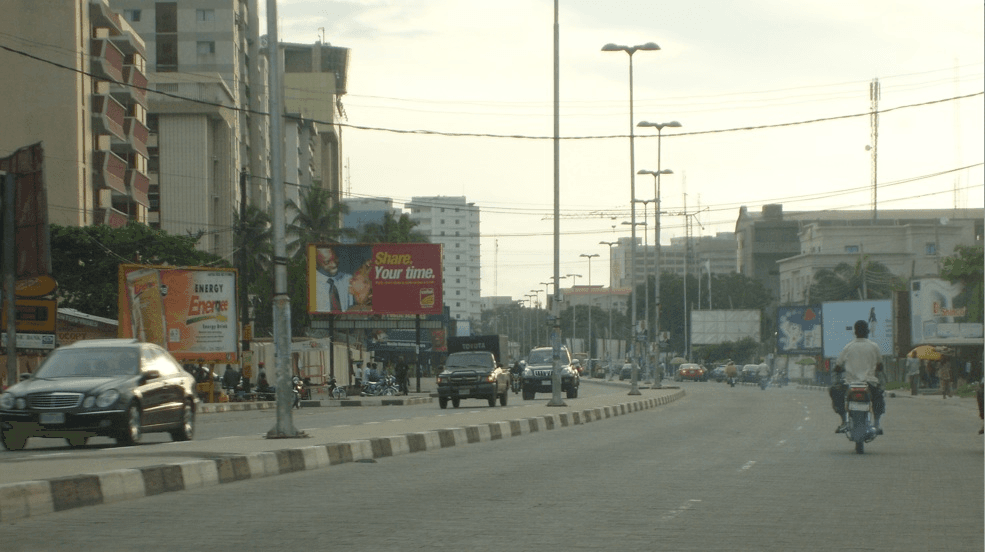
Victoria Island is rarely the first choice for anyone looking to save money in Lagos. Most people moving to this commercial nerve centre already have a general sense that they are entering one of Africa’s most expensive real estate markets. However, knowing that the area is expensive is fundamentally different from understanding the precise breakdown of where that money goes each month. Many newcomers find a significant gap between their expectations and the reality of living in a district where a “hidden” utility bill or a mandatory service charge can often rival the monthly equivalent of the rent itself.
This guide provides an exhaustive breakdown of the cost of living in Victoria Island for the year 2026. We cover every major expenditure category, from the current rent prices for various apartment sizes to the fluctuating costs of diesel, groceries, and private education. Our goal is to provide you with an accurate, realistic number that helps you plan your relocation or budget adjustment before you sign a lease, ensuring you are not hit by financial surprises three months after move-in.
The cost structure of Victoria Island is distinctive because of its dual nature as a residential and high-intensity commercial hub. Unlike purely residential areas like Magodo or parts of Lekki, the density of businesses in Victoria Island drives up the cost of everything from parking to a loaf of bread at a local supermarket. This “commercial premium” is the invisible tax paid by residents for the convenience of living within walking distance of Nigeria’s largest corporate headquarters and premium social amenities.

Browse verified apartments in Victoria Island with current pricing on Expert Listing:
How Much is rent in Victoria Island?
Rent is the undisputed dominant cost category in Victoria Island, serving as the financial anchor around which every other lifestyle choice is organised. In 2026, the market has seen a continued upward trend driven by the scarcity of new residential developments and the increasing conversion of older houses into commercial offices.
Victoria Island Rent Prices (2026)
| Property Type | Annual Rent Range | Monthly Equivalent |
| Self-contained / Studio | ₦4,500,000 – ₦8,000,000 | ₦375,000 – ₦666,666 |
| 1-Bedroom Flat | ₦7,500,000 – ₦15,000,000 | ₦625,000 – ₦1,250,000 |
| 2-Bedroom Flat | ₦12,000,000 – ₦25,000,000 | ₦1,000,000 – ₦2,083,333 |
| 3-Bedroom Flat | ₦18,000,000 – ₦45,000,000 | ₦1,500,000 – ₦3,750,000 |
| 4-Bedroom Duplex | ₦35,000,000 – ₦90,000,000 | ₦2,916,666 – ₦7,500,000 |
First, it is vital to understand the Lagos landlord upfront payment convention, which remains strictly enforced in Victoria Island despite various legislative attempts at reform. Most landlords demand at least one year of rent in advance, and for high-demand units or newer builds, a two-year upfront payment is frequently requested. For instance, a professional securing a modest 2-bedroom flat at ₦15,000,000 per annum must be prepared to write a single check for the full amount, plus agency and legal fees, before they are handed the keys.
Second, significant within-range variation is dictated by the specific street, building age, and furnishing status. A 3-bedroom flat on a premium, quiet street like Kofo Abayomi or within the high-rise luxury towers on Ahmadu Bello Way will consistently sit at the ₦45,000,000 mark. Conversely, older standalone buildings or apartments located in the Oniru border areas or near the more congested parts of Adeola Odeku offer the lower-end entry points, though these often come with higher maintenance requirements.

Service Charges and Estate Levies
The service charge is frequently the cost that new renters in Victoria Island underestimate the most, often failing to realise that it is a recurring monthly or quarterly obligation that never ends. In well-managed Victoria Island estates and high-rise buildings, these charges are comprehensive and cover 24-hour security personnel, communal area cleaning, waste disposal via LAWMA or private contractors, water treatment, landscaping, and the maintenance of elevators and swimming pools.
Victoria Island Service Charges
| Building Type | Monthly Service Charge Range |
| Older standalone building (basic) | ₦150,000 – ₦300,000 |
| Mid-tier estate compound | ₦350,000 – ₦650,000 |
| Well-managed newer estate | ₦700,000 – ₦1,200,000 |
| Premium serviced building | ₦1,500,000 – ₦2,500,000+ |
To see how this impacts a real budget, consider a worked example: a mid-tier 2-bedroom apartment with an annual rent of ₦18,000,000. If the monthly service charge is ₦500,000, the tenant must pay an additional ₦6,000,000 per year. This brings the effective annual cost of the apartment to ₦24,000,000. This “all-in” figure is the only realistic number to use when comparing different neighbourhoods or properties, as a lower rent with a massive service charge can often be more expensive than the reverse.
Because service charges are subject to inflation, especially regarding labour and maintenance parts, you should always insist on confirming the service charge breakdown in writing as part of the tenancy agreement. Ensure the agreement specifies what is included and whether the charge is “fixed” or “subject to review” based on actual expenditure.

Want to live in Victoria Island? Check our guide to renting an apartment in Victoria Island:
Generator Fuel: The Hidden Utility Bill
In many Victoria Island buildings, generator fuel is billed separately from the core service charge to allow for fluctuating diesel prices. In 2026, when the national grid still experiences frequent outages, this “hidden” bill can be substantial. For apartments where residents share a central generator, monthly per-apartment fuel levies typically range from ₦250,000 to ₦600,000 depending on the size of the generator, the number of occupied units, and whether the building runs on a 24-hour or “night and morning only” power schedule.
In some older or more premium serviced buildings, a flat service charge is used that already captures fuel costs. However, the trend in 2026 has shifted toward direct-billing or “pay-as-you-go” power meters for generator usage. If you are in a building that bills fuel separately, you must add this range to your monthly total to get an accurate picture of your outflow.
The most practical step a prospective tenant can take is to ask the landlord or estate manager for the exact billing history of the unit. Ask specifically: “Is diesel/fuel included in the service charge, and if not, what was the average per-apartment fuel bill for the last three months?” This transparency prevents the shock of receiving a ₦400,000 fuel bill in your first month of residency.

Food and Groceries
Shopping for food in Victoria Island offers a wide range of price points, but generally skews toward the premium end of the Lagos spectrum.
Supermarket shopping: Residents typically frequent high-end supermarkets such as Hubmart on Adeola Odeku, Hartleys on Adetokunbo Ademola, or the Spar at Ceddi Plaza. For a single professional, a weekly grocery run for essentials and imported goods averages ₦60,000 to ₦95,000. For a couple, this rises to ₦110,000 – ₦180,000, and a family of four can expect to spend ₦250,000 – ₦450,000 per week, depending on their preference for imported brands versus local alternatives.
Local market shopping: The nearest significant local market is the Oniru New Market or the Obalende Market just across the bridge. Shopping at these wet markets for fresh produce, meat, and grains offers a significant cost advantage, typically resulting in 25–35% savings compared to supermarket prices. Many Victoria Island residents choose to send household staff to these markets for bulk purchases of yams, peppers, and tomatoes to keep the food budget manageable.
Eating out: Victoria Island is the dining capital of Nigeria, centred around the Adetokunbo Ademola and Tiamiyu Savage corridors. A mid-range meal for one person at a casual spot like Orchid House or Danfo Bistro costs between ₦15,000 and ₦25,000. Premium dining at establishments like RSVP or Shiro will easily exceed ₦60,000 per person. A working professional who eats out three times a week for lunch and once on the weekend will spend approximately ₦350,000 per month on dining.
Monthly Food Budget (2026)
| Household Type | Cooking at Home Mostly | Mixed (some eating out) |
| Single professional | ₦250,000 – ₦350,000 | ₦450,000 – ₦650,000 |
| Couple | ₦450,000 – ₦700,000 | ₦800,000 – ₦1,200,000 |
| Family of four | ₦900,000 – ₦1,400,000 | ₦1,600,000 – ₦2,300,000 |
Transport
Transport costs in Victoria Island vary wildly depending on whether you are commuting within the Island or crossing the bridge to the Mainland.
Personal vehicle: For a resident with a modern SUV or sedan, the monthly fuel cost for local VI/Ikoyi/Lekki driving averages ₦120,000 to ₦200,000. Amortised maintenance (oil changes, tyre replacement, and general repairs) adds another ₦50,000 to ₦100,000 per month. This brings the total monthly running cost for a single vehicle to a range of ₦170,000 to ₦300,000, excluding the initial purchase or insurance costs.
Ride-hailing (Uber and Bolt): The most common commute route for residents is within Victoria Island itself or to nearby Ikoyi. A typical one-way trip within VI during peak hours costs between ₦4,500 and ₦7,500. For a daily 5-day-a-week commuter using ride-hailing exclusively, the monthly bill can easily reach ₦220,000 to ₦350,000, especially when surge pricing is factored in during rainy days or Friday evenings.
BRT and public transport: Victoria Island is served by several BRT routes, with the main terminal located near CMS/Lagos Island. A single BRT journey to or from the Mainland costs between ₦800 and ₦1,500. While this is the most cost-effective option for Island-bound commuters, most Victoria Island residents only use this if they are travelling long distances toward the Mainland and wish to avoid the stress of driving in heavy traffic.

Monthly Transport Costs (2026)
| Commute Pattern | Monthly Transport Cost |
| Personal vehicle, daily Island commute | ₦180,000 – ₦300,000 |
| Ride-hailing, daily Island commute | ₦220,000 – ₦350,000 |
| BRT daily commuter | ₦40,000 – ₦75,000 |
| Mixed (drive some days, BRT others) | ₦120,000 – ₦200,000 |
| Work from home / minimal commute | ₦60,000 – ₦110,000 |
Utilities: Internet and Additional Power Costs
Reliable internet is a non-negotiable utility in Victoria Island, with fibre-to-the-home (FTTH) being the standard for most modern apartments. Providers like FibreOne, Tizeti, and Starlink are the most popular choices. A basic unlimited fibre plan starts at ₦35,000 per month, while premium high-speed packages for heavy users or home offices can reach ₦85,000 per month.
Additional power costs often include inverter battery maintenance or top-ups. While the generator fuel is covered in the service charge section, residents who use solar-inverter hybrids for 24/7 silence usually budget about ₦20,000 monthly for long-term battery replacement funds and minor equipment checks.
Water is typically managed at the building level in Victoria Island through industrial-grade boreholes and treatment systems. In most cases, the cost of water is bundled into the service charge. If you are in a standalone house responsible for its own water, chemicals and pumping power will cost roughly ₦30,000 to ₦50,000 per month.
Total utilities estimate: ₦85,000 – ₦165,000 per month, depending on building arrangement and data consumption patterns.
School Fees
For families, school fees are almost always the second-largest line item in the budget after rent, as Victoria Island and neighbouring Ikoyi house some of the most expensive educational institutions in West Africa.
Education Costs in Victoria Island (2026)
| School Tier | Termly Fees Range |
| Entry-level private primary | ₦800,000 – ₦1,500,000 per term |
| Mid-tier established private school | ₦1,800,000 – ₦3,500,000 per term |
| Premium private school (e.g. Greensprings School) | ₦4,000,000 – ₦7,500,000 per term |
| International curriculum school (e.g. British International School) | ₦8,000,000 – ₦15,000,000 per term |
The annual cost for education is calculated by multiplying the termly fee by three, though this excludes mandatory “extras” such as uniforms, bus services, and extracurricular activities, which can add 20% to the base fee. A child at a mid-tier school will cost approximately ₦7,500,000 per year. For a family with two children in mid-tier schools, the total annual commitment is roughly ₦15,000,000, making it a critical factor in deciding whether Victoria Island is affordable for the household.

Household Help
Maintaining a household in Victoria Island usually requires professional help due to the size of the properties and the busy schedules of residents. A live-in housekeeper or cook is common; they typically earn between ₦80,000 and ₦150,000 per month. Residents must also provide accommodation, which is usually the “boys’ quarter” (BQ) or a staff room attached to the main apartment.
For those who do not require live-in staff, a daily cleaner who visits two or three times a week will charge between ₦40,000 and ₦70,000 per month. This is a popular option for single professionals living in 1-bedroom flats who only need laundry and basic cleaning services.
A nanny or childminder is a high cost for families with young children. Depending on their experience and whether they have formal nursing training, a nanny in Victoria Island earns between ₦100,000 and ₦200,000 per month. The hours are often long, and many families provide additional stipends for health and transportation.
Standalone houses that are not within a gated estate require private security guards. Hiring two guards (for day and night shifts) from a reputable security firm costs between ₦180,000 and ₦300,000 per month. For families with young children, the nanny cost is an essential budget line rather than a discretionary one.
Healthcare
Health insurance is the primary way residents manage medical costs. Many corporate professionals have employer-provided cover, but for those who are self-employed or require additional protection, a premium individual plan from an HMO like RelianceHMO or AXA Mansard costs between ₦450,000 and ₦1,200,000 annually.
Out-of-pocket expenses for minor ailments are handled at private clinics. A general practitioner (GP) consultation at a facility like Iwosan Lagoon Hospitals typically costs between ₦25,000 and ₦45,000 per visit, excluding tests or medication. Specialist consultations for paediatrics or cardiology range from ₦50,000 to ₦90,000. It is highly recommended that residents without comprehensive insurance maintain a monthly healthcare emergency fund of at least ₦100,000.
Entertainment and Lifestyle
The lifestyle costs in Victoria Island reflect its status as a luxury destination. A membership at a high-quality gym like the one at Eko Hotels & Suites or specialised fitness centres costs between ₦150,000 and ₦350,000 per month. Most residents also pay for a suite of streaming services, including Netflix, Showmax, and DSTV, which total roughly ₦45,000 to ₦70,000 per month.
Weekend dining and social events are the biggest lifestyle variables. A conservative single professional who enjoys occasional drinks or dinner might spend ₦150,000 per month. However, someone with an active social life who frequents the bar and lounge corridor on Saturdays can easily spend upwards of ₦500,000 per month.
Personal care, including visits to high-end barbers or hair salons and general grooming, is another recurring expense. A standard men’s haircut at a premium VI barber costs about ₦15,000, while women’s salon services for braiding or treatments range from ₦40,000 to ₦150,000. A monthly budget of ₦60,000 to ₦120,000 is typical for personal grooming.

Full Monthly Budget Summaries
Bringing all categories together, here are realistic monthly cost estimates for three common Victoria Island household profiles.
Single professional in a 1-bedroom flat (Annual Rent: ₦10,000,000)
| Category | Monthly Cost |
| Rent (monthly equivalent) | ₦833,333 |
| Service charges | ₦400,000 |
| Food (mixed cooking and eating out) | ₦550,000 |
| Transport (personal vehicle) | ₦240,000 |
| Internet and utilities | ₦110,000 |
| Entertainment and lifestyle | ₦250,000 |
| Healthcare buffer | ₦50,000 |
| Total | ₦2,433,333 |
Couple in a 2-bedroom flat (Annual Rent: ₦18,000,000)
| Category | Monthly Cost |
| Rent (monthly equivalent) | ₦1,500,000 |
| Service charges | ₦600,000 |
| Food (mixed) | ₦1,000,000 |
| Transport (one vehicle) | ₦280,000 |
| Internet and utilities | ₦130,000 |
| Entertainment and lifestyle | ₦400,000 |
| Healthcare buffer | ₦80,000 |
| Total | ₦3,990,000 |
Family of four in a 3-bedroom flat (Annual Rent: ₦30,000,000), two children in a mid-tier school
| Category | Monthly Cost |
| Rent (monthly equivalent) | ₦2,500,000 |
| Service charges | ₦900,000 |
| Food (family) | ₦1,900,000 |
| Transport (one vehicle) | ₦350,000 |
| School fees (two children, averaged monthly) | ₦1,250,000 |
| Housekeeper/nanny | ₦250,000 |
| Internet and utilities | ₦160,000 |
| Entertainment and lifestyle | ₦500,000 |
| Healthcare buffer | ₦150,000 |
| Total | ₦7,960,000 |
These figures represent realistic middle-of-range estimates for 2026, and individual spending will naturally vary depending on specific building amenities and personal consumption habits.
How Victoria Island Compares to Nearby Areas
For context, here are approximate all-in monthly costs for comparable household profiles in nearby areas:
| Area | Single Professional (1-bed) | Family of Four (3-bed) |
| Ikoyi | ₦3,200,000 – ₦5,500,000 | ₦10,000,000 – ₦18,000,000 |
| Victoria Island | ₦2,200,000 – ₦4,000,000 | ₦7,500,000 – ₦12,000,000 |
| Oniru | ₦1,800,000 – ₦3,000,000 | ₦6,000,000 – ₦9,500,000 |
| Lekki Phase 1 | ₦1,500,000 – ₦2,800,000 | ₦5,500,000 – ₦8,500,000 |
| Ikeja GRA | ₦1,700,000 – ₦3,200,000 | ₦6,500,000 – ₦10,000,000 |
Victoria Island typically represents about 70–80% of the cost of living in Ikoyi, which remains the most expensive district in the country. While it is significantly more expensive than Lekki Phase 1, it offers a distinct advantage in proximity for those who work in the financial district, saving hours of commuting time each week. Whether the 30% premium over Oniru or Lekki is worth it usually depends on how much a resident values their time and their access to the city’s primary business and social hubs.
Ready to Plan Your Victoria Island Budget?
Successfully moving to Victoria Island requires a clear-eyed look at the numbers and a partner who provides verified data. Every listing on Expert Listing includes verified pricing, real-time availability, and precise location data, including flood-risk signals to ensure your investment is sound.
Frequently Asked Questions
How much does it cost to live in Victoria Island per month?
For a single professional, a realistic monthly budget starts at approximately ₦2.4 million, which includes the monthly equivalent of annual rent, service charges, and basic lifestyle expenses. A family of four should expect to spend between ₦7.5 million and ₦9 million per month when high-quality schooling and household help are factored into the total. These figures reflect the 2026 market reality, where utilities and services account for nearly 40% of the total outflow.
Is Victoria Island expensive compared to the rest of Lagos?
Yes, Victoria Island is one of the top three most expensive neighbourhoods in Lagos, sitting just below Ikoyi and Eko Atlantic City in terms of total cost of living. While areas like Ikeja GRA on the Mainland are also premium, the concentration of luxury services and the high cost of diesel for 24-hour power in Victoria Island create a higher financial barrier for residents. It is significantly more expensive than middle-class hubs like Surulere or Yaba.
What is the minimum salary to live comfortably in Victoria Island?
To live comfortably as a single individual in a serviced 1-bedroom apartment without financial strain, a monthly take-home pay of at least ₦3.5 million is recommended. This allows for the high rent and service charge obligations while leaving enough for high-quality food, transport, and a savings buffer. Families generally require a household income exceeding ₦12 million per month to maintain a standard of living that includes premium schooling and private security.
Are service charges expensive in Victoria Island?
Service charges in Victoria Island are among the highest in Lagos because they often include the cost of heavy-duty power generation and high-end security. In a modern serviced building, you can expect to pay between ₦700,000 and ₦1.2 million per month just for building maintenance and communal services. It is essential to treat the service charge as a “second rent” when calculating your total monthly commitments.
How much are school fees in Victoria Island?
Education in the area is a premium service, with termly fees for reputable primary schools ranging from ₦1.8 million to over ₦10 million at international institutions. Annual costs for a single child at an established private school typically start at ₦7.5 million. Parents should also budget for additional costs like school bus services and international field trips, which are standard in the Victoria Island educational circuit.
Is it cheaper to live in Victoria Island or Oniru?
Oniru is generally 15% to 25% cheaper than the heart of Victoria Island, particularly regarding rent and service charges. Because Oniru is often seen as an extension of Victoria Island, residents there enjoy similar proximity to businesses but at a slightly lower entry price for housing. However, the infrastructure in Oniru can be more congested, and the “all-in” cost gap narrows if you frequently commute into the core of Victoria Island for work and social life.