Amuwo Odofin, Lagos: Complete Area Guide
Expert Listing
·
·
Amuwo Odofin is one of those Lagos addresses that rewards people who look past the surface. It does not have the cultural mythology of Festac Town next door, nor does it have the commercial energy of Oshodi. What it has is something more quietly valuable: a residential environment that has been steadily improving for two decades, a location that puts the western Mainland area within easy reach, and at a price point that gives households genuine financial headroom compared to more celebrated addresses.
The area sits at an interesting intersection of old and new Lagos. The Amuwo Odofin GRA is one of the area’s most established residential zones that carries the kind of spacious, low-density character that is increasingly rare on the Mainland. Newer estate developments have introduced more contemporary housing structures alongside the older family homes. And the broader Amuwo Odofin axis, which stretches from the Mile 2 area down toward the Lagos Lagoon, offers a range of living environments that serve different budgets and lifestyle preferences within the same general address.
This guide covers what Amuwo Odofin is actually like to live in: the commute reality, the zones and estates, the schools, the healthcare options, the food and retail scene, and the trade-offs worth understanding before you commit.

What Is Amuwo Odofin?
Amuwo Odofin is a Local Government Area and a residential district in Lagos State. It lies along the Lagos–Badagry Expressway. It shares boundaries with Festac Town, Mile 2, and parts of the Apapa industrial axis.
The area was developed for Lagos’ planned residential expansion. That’s why it’s different from many organically grown Mainland neighbourhoods. Amuwo was designed with a clear layout of avenues, closes, and numbered roads. This contrasts with the usual irregular street patterns and dense, unstructured growth. That structure still defines the area today.
The area was developed as part of the same federal government housing push that produced Festac Town, and it shares some of that planned estate character of organised plots, defined road networks, and a residential zoning discipline that has held better in some sections than others.
Its position on the Lagos Mainland puts it within reach of some of the city’s most significant commercial areas, like the Trade Fair Complex, Alaba International Market, the Apapa port, and the Lagos-Badagry Expressway. For residents whose work is anchored in any of these destinations, Amuwo Odofin’s location makes practical sense in a way that addresses what further east on the Mainland does not.
The Neighbourhood Feel
Amuwo Odofin has a quieter, more residential feel than its neighbours might suggest. Despite sitting between the commercial bustle of Mile 2 and the density of Festac, the interior streets of the estate have a settled, unhurried character that reflects long-term, stable residency.

The GRA section is the exception to this pattern. Here, the housing shifts to detached and semi-detached houses on wide plots with established trees a low-density, spacious residential quality that is a different experience from the blocks-and-flats character of the broader area. Residents who live in the GRA tend to be deliberate about staying, and the section commands a premium that reflects the scarcity of that kind of space on the Mainland.
Beyond the GRA, the broader area has a mixed resident profile. Newer apartment developments have introduced younger households and first-time Lagos renters alongside the established families and long-term residents who anchor the older sections. The two populations coexist without much friction, and the area’s commercial infrastructure has developed to serve both.
The resident mix reflects the area’s western Mainland position: traders from Trade Fair and Alaba, port and logistics workers from Apapa, civil servants, and a growing number of young professionals who have discovered that Amuwo Odofin’s infrastructure is more developed than its relatively low profile suggests.
Key Streets, Zones, and Estates
Amuwo Odofin is not a uniform neighbourhood. The variation between its different zones is significant enough that where you live within the area shapes your experience materially.

Amuwo Odofin GRA is the area’s most prestigious residential zone a low-density, planned estate section with wide streets, large plots, and a settled residential character that attracts senior professionals, established families, and business owners who want space and order without Island prices. Detached and semi-detached houses dominate the housing structure here. It is the most expensive section of the broader Amuwo Odofin address and the section where the area’s reputation for quality living is most consistently delivered.
Amuwo Odofin Estate is the broader planned estate section that surrounds and extends beyond the GRA. Housing here includes a mix of older government-built structure and newer private developments. The estate character includes defined road network, organised plots, and residential zoning, making it more predictable in quality than the open streets beyond the estate boundary.
Apple Junction and the Mile 2 Axis represent the more commercially active end of the Amuwo Odofin address. Apple Junction is one of the busiest intersections in this part of the Mainland as it serves as a hub for transport, trade, and daily movement. Living close to it means maximum access to commercial services and maximum exposure to the noise and congestion that come with them. It is a practical address for residents who prioritise convenience over quiet.
The Newer Estate Developments scattered across the broader axis have introduced more contemporary housing structure, serviced compounds with modern finishes, functional generator infrastructure, and managed borehole water at price points that sit above the older estate structure but below what equivalent quality would cost in Festac or Okota. These developments attract young professionals and households who want managed living without the price tag of more established addresses.
The Lagoon-Facing Streets on the southern end of the area sit closest to the Lagos Lagoon and carry the highest flooding risk during the rainy season. Some of these streets offer scenic positioning and lower rents, but the infrastructure trade-offs are real and should be assessed carefully at the property level.
Rent Prices in Amuwo Odofin
Amuwo Odofin sits in the accessible mid-range of the Lagos Mainland rental market, above the most basic Mainland addresses but below Festac Town’s upper end and well below Island alternatives.
| Property Type | Estimated Annual Rent |
| 1-Bedroom Apartment | N600,000 – N1.8M |
| 2-Bedroom Apartment | N1.2M – N3.5M |
| 3-Bedroom Apartment | N2M – N5M |
| 3-Bedroom Detached / Semi-Detached | N3.5M – N7M |
| 4-Bedroom Detached (GRA) | N5M – N12M+ |
Flooding: What You Need to Know
Flooding is a genuine concern in parts of Amuwo Odofin and requires honest assessment before committing to any property. The area’s proximity to the Lagos Lagoon, its flat terrain, and the age of drainage infrastructure in older sections create conditions that can produce significant waterlogging during Lagos’s heavy rain seasons, April to July and September to October.
The GRA and the better-managed estate sections generally have more functional drainage infrastructure than the open streets and lagoon-facing areas. The lower-lying streets are the most vulnerable and have a documented history of flooding during heavy rain.
As with every Lagos address: visit the specific street during or after heavy rain before committing. Ask current residents about the flooding history of the property, not the neighbourhood in general, but the specific street and compound. Neighbourhood reputation is not a reliable guide to individual street drainage performance.
Safety and Security
Amuwo maintains a relatively stable security profile by Mainland standards.
The structured layout and strong community presence contribute to this. Many streets have informal security arrangements, and gated closes add an extra layer of protection. Residents tend to know each other, which reduces certain types of opportunistic crime.
That said, it is still Lagos. Petty theft exists, particularly around busy junctions and transport hubs. Night movement requires basic caution, and standard urban awareness applies.
Amuwo is seen as a livable and fairly safe place, especially compared to busier areas.
Commute and Getting Around
Amuwo Odofin’s location is its most important practical characteristic and the one that determines most clearly whether it is the right address for a specific resident. What makes it particularly interesting in 2026 is that it now has more transport options than almost any other Mainland address at its price point.
To Mile 2: 10 to 15 minutes. Mile 2 is the area’s primary transport hub and the gateway to three distinct commute options toward the Island; the Blue Line Rail, the BRT, and water transport, all of which give Amuwo Odofin residents a level of commute flexibility that most Lagos addresses cannot match.
To Festac Town: 10 to 20 minutes. The proximity to Festac means residents access Festac’s more developed commercial and school infrastructure regularly without it feeling like a separate trip.
To Trade Fair Complex and Alaba International Market: 15 to 25 minutes. For traders and business owners in this area, the commute logic is strong.
To Apapa: 20 to 35 minutes, depending on the Apapa traffic situation, which can be significant on days when port activity is heavy.
To Victoria Island: 45 minutes to 1.5 hours during peak hours by road. Under light traffic, early morning or mid-day the journey is closer to 35 to 50 minutes.
To Murtala Muhammed International Airport: 30 to 50 minutes via Oshodi, depending on traffic through the Mile 2 and Oshodi.
Getting Around: The Transport Options
The Blue Line Rail is the most significant infrastructure development to affect commuting from this part of Lagos in decades. Running from Mile 2 to CMS on Lagos Island, the rail has made the Island commute faster and more predictable for residents who can reach the Mile 2 station. Under normal conditions, it cuts the CMS journey to a fraction of what road traffic demands. Trains run approximately every 15 minutes, which is frequent enough to make it a reliable daily option rather than an occasional alternative.
The one caveat worth noting: the area around the Mile 2 bus stop can become congested when trains arrive, as passengers disperse into the road network simultaneously. Residents who time their movement to avoid the post-arrival surge manage the connection significantly better than those who don’t.
The BRT on the Mile 2 corridor provides a more predictable road-based alternative to regular Danfo buses for residents commuting toward CMS and Lagos Island. It is faster and more comfortable than standard bus options during peak hours and serves as a practical daily commute option for non-drivers.
Water Transport is one of Amuwo Odofin’s most underappreciated assets. Boat services from the Mile 2 jetty connect residents directly to CMS on Lagos Island, a commute that bypasses road traffic entirely and can be significantly faster than any road-based option during peak hours. Beyond CMS, the same water transport network extends to Apapa, Badagry, Seme Border, and Porto Novo in the Republic of Benin. For residents with commercial interests along the Lagos coastline or cross-border trade, this connectivity is a concrete practical advantage that few Mainland addresses can offer.
For internal movement within the estate, Danfo buses, Keke NAPEP, and ride-hailing apps cover most daily needs. Ride-hailing fares to central Lagos reflect the distance, but the combination of rail, BRT, and boat options means car ownership is less essential here than in many other Mainland addresses at this price point.
Schools
Amuwo has a large and diverse educational landscape. There is a strong presence of private schools, alongside public institutions that serve the wider community.

Notable private schools in the area are:
- DOSEG GROUP OF SCHOOLS
- Mater Dei Schools Amuwo odofin
- CITY PRIDE SCHOOLS
- Goldenville Montessori School
- AlexaHills British School Amuwo Odofin
- Dulcet School
- Rhodan Ville School
- Chesatale Montessori School
Public schools in Amuwo Odofin include:
- Amuwo Odofin Grammar School
- Imoye Secondary School
- Odofin Secondary School
- Awori Senior Secondary School
- Amuwo Odofin Community Secondary School
Education quality varies. Still, there are good options, especially in private schools. For families seeking higher-end or internationally aligned education, nearby areas like Festac and Okota provide additional options.
Healthcare
Healthcare in Amuwo Odofin is more developed than its low profile suggests, with a practical mix of general hospitals, specialist centres, and maternal care facilities distributed across the area.
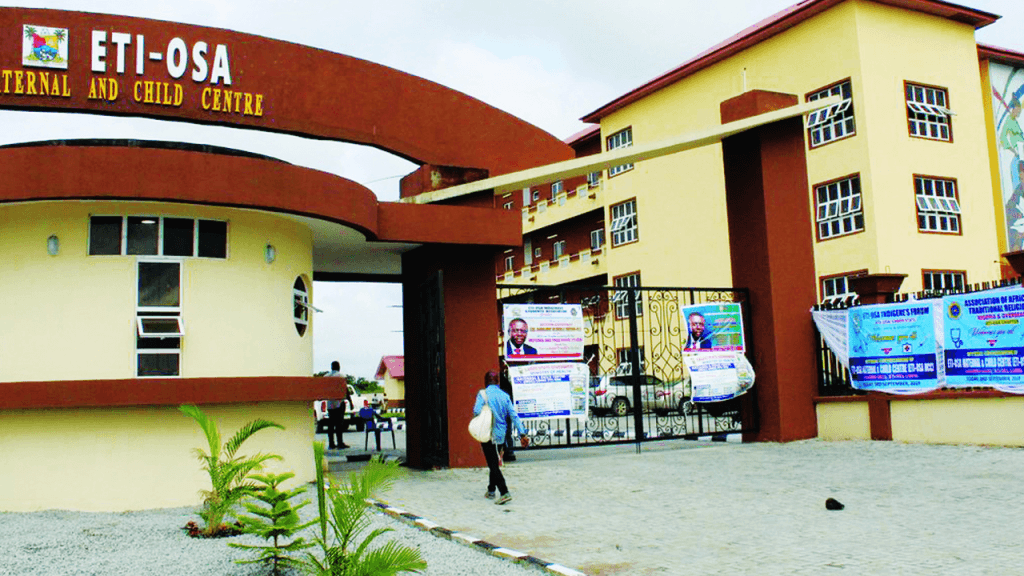
Amuwo Odofin Maternal and Child Centre is one of the area’s most important public healthcare institutions, dedicated specifically to maternal and paediatric care. For families with young children and expectant mothers, its presence within the area removes the need to travel far for specialist maternal and child health services.
Safehands Medical Centre provides general outpatient care, diagnostics, and specialist consultations in a private clinical setting. It is one of the more structured private facilities in the area and serves residents who want a reliable first call for routine and moderate medical needs without the wait times of larger public institutions.
Greenlife Hospital handles general medical services, routine treatments, and outpatient care within the Amuwo Odofin area. It is a consistently operational facility with steady patient flow and serves as a dependable everyday healthcare option for residents across the area.
AMC Hospital provides a broader range of medical services, including general practice, diagnostics, and specialist care. It adds depth to the area’s private healthcare offering and serves residents who need more comprehensive attention than a standard clinic provides.
Together, these facilities cover most routine, moderate, and maternal healthcare needs without requiring residents to leave the area. For complex or high-acuity cases — specialist surgery, advanced diagnostics, or tertiary care, the road toward Oshodi and Ikeja provides access to LASUTH and the broader Ikeja hospital cluster within 35 to 50 minutes under reasonable conditions.
Lifestyle, Food, and Retail
Amuwo Odofin is built for functional, everyday living rather than curated lifestyle experiences. What it offers is convenience and accessibility. You can run errands, buy groceries, eat, and handle daily needs without leaving the area. What it does not offer is a dense concentration of high-end lifestyle spots. For that, residents typically rely on nearby Festac or other parts of the Mainland.
Retail
The proximity to Trade Fair Complex and Alaba International Market is one of Amuwo Odofin’s most underrated practical advantages. For residents who want access to wholesale and retail pricing across electronics, appliances, clothing, and household goods, these markets are effectively on the doorstep. The variety and pricing available at Trade Fair in particular is difficult to match anywhere else in Lagos.
For everyday supermarket shopping, SPAR serves the area alongside several smaller, well-stocked supermarkets and grocery stores along the Mile 2 corridor that cover daily provisioning needs efficiently. The Festac Town retail infrastructure including Globus, Market Square, and Temple Hill, is accessible within 15 to 20 minutes and covers the more contemporary retail needs that the immediate area does not fully serve on its own.
Local markets within the area handle fresh food, proteins, and daily provisions at competitive prices. For most daily provisioning needs, residents rarely need to travel far.
Dining
The dining scene in Amuwo Odofin is one of its more pleasant surprises. The area has a solid spread of options across different meal occasions and price points, anchored by both established chains and local favourites.
Tangibles is one of the area’s better-regarded dining spots with its food quality and atmosphere, representing the kind of sit-down dining experience that signals a neighbourhood’s growing confidence in its own lifestyle infrastructure.
For fast food and casual dining, the area is well-served. Sweet Sensation covers quick meals and baked goods across different meal occasions. Burger King and Dodo Pizza provide international fast food options that have become standard expectations for a well-developed residential area. Panarottis Pizza adds a more casual sit-down pizza and pasta option for residents who want something between fast food and a full restaurant experience. Mega Chicken is a dependable spot for hearty local and fast food meals. The spread across these options means residents have genuine variety without leaving the area for most dining needs.
Utilities: Power and Water
Power supply in Amuwo is managed by Eko Electricity Distribution Company. Like most parts of Lagos, supply is inconsistent, and residents rely heavily on generators or inverter systems. Water is primarily sourced from boreholes. Public water supply is unreliable and not widely used.
Service charges are low compared to Island developments. They mainly apply to gated estates or newer compounds.
Who Amuwo Odofin Is Best For
Traders and business owners in the Trade Fair and Alaba environment. The proximity to two of Lagos’s largest markets is Amuwo Odofin’s most specific and concrete advantage. For anyone whose commercial life is anchored in this area, living here makes logistical sense that is difficult to argue against.
Port and logistics workers in the Apapa area. The route to Apapa from Amuwo Odofin is more manageable than from most other Mainland addresses, and for workers whose daily destination is the port, the commute advantage is real.
Families who want GRA-quality living at below-Island prices. The Amuwo Odofin GRA delivers the kind of spacious, low-density residential environment that is increasingly rare on the Mainland, at prices that remain below equivalent Island corridor options. For established families who have decided the Mainland is their base, the GRA section represents genuine value.
Young professionals on a tight budget who want a managed living environment. The newer estate developments in the broader axis offer serviced compound living at accessible price points. For first-time Lagos renters who want the security and infrastructure of a managed compound without the cost of more established addresses, these developments are worth considering.
What to Watch Out For
The key risks in Amuwo are not hidden, but they need to be taken seriously. Traffic along the Lagos–Badagry Expressway can significantly affect daily life. Flooding, while localised, requires careful verification at the street level. Infrastructure quality varies, and older buildings may require upgrades. Power supply remains inconsistent, and the overall experience can vary sharply by location.
Ready to Find Your Apartment in Amuwo Odofin?
Every listing on Expert Listing is checked before going live. Location is mapped precisely against flood-risk data. Listings are removed the moment they are rented or sold. No ghost listings. No wasted trips.
Browse verified apartments for rent in Amuwo Odofin on Expert Listing.
Frequently Asked Questions
Is Amuwo Odofin a good place to live in Lagos? Amuwo Odofin is a great choice for residents who value structure, affordability, and community more than prestige. It offers a more organised environment than many Mainland areas, with wider roads and a defined layout. However, it lacks the lifestyle and infrastructure advantages of Island locations. The decision ultimately depends on your work location and lifestyle preferences.
How much does it really cost to live in Amuwo Odofin beyond rent? Tenants should also consider agency and legal fees, usually around ten per cent each. Additional costs may include generator fuel, inverter systems, water maintenance, and security contributions within certain closes. While overall costs are lower than in island areas, they are still significant and should be planned for carefully.
Is flooding a serious problem in Amuwo Odofin? Flooding exists but is not uniform across the area. It is primarily caused by drainage issues rather than geographic vulnerability. Some streets experience water accumulation during heavy rain, while others remain unaffected. Proper inspection and verification at the street level are essential before renting.
How bad is traffic from Amuwo Odofin to other parts of Lagos? Traffic can be one of the biggest challenges of living in Amuwo. Distances are okay. However, traffic on the Lagos–Badagry Expressway can significantly increase travel times. Commutes to Apapa and Festac are relatively easy, but trips to Victoria Island or Ikeja can take over an hour during peak periods.
Are there good schools and hospitals in Amuwo Odofin? Yes, Amuwo has a wide range of private and public schools, as well as many clinics and healthcare centres. The area provides solid everyday options but is not a top-tier destination for premium services.
Is Amuwo Odofin close to Trade Fair? Yes. The Trade Fair Complex and Alaba International Market are both within 15 to 25 minutes of most parts of Amuwo Odofin, making it one of the most practical residential bases for traders and business owners in that corridor.