How to Find an Apartment in Ikate (Elegushi), Lagos
Expert Listing
·
·
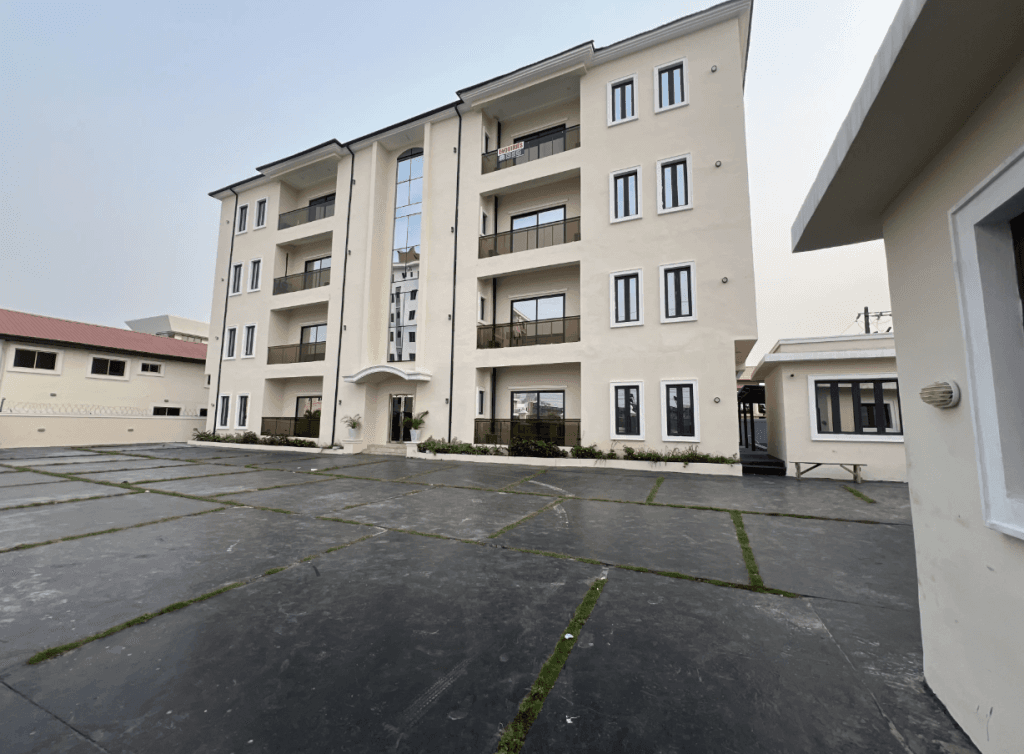
Finding an apartment in Ikate, popularly known as Ikate Elegushi, requires a level of tactical speed and scepticism that few other Lagos neighbourhoods demand.
Unlike the more established serenity of Old Ikoyi or the purely commercial bustle of Victoria Island, Ikate is the epicentre of the “young professional” rental surge, creating a market where demand almost always outstrips the supply of quality units.
You will find that the gap between a “luxury” label and actual building quality is wider here than anywhere else on the Lekki corridor. If you enter this market unprepared, you risk overpaying for a unit with systemic plumbing issues or falling prey to the area’s notorious “double-allocation” scams, where agents collect rent from multiple unsuspecting tenants for the same property.
This guide is designed to move you from a casual browser to a prepared closer by providing a research-backed roadmap of the Ikate rental landscape.
You will learn how the market actually functions in 2026, which specific estates offer the best value for your lifestyle, and how to verify a listing before any money leaves your account.
We cover the full cost of entry beyond the headline rent, the non-negotiable physical features you must inspect during a viewing, and the negotiation leverage that actually works with local landlords.
By the time you reach the final section, you will have the exact framework needed to secure a home that meets your standards without the typical Lagos rental drama.
If you want to browse verified, real-time listings while you read, start here: Verified apartments for rent in Ikate (Elegushi) on Expert Listing.

Understand the Market Before You Start Looking
The Ikate rental market in 2026 is defined by its position as the premier “buffer zone” between the high-cost commercial hubs of Victoria Island and the further residential reaches of Lekki Phase 2.
You are competing in a high-velocity market where the primary tenants are upwardly mobile professionals, tech entrepreneurs, and expatriates who value proximity to the city centre but lack the budget for Ikoyi.
Because of this specific demographic, the demand for one- and two-bedroom “serviced” apartments is relentless. You will find that a correctly priced, well-finished apartment in a gated part of Ikate rarely stays on the market for more than 72 hours.
Supply constraints in Ikate are driven by the exhaustion of available land, leading to a trend of “redevelopment” where older bungalows are razed for high-density apartment blocks.
This creates a fragmented market where a brand-new glass-fronted complex might sit directly next to a legacy property with failing infrastructure.
You must understand that corporate tenants often snap up entire floors of new developments before they are even finished, further squeezing the inventory available to individual renters.
This competition means you cannot afford to “think about it” for a week; in Ikate, hesitation is a guaranteed way to lose a good unit.
The practical implication for your search is twofold: you must have your financing ready before you start viewing, and you must be hyper-vigilant about misrepresentation.
Because the “Ikate” brand carries such weight, agents often label properties in neighbouring, less-desirable pockets as being in Ikate to justify higher rents. If you are poorly prepared, you will likely end up paying a premium for a “managed” building where the elevator never works, and the generator schedule is erratic.
Preparation in this market is not just about finding a house; it is about ensuring the premium you pay translates into the quality of life you were promised.
Set Your Budget Including All Costs
The headline rent is only part of what you will pay in Ikate. In this market, the “service charge” is often a significant second rent that many newcomers fail to account for properly.
Because almost all modern developments in Ikate rely on private power generation and water treatment, these costs are passed directly to you. In 2026, you should expect service charges to range between 30% and 50% of your annual rent, depending on the level of 24-hour power promised.
These charges typically cover security, waste management, cleaning of common areas, and the maintenance of facilities like gyms or swimming pools.
Beyond the rent and service charge, you must account for the “total package”, which includes agency and legal fees. In Ikate, agency fees are strictly 10% of the annual rent, and legal fees are another 10%.
While some landlords in other parts of Lagos might flex on these, Ikate landlords rarely do because the demand is high enough that someone else will pay the full freight.
You will also be required to pay a caution deposit, which is usually a refundable sum intended to cover potential damages to the property.
This is typically set at 10% of the rent or a fixed sum ranging from ₦250,000 to ₦500,000 for standard units.
In 2026, the standard upfront payment in Ikate remains one year of rent. While there is a growing movement toward monthly or quarterly payments in newer “co-living” spaces, these units often carry a 20% premium over the annual rate.
For a standard 2-bedroom apartment in a decent Ikate estate, your budget calculation should follow this structure:
- Annual rent: ₦6,500,000 (average for a modern 2-bedroom)
- Service charges: ₦2,500,000 (including power deposit)
- Agency fee: ₦650,000 (10% of rent)
- Legal fees: ₦650,000 (10% of rent)
- Caution deposit: ₦500,000 (refundable)
- Total first-year outlay: 1.6 times the annual rent figure
Do this calculation before you begin. It will save you from falling in love with an apartment that turns out to be outside your actual budget once all costs are accounted for.
Not sure about Ikate (Elegushi)? Read our area guide first.
Know the Zones Within Ikate (Elegushi)
Ikate contains meaningfully different residential experiences depending on where within it you are looking, and knowing your target zone before you start viewing saves time and prevents disappointment.
The area is not a monolith; it ranges from strictly gated, high-security estates to more open, “organic” neighbourhoods where commercial and residential interests collide.
Your choice of zone will dictate not just your rent, but your daily commute time and your peace of mind during the rainy season.

The Right Side (Marwa/Enyo Axis) is the most sought-after pocket of Ikate for those who work on the Island. Geographically, this is the area to your right as you drive toward Ajah, before the second roundabout. It is characterised by high-density, modern apartment blocks and a very high concentration of young professionals. This zone is mid-to-top tier in terms of pricing and suits renters who prioritise a short commute and proximity to social hubs like Spar and various lounges. However, it can be noisy and traffic-heavy during peak hours.
Chisco/Elegushi Main District offers a mix of older, more spacious compounds and newer, narrow-profile developments. This area is closer to the traditional seat of the Elegushi royal family and features more “local” character. Prices here are often slightly more accessible than the Marwa axis, making it ideal for families or renters who need more square footage for their money. The drawback here is that road infrastructure can vary wildly from one street to the next, with some areas being prone to significant flash flooding.
Blue Water and Premium Estates Zone represents the luxury tier of Ikate. These are typically gated communities with strict access control and unified facility management. You will find higher-end finishes, better-planned drainage, and more reliable “round-the-clock” power. This zone suits corporate executives and expatriates who require a “plug-and-play” living experience and are willing to pay the highest service charges in the area for the privilege of professional security and maintenance.
Ikate-Ilado/Inland Corridors are the more “emerging” parts of the neighborhood, located further away from the Lekki-Epe Expressway. This zone is where you will find the most competitive prices for brand-new builds. It suits the budget-conscious renter who has a private vehicle and doesn’t mind an extra 10-15 minutes of navigation through inner roads. The trade-off is often the lack of paved access roads, which can become a major challenge during the peak of the Lagos rainy season. Decide on your target zone before viewing – specificity saves time and prevents agents from redirecting you to less suitable options.
Decide on Your Must-Haves Before You View
Fixing your non-negotiables before viewing prevents you from making decisions under the pressure of a live viewing. I
n the heat of an Ikate apartment hunt, it is easy to be swayed by a shiny kitchen backsplash while overlooking the fact that the building has no dedicated transformer.
You must enter every property with a checklist of area-specific requirements that ensure the apartment is actually livable in the long term.
Generator backup. What matters is management quality, not just presence. In Ikate, you must ask about the daily uptime schedule and the fuel billing structure. Some buildings charge a flat monthly levy regardless of use, while others use “pay-as-you-go” meters for power consumption. A well-managed building will have a visible maintenance log for the generator and a backup for the backup. If the generator room looks neglected or is covered in oil spills, it is a sign that power reliability will be a constant headache.
Water supply. The standard in a quality Ikate building is a dedicated industrial-grade borehole coupled with a multi-stage treatment system. You must look for the “treatment plant” – not just a plastic tank. Ask how often the filters are changed and check the colour and smell of the water in the bathrooms. In this area, untreated water is notoriously “salty” or “rusty” due to the proximity to the ocean and the high iron content of the soil. Anything less than a professionally managed treatment system is not adequate as a long-term solution.
Security. The access control standard should be high-level in Ikate. You should ask about 24-hour guard coverage, the presence of CCTV in common areas, and the protocol for admitting visitors. In many Ikate estates, security is two-tiered: estate-level security and building-level security. If a building is “open-gate” in a non-gated part of Ikate, you are essentially responsible for your own safety, which is a significant risk in this market. Security quality usually correlates directly with the service charge.
Parking. Designated parking is a genuine friction point in Ikate because of the narrow plots developers use. You must confirm how many parking slots are legally assigned to your unit. Do not accept a verbal “you can park anywhere” from an agent; this leads to “parking wars” with neighbors. If you have two cars but the unit only allocates one, you will find yourself parking on the street, which exposes your vehicle to theft and the elements.
Furnishing status. Furnished apartments in Ikate command a 40% to 60% premium over unfurnished units. You must confirm exactly what is included – does “furnished” include kitchen appliances, or just the bed frames and sofas? These units suit short-term expatriate stays or frequent travelers but are rarely cost-effective for long-term residents. Ensure you check the condition of the AC units and water heaters, as these are the most common points of failure in furnished rentals.
Lease length and renewal terms. Common clauses in Ikate leases include 10% annual rent escalation provisions and strict notice requirements of three to six months. You must check for subletting restrictions, as many Ikate landlords are now explicitly banning Airbnb-style shortlets to protect the privacy of other tenants. Reading the proposed lease at the viewing stage allows you to flag deal-breakers before you have committed your caution deposit.
How to Search Without Wasting Time
The biggest time-waster in the Ikate rental market is “ghost inventory.”
This is a practice where agents keep listings for high-quality, already-rented apartments active online to lure you in, only to tell you the unit is “just gone” and redirect you to inferior, overpriced properties.
This bait-and-switch tactic is rampant in Ikate because of the high volume of search traffic the area generates.
To avoid this, you must change how you source and vet your options.
Use a platform that verifies real-time availability. Expert Listing is the right tool here because every listing is physically inspected by a representative before it goes live. In the Ikate market, where buildings look identical from the outside, the “Expert Listing” verification ensures that the photos you see match the actual unit available.
Listings are removed the moment a deposit is confirmed, meaning you won’t spend your Saturday driving to see five apartments that were rented out on Tuesday.
Be specific in your search parameters. In this market, the difference between the right building and the wrong one is often one street or one feature. Instead of a broad search, look for “2 bedroom serviced apartment Ikate right side” or “1 bedroom with 24-hour power Ikate.”
The more specific your search, the less time you waste on “close-but-wrong” viewings that lack your non-negotiables. You should also set up alerts for these specific terms so you are notified the second a matching unit hits the market.
Move quickly on serious options. The realistic timeline from viewing a good apartment to making a commitment in Ikate is less than 24 hours. If you find a unit that checks 80% of your boxes and fits your budget, you should be prepared to pay the “commitment fee” or the full rent immediately.
Correctly priced apartments in Ikate do not wait for “second opinions” from family members. If you delay, the next person in the viewing queue will almost certainly take it.
Do not rely on a single agent. Agents in the Ikate market typically have access to a portion of available stock, not all of it. Using a verified listings platform like Expert Listing alongside a few targeted agent relationships gives you broader coverage.
This multi-channel approach ensures you see the off-market deals and the high-demand new builds as soon as they become available.
What to Check During a Viewing
A viewing in this market is not a formality. It is due diligence. Use the time deliberately to look past the fresh coat of paint and the modern lighting fixtures.
Because many developers in Ikate build for “speed to market” rather than “longevity,” you must be your own inspector to avoid moving into a building that begins to fall apart within six months.
Check the building’s physical condition. Look closely at the common areas, corridors, and the car park. If the lobby is unkept or the elevator makes unusual grinding noises, it is a direct reflection of the facility management’s incompetence. In Ikate, where you are paying high service charges, the common areas should be pristine. Check the walls for “rising damp” or “salt damp” (peeling paint at the base of walls), which indicates poor foundation damp-proofing – a common and expensive issue in this coastal area.
Test the generator. Ask the facility manager to turn on the generator during your viewing if it isn’t already running. Listen for excessive knocking or heavy black smoke, which suggests poor maintenance. A well-maintained generator room should be organised, with visible service cards and secondary fuel storage. If the generator looks like it’s being “patched together” with irregular parts, you can expect frequent power outages and excuses about “spare parts” later.
Check water pressure and quality. Turn on all the taps and flush the toilets simultaneously to test the water pressure. If the water has a yellowish tint or a “metallic” smell, the treatment plant is either non-existent or failing. Ask to see the borehole and treatment tanks. A quality building in Ikate will have a multi-stage system (aerators, sand filters, and carbon filters). Red flags like brown stains in the sinks will not improve after you move in; they will only ruin your clothes and skin.
Assess flood risk. Assessing flood risk during a dry-season viewing requires looking for “watermarks” on the exterior fences and the base of the building. If the ground floor of the building is not significantly elevated above the street level, it is a high-risk unit. Ask existing residents about the road’s passability during June and July. Expert Listing provides listing-level flood-risk data, which you should cross-reference with your physical observations to ensure you aren’t stranded for two months of the year.
Review the lease terms before you leave. Requesting the proposed tenancy agreement at the viewing stage – not after verbal commitment – is a power move. It allows you to see the hidden clauses, such as “mandatory” annual increases or “non-refundable” portions of the caution deposit. Review the service charge breakdown to ensure you aren’t being double-billed for items like security. If the landlord refuses to show the lease until after you’ve paid, walk away.
Alternatively, you can request a snagging service. Let professionals help you get a quality inspection before you move in.

Common Mistakes That Cost Ikate Renters Money
Paying for the address rather than the quality. Many renters overpay for a building simply because it is in a “prime” Ikate estate, ignoring the fact that the internal plumbing is substandard or the rooms are tiny. Do not let the prestige of the neighbourhood blind you to the functional reality of the apartment.
Skipping or rushing document verification. With the high number of “agency scams” in Ikate, failing to verify the landlord’s title or the agent’s authority is a recipe for disaster. Always demand to see the root of the title or the management agreement before making any payment.
Committing before financing is arranged. In the fast-moving Ikate market, saying “I’ll pay next week” is the same as saying “I’m not interested.” If you don’t have the bulk sum ready to transfer, you will lose out on the best units and end up settling for the “leftovers” that nobody else wanted.
Ignoring service charges when comparing rents. A ₦5,000,000 apartment with a ₦2,500,000 service charge is more expensive than a ₦6,000,000 apartment with a ₦1,000,000 service charge. Always compare the “total cost of occupancy” rather than just the headline rent.
Accepting verbal assurances on flooding or repairs. Landlords and agents will often promise that “the road is being fixed” or “the flood doesn’t reach here.” If it isn’t in writing or visible to your eyes, assume it is a lie. Verbal promises are unenforceable once the money has changed hands.
Underestimating the “hidden” cost of commute. If you choose a cheaper apartment deep in Ikate-Ilado, you may spend an extra ₦100,000 a month on fuel and vehicle maintenance due to bad roads and traffic. Sometimes, paying more for a “Right Side” apartment is actually the cheaper long-term option.
Negotiating Rent in Ikate (Elegushi)
Landlords in Ikate are generally resistant to deep discounts because they know if you don’t take the apartment, someone else will within the hour.
However, this does not mean negotiation is impossible; it just means you need to offer something of value in return for a price reduction.
In 2026, the realistic negotiation range for a correctly priced apartment in Ikate is between 5% and 8%. If a landlord is willing to drop the price by 20%, you should be suspicious of the building’s quality or the listing’s legitimacy.
One point of genuine leverage is offering two years of rent upfront. While most renters prefer annual payments, landlords in Ikate often have high-interest construction loans to service and may grant a 10% discount for a multi-year cash infusion.
Another lever is your profile: if you can provide verified corporate employment documentation from a reputable firm, you represent a “low-risk” tenant. Landlords often prefer a stable, corporate-backed tenant at a slightly lower price over a “high-risk” individual offering the full asking price.
Points that rarely work in Ikate include trying to negotiate based on minor cosmetic flaws like paint colour or light fixtures.
Landlords here expect you to take the unit “as is” or move on. Similarly, comparing a premium serviced apartment to a basic compound house across the street will not get you a discount; it will only signal to the landlord that you don’t understand the market.
Speed of commitment is your best tool; offering to pay the full “total package” within the hour if they shave ₦200,000 off the rent is a tactic that frequently works.
Ready to Start Your Search?
Every listing on Expert Listing is physically inspected and document-verified before going live. Flood-risk is mapped at the individual listing level. Listings are removed the moment they are rented or sold. At Ikate (Elegushi) price points, searching verified inventory is not a convenience; it is protection.
Browse verified apartments for rent in Ikate (Elegushi) on Expert Listing.
Frequently Asked Questions
How do I find a genuine/legitimate apartment in Ikate without being scammed?
To avoid scams in Ikate, you must strictly avoid “street agents” who cannot prove their relationship with the property owner. Always insist on conducting a physical viewing and verifying the property documents through a legal professional before any transfer. Using a verified platform like Expert Listing is the most reliable way to ensure you are dealing with legitimate inventory that has already been vetted for authenticity.
What is the cheapest apartment available in Ikate?
As of 2026, the cheapest apartments in Ikate are typically found in the unpaved “inland” areas of Ilado or in older, non-serviced compounds. You might find a self-contained unit or a “mini-flat” starting around ₦1,500,000 to ₦2,500,000, but these usually lack 24-hour power and treated water. Be wary of any “luxury” 2-bedroom listing in Ikate priced below ₦4,000,000, as it is likely either a scam or located in a severely flood-prone zone.
How much do I need upfront to rent an apartment in Ikate?
You should prepare to pay approximately 1.5 to 1.7 times the annual rent as your total upfront cost. This covers the one-year rent, the 10% agency fee, the 10% legal fee, a caution deposit, and the initial service charge deposit. For a standard ₦5,000,000 apartment, your actual “out-of-pocket” move-in cost will likely be close to ₦8,000,000 when all fees and service charges are accounted for.
Is it better to rent furnished or unfurnished in Ikate?
Renting unfurnished is generally the better long-term financial decision unless you are in Lagos for a short-term contract of less than six months. Furnished apartments in Ikate carry a heavy premium and often include “utility caps” that can lead to extra costs if you use the AC frequently. If you plan to stay for a year or more, the cost of buying your own furniture is usually recovered within the first twelve months of the rent savings.
What should I look for in an apartment building in Ikate?
You must prioritise structural integrity and professional facility management over aesthetic finishes. Specifically, look for a functional water treatment plant, a well-maintained soundproof generator, and a ground-floor elevation that protects against the area’s seasonal flooding. Additionally, confirm that the building has a dedicated transformer to ensure you aren’t reliant solely on expensive diesel power.
How quickly do apartments get taken in Ikate?
In the current 2026 market, high-quality apartments in Ikate are often rented within 24 to 48 hours of being listed. Because of the area’s popularity with professionals, the competition is fierce, and “viewing queues” are common. To secure a unit, you must be ready to make a financial commitment immediately after your viewing; waiting even until the next morning often results in the apartment being taken by someone else.