Renting in Ikorodu, Lagos: What You Need to Know Before You Rent (2026)
Expert Listing
·
·
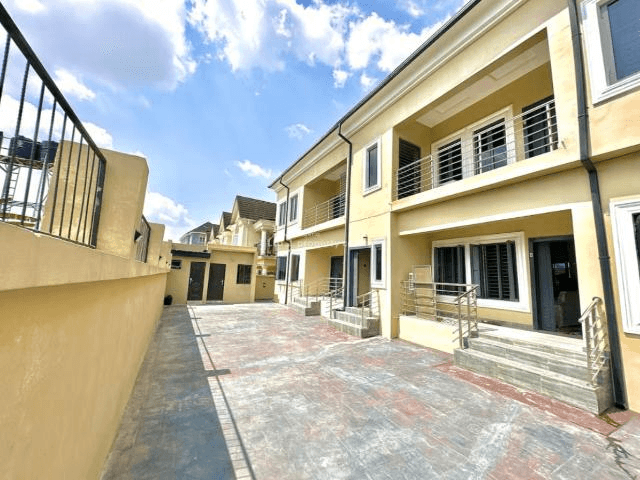
Renting in Ikorodu often feels like a high-stakes trade-off where the promise of significantly lower rent is balanced against the gruelling reality of the Lagos commute.
Unprepared renters often find themselves trapped in beautiful apartments that become psychological prisons once they realise that spending six hours daily in traffic between the Ikorodu roundabout and the Lagos mainland erodes any savings made on the lease.
However, those who enter this market with a clear strategy and a deep understanding of local infrastructure find that Ikorodu offers the best value-to-space ratio in the state, provided they choose their specific neighborhood with surgical precision.
This guide provides a comprehensive breakdown of the Ikorodu rental landscape as it stands in 2026, moving beyond surface-level observations to give you the intelligence needed for a safe move. It covers the five specific red flags that define this market, the critical questions you must ask regarding water and power infrastructure, the neighborhoods where price and accessibility actually align, and a realistic look at what a quality apartment should cost in the current economy.
If you want to start with verified, physically inspected listings, browse apartments in Ikorodu on Expert Listing.

Who Should Be Renting in Ikorodu
Renter satisfaction in Ikorodu is almost entirely dependent on where you work and how often you need to leave the area.
A significant portion of renter problems in this area comes from a mismatch between what the area offers and what the renter was expecting, particularly regarding the ease of reaching the Lagos business districts.
The renter profile that thrives here includes remote workers and digital nomads who prioritise large, modern living spaces and stable internet over proximity to a physical office.
For a freelance developer or creative professional, the ₦1,500,000 that gets a cramped studio in Surulere can secure a sprawling three-bedroom flat in a gated Ikorodu estate.
Another successful profile is the small business owner whose operations are localised within Ikorodu, such as those trading in the Sabo Market or running schools and clinics within the community.
Furthermore, civil servants working at the Alausa Secretariat in Ikeja can find Ikorodu viable if they are willing to utilise the BRT dedicated lane, which offers a more predictable, albeit long, commute compared to private vehicle travel.
Conversely, Ikorodu is a poor fit for young professionals working 9-to-5 roles in Victoria Island or Lekki Phase 1 who do not have the budget for daily ferry commutes.
The exhaustion of navigating the Majidun and Ogolonto bottlenecks daily leads to rapid burnout and neglected apartment maintenance. It is also a challenging environment for families who prioritise high-end private healthcare and international-standard leisure facilities, as these are still less concentrated here than on Lagos Island.
If you are in the first group, read on. If you are in the second group, consider whether Ikorodu’s price advantage genuinely compensates for the daily friction before committing.
The Ikorodu Rental Market: How It Actually Works
The Ikorodu rental market is a complex hybrid dominated by informal family-owned stock, though there is a growing presence of formal estate developments in areas like Ebute and Igbogbo.
Most of the available housing is managed by local “family” agents or individual landlords who may have built the property as a long-term retirement investment.
This means that documentation is often less standardised than in more corporate-led markets like Ikoyi, and the quality of the tenancy agreement can vary wildly depending on the landlord’s personal preferences.
The market structure leans heavily toward informality, which creates a unique opportunity for payment flexibility. While the standard demand in Lagos remains a one-year or two-year upfront payment, many Ikorodu landlords are more open to negotiation than their mainland counterparts.
In some of the older, family-managed buildings, it is not uncommon to find landlords who will accept six-month or even quarterly payments, especially if the tenant is a family man or a civil servant perceived as “stable.”
This flexibility is a vital lifeline for renters who cannot access large lump sums but still want decent housing.
However, this informality carries significant risks regarding maintenance and the lack of professional management. Without a formal estate manager, disputes over shared costs like security fees or borehole repairs can become personal and messy.
Renters often find that the absence of a clear service charge agreement leads to “surprise” levies throughout the year. The better end of the market consists of newer mini-estates and “serviced” blocks where a third-party agency handles everything from waste management to common-area lighting.
These properties command a premium of 20 % to 30 % over the average market rate, but they are consistently worth it for the peace of mind they provide.
Red Flag 1: The Hidden Cost of Water Salinity and Iron Content
The most pervasive physical issue in Ikorodu, particularly in the coastal areas like Ebute, Ipakodo, and parts of Igbogbo, is the high salinity and iron content of the groundwater.
Many renters sign a lease after seeing a functional tap, only to discover a week later that the water is brownish, smells of sulfur, or is so salty it ruins hair, skin, and plumbing fixtures within months. I
n many older buildings, the landlord has installed a basic borehole without any filtration system, leaving the tenant to bear the cost of buying bottled water for everything except flushing toilets.
What to look for during a viewing: You must check the internal state of the toilet cisterns and the base of the bathroom tiles. If you see deep orange or reddish-brown staining, it is a definitive sign of high iron content in the water.
Open the kitchen tap and let it run for at least two minutes; water that looks clear initially may turn cloudy or develop an odour once it has sat for a moment.
Examine the plumbing pipes under the sink for signs of premature corrosion, as salty water eats through cheap metal fittings rapidly.
What this means practically is that you will likely spend an additional ₦15,000 to ₦30,000 monthly on water treatment or purchasing clean water if the building lacks a functional industrial-grade filtration system.
Expert Listing mapping shows that areas further inland, such as Maya or Adamo, have better water quality, but the commute from those areas is significantly worse. If the water quality is poor, you must factor this “water tax” into your annual budget before agreeing to the rent.
Red Flag 2: Seasonal Access and the “Hidden” Flood Zones
Ikorodu’s topography is deceptive, and many streets that look perfectly dry in the February heat become impassable lagoons by June.
This is not just about the apartment itself flooding; it is about the “lock-in” effect, where the surrounding streets become so flooded that you cannot drive your car out or even walk to the nearest bus stop.
Areas around Agric-Owolowo, certain parts of Ishawo, and lower-lying sections of Solomade are notorious for this. Renters often find themselves effectively housebound during heavy downpours, which is a disaster for anyone with a physical commute.
What this means practically: You must investigate the “watermark” on the fences of neighbouring houses and the electricity poles. In Ikorodu, a clear line of discolouration roughly two to three feet off the ground is a warning that the street experiences significant flash flooding.
Do not take the agent’s word that “the government is coming to fix the drainage.” Look at the shops on the street; if they have built high concrete steps or “bunding” at their entrances, the street definitely floods.
The protective steps involve visiting the property immediately after a heavy rainstorm. If the street remains submerged three hours after the rain has stopped, the drainage system is failed or non-existent.
Expert Listing provides flood-risk data at the listing level, which is particularly useful in Ikorodu, where one street can be perfectly dry while the parallel street is a swamp. Never rent a ground-floor apartment in a suspected flood zone, regardless of how discounted the price seems.
Red Flag 3: The Multi-Agent Deposit Scam and Title Disputes
Because the Ikorodu market has many “family” properties, there is often confusion over who has the actual authority to lease the building. A common scam involves a family member or a “caretaker” who has keys to the property but no legal right to collect rent.
They show the apartment to twenty different people, collect deposits from all of them, and disappear. Additionally, because land titles in Ikorodu can be murky, you may find yourself caught in a “Notice to Quit” battle between feuding family members or between the landlord and the state government over building permits.
The protective steps: You must insist on seeing the original Letter of Administration or the Deed of Assignment if you are dealing with a family estate. Never pay cash to an agent in a bar or on the street; all payments should be made via traceable bank transfers to a verified account, preferably the landlord’s personal account or a registered legal firm’s client account.
If an agent tells you that “the landlord is abroad” and you should pay him instead, treat this as a massive red flag.
Expert Listing’s pre-listing verification process is designed to prevent exactly this. We verify that the person listing the property has the legal right to do so.
If you are searching independently, ask the neighbours who the real landlord is. In close-knit Ikorodu communities, the neighbours usually know the history of the house and will often warn a prospective tenant if there is a pending court case or a family dispute over the property.
Red Flag 4: The Reality of “Transformer” and “Prepaid” Politics
While Ikorodu generally has better power supply than many parts of Lagos due to its proximity to the Egbin Power Station, the local distribution infrastructure is often the weak link. Many neighbourhoods suffer from “transformer debt,” where the electricity company refuses to supply power because previous tenants or the landlord owe millions in arrears.
In other cases, the building may have a single “analogue” meter for ten flats, leading to constant infighting over how the bill is shared and who is “over-using” their air conditioner.
Questions to ask before committing: You should ask to see the last three months of electricity bills or the status of the prepaid meter. If the building uses a shared meter, ask specifically: How is the bill shared? Who collects the money? What happens if one tenant doesn’t pay? If the landlord says, “We just split it equally,” you should expect frequent power cuts when the bill inevitably goes unpaid. You should also ask if the local transformer is currently functional and if there are any “community levies” for its maintenance.
What this means practically is that an apartment without an individual prepaid meter will cost you significantly more in stress and money. A good apartment will have a dedicated meter for each unit. If you find a building where the residents have contributed to buy their own transformer, the power supply is usually more stable, but the entrance fee for a new tenant can be as high as ₦50,000. Ensure you know if you are expected to pay this “development levy” before you sign.
Red Flag 5: Security Architecture and Gated Community “Fakes”
Security in Ikorodu is a top priority for most renters, leading to a surge in properties claiming to be in “gated estates.” However, many of these are simply streets with a makeshift gate that is never actually locked or guarded.
Genuine security in Ikorodu requires a “double-layer” approach: the property itself must have high walls and professional security, and the neighbourhood must have an active Landlords’ Association (CDA) that employs a night watch or works with local security groups like the Onyabo.
What to look for during a viewing: Look at the security measures on the neighbouring houses. If every house on the street has high-quality electric fencing and massive gates, it suggests the area has a security challenge. Conversely, if people are sitting outside their houses at 8:00 PM, the area is likely safer. Check if the “estate gate” has a physical guard or if it is just a rusty bar that stays open 24 hours a day.
The protective steps involve walking the street at dusk. This is when you will see the actual security profile of the area. Ask the local shops what time they close; if everything shuts down by 7:00 PM, it is a sign that the neighbourhood is not secure after dark.
A genuinely secure apartment in Ikorodu will have a 24-hour uniformed guard and a clear system for vetting visitors. If the landlord says “everyone is their own security,” you should factor in the cost of reinforcing your own doors and windows.
What a Good Ikorodu Apartment Actually Looks Like
A good Ikorodu apartment in 2025/2026 typically sits in the better zones like Ebute, Ipakodo, or the newer parts of Ibeshe, in a building that has been actively maintained by a professional agency rather than a distant landlord.

The apartment will feature a dedicated prepaid meter, a functional borehole with an integrated industrial water treatment plant that delivers clear, odourless water to all taps, and a well-drained compound that shows no signs of water stagnation even during the peak of the rainy season.
The tenancy agreement will be a clear, typewritten document that explicitly lists the service charges for waste disposal, security, and common-area cleaning, ensuring there are no hidden levies. Internally, the flat will have modern finishing, including P.O.P ceilings and quality tiles that are not stained by previous water issues, and the windows will be fitted with high-quality mosquito netting and burglary-proofing. The building will be within a five-minute walk of a major road or a BRT terminal, reducing the “last-mile” commute stress that plagues many interior Ikorodu residents.
None of what is described is extraordinary. These are baseline expectations of a properly managed rental property.
The better buildings in this area deliver them; the worse ones do not, and the rent saving does not compensate for the daily frustration of living without these basics.
Rent Red Flags: When the Price Is Too Low Even for Ikorodu
Ikorodu has genuinely low rents relative to comparable Lagos addresses, making it a haven for those looking to save. However, there is a floor below which the asking rent signals a serious problem rather than a deal.
If a two-bedroom apartment in a decent area like Ebute is being offered at ₦500,000 per year in 2025, you must ask why. In this market, such a price usually means the building has serious structural problems, the area is prone to extreme flooding that makes it unlivable for four months of the year, or the listing is a complete scam designed to collect “commitment fees” from multiple desperate searchers.
The correct renter response to a suspiciously low price is not to move quickly before someone else takes it, but to ask specifically why the price is what it is.
Be very cautious if the agent claims it is “distress” or that the landlord “just wants a good person.” These are standard lines used to mask systemic issues with the property. The confirmed market floor for a genuinely habitable one-bedroom apartment in Ikorodu with functional power and water backup is approximately ₦800,000.
Below this figure, the risk that something significant is wrong with the property, the location, or the documentation is extremely high.
Negotiating Rent in Ikorodu
Ikorodu is one of the more negotiable markets in Lagos, primarily because the supply of newer apartments often outstrips the number of qualified tenants who can pay a lump sum.

Landlords here are often more concerned with finding a tenant who won’t “destroy the house” than they are with squeezing every last Naira out of the lease.
This creates a favourable environment for a savvy renter to lower the entry cost.
The most effective negotiation tool in Ikorodu is demonstrating your professional stability. If you are a civil servant or work for a reputable private company, bringing your employment letter or ID card to the negotiation can often trigger a discount.
Landlords value peace of mind. Another effective strategy is to offer to handle minor repairs or painting yourself in exchange for a reduction in the first year’s rent.
Furthermore, speed of commitment is a powerful lever; if you can show that you are ready to pay immediately once the price is agreed, a landlord who has had a vacant flat for two months will likely buckle on the price.
What rarely works is trying to compare the apartment to a cheaper one in a significantly worse neighbourhood; Ikorodu landlords are very aware of the hierarchy of their neighbourhoods and will not lower their price in Ebute because houses are cheaper in Imota.
The realistic discount range for a property that has been vacant for more than three months is between 10 % and 15 % of the asking price.
For recently vacated, well-maintained buildings in high demand, you should not expect more than a 5 % discount, if any. Many landlords will stand firm on the rent but may be willing to waive or reduce the “caution fee” or “agency and legal” %ages, which can save you high upfront costs even if the annual rent remains the same.
Ready to Search Verified Ikorodu Listings?
Every listing on Expert Listing is physically inspected before going live. Documentation is verified. Flood risk is mapped at the listing level. Listings are removed the moment they are rented or sold.
Browse verified apartments for rent in Ikorodu on Expert Listing.
Frequently Asked Questions
Is it safe to rent in Ikorodu, Lagos?
Ikorodu is generally safe for residents who live in established neighbourhoods and gated estates, but like any large urban area, it has pockets of concern. The security profile improved significantly after the 2017/2018 crackdowns, and today, most residents go about their business without major issues. However, it is essential to rent in areas with active Community Development Associations (CDAs) that manage local security patrols.
What is the difference between renting in Ebute versus Igbogbo within Ikorodu?
Ebute is the “premium” gateway to Ikorodu, offering the best proximity to the ferry terminal and the BRT home terminal, making it ideal for those who commute to the Island or the Mainland. Igbogbo is more residential and slightly more affordable, but it requires navigating more internal traffic to reach the exit points of the town. Ebute has more modern, serviced apartments, while Igbogbo offers more space and a quieter, more “community” feel.
What is the price of flats for rent in Ikorodu, Lagos, Nigeria?
The average price of flats for rent in Ikorodu, Lagos, Nigeria is ₦810,000 per year as of early 2026. However, prices vary significantly by apartment size, with three-bedroom flats averaging ₦1,500,000 per year. For smaller units like mini-flats, prices typically hover around ₦800,000 depending on the proximity to the main road and the quality of internal finishing.
What is the price of the cheapest flats for rent in Ikorodu, Lagos, Nigeria?
The price of the cheapest flats for rent in Ikorodu, Lagos, Nigeria can be as low as ₦120,000 per year. These units are typically single rooms in older “face-me-face-you” buildings or properties in very remote areas with poor infrastructure. For a self-contained apartment that is genuinely habitable with basic water and power facilities, you should expect to pay no less than ₦350,000 to ₦450,000 per year.
What is the price of 3-bedroom flats for rent in Ikorodu, Lagos, Nigeria?
The average price of 3-bedroom flats for rent in Ikorodu, Lagos, Nigeria is ₦1,500,000 per year in 2026. The most expensive 3-bedroom flats, which are often located in high-end gated estates like Valley View or Alogba, can reach up to ₦3,000,000 per year. The cheapest 3-bedroom options in the area start at approximately ₦600,000, but these often come with significant trade-offs in terms of road access and security.
What is the price of the most expensive 3-bedroom flats for rent in Ikorodu, Lagos, Nigeria?
The price of the most expensive 3-bedroom flats for rent in Ikorodu, Lagos, Nigeria is ₦3,000,000 per year. These units are usually newly built, fully serviced, and located within estates that provide consistent security, paved roads, and dedicated transformers. Renting at this price point ensures you are in the top tier of the Ikorodu market, where maintenance standards mirror those found in prime mainland areas like Surulere or Yaba.