How to Find an Apartment in Maryland, Lagos
Expert Listing
·
·
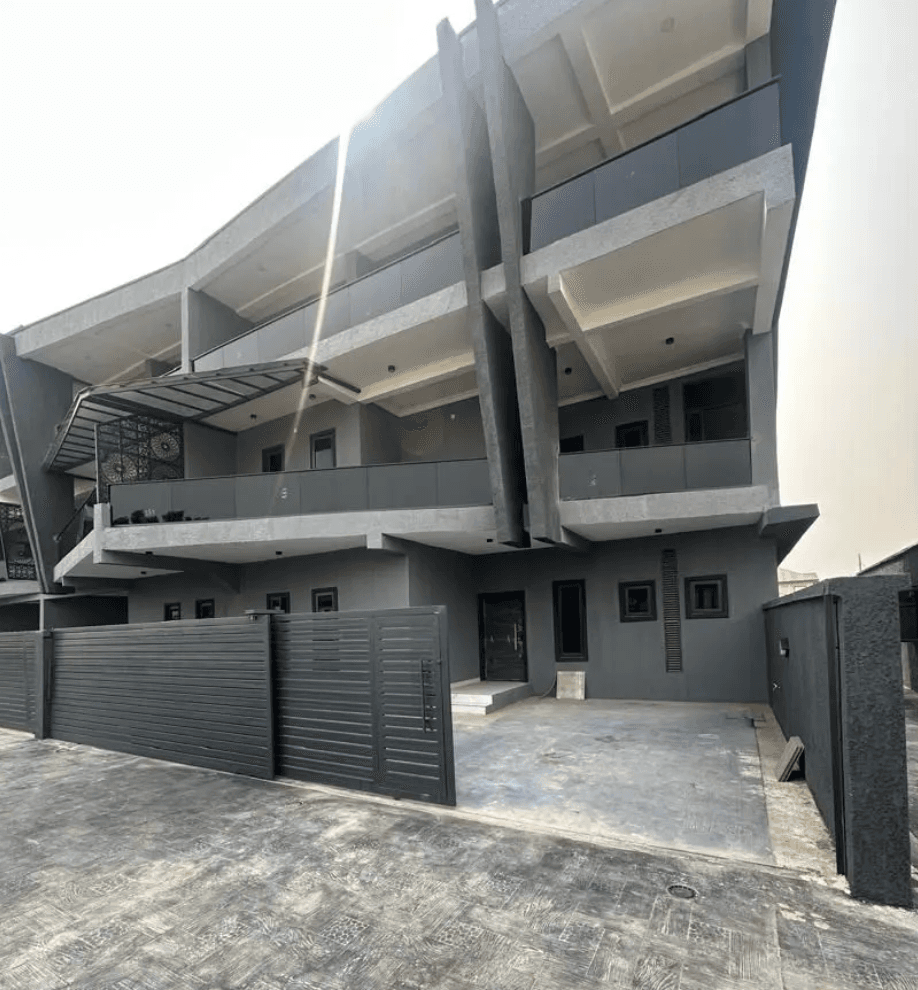
Finding an apartment in Maryland is distinct from the sprawling chaos of Lekki or the purely residential quiet of Magodo.
You are looking at a hyper-connected transit hub where the rental market moves at an exhausting pace because it serves as the literal bridge between the Mainland and the Island.
The challenge here is not just finding a vacancy; it is identifying quality amidst a sea of ageing colonial-era structures and hastily built modern infills.
In this market, the price-quality gap is wide, and because demand is fueled by professionals who value the sub-15-minute commute to Ikeja or the Third Mainland Bridge, a “good” listing rarely stays active for more than 48 hours.
If you enter this market without a clear grasp of specific street-level dynamics, you will likely settle for an overpriced unit with hidden structural or plumbing issues just to end up somewhere central.
This guide is designed to be your tactical manual for navigating Maryland’s unique real estate landscape in 2026.
You will learn exactly how the local market functions, which zones offer the best value for your specific lifestyle, and how to spot the common traps set by “briefcase agents” who frequent this corridor.
We cover the full financial reality of renting here, the non-negotiable features you must demand in a Maryland build, and a step-by-step due diligence process to ensure your deposit secures a home rather than a headache.
By the time you finish reading, you will be positioned to move with the speed and authority required to beat out other competing renters.
If you want to browse verified, real-time listings while you read, start here: Verified apartments for rent in Maryland on Expert Listing.

Understand the Market Before You Start Looking
The Maryland rental market in 2026 sits firmly in the upper-middle-tier of the Lagos Mainland hierarchy. It functions as a high-velocity “commuter’s prize,” where demand is consistently high regardless of broader economic fluctuations.
You are competing against a diverse profile of renters, ranging from mid-level corporate professionals working in Ikeja GRA and Allen Avenue to entrepreneurs who need the strategic proximity to both the Muritala Muhammed International Airport and the Ikorodu Road arterial.
This constant pressure means that landlords in Maryland rarely feel the need to offer concessions, and the supply of modern, “ready-to-move-in” apartments is perennially constrained by the lack of available new land.
The supply-demand dynamic here is defined by “regeneration.” Because Maryland is an established neighbourhood, most of what you see is either older family homes being converted into multi-unit apartments or small-scale developers squeezing mini-estates into brownfield sites.
This creates a market where “new” is rare and carries a heavy premium. Apartments in gated enclaves like Shonibare or Mende’s premium pockets move the fastest, often being let out before renovations are even completed.
If you are looking for a 1-bedroom or 2-bedroom unit, expect the most aggressive competition, as these are the primary targets for young professionals seeking an alternative to the higher prices of Ikeja GRA.
Preparation is your only real leverage in this market. A poorly prepared renter, someone who is still “just looking” or hasn’t liquidated their move-in fund, will inevitably lose out on the top-tier units. In Maryland, the specific risk of being unprepared is falling into the “renovated trap.”
This is where an agent shows you an apartment that looks fresh due to a new coat of paint and cheap tiling, but hides systemic issues with dampness or faulty 1980s-era wiring.
When you have to decide in hours, you lose the ability to look deep into the building’s bones. Preparation allows you to vet the building’s history before the pressure of the “other interested tenant” (who may or may not exist) forces your hand.
Set Your Budget Including All Costs
The headline rent is only part of what you will pay in Maryland. In 2026, the complexity of utility management and the rise in professionalised facility management mean that your base rent is merely the entry fee.
You must factor in a range of secondary costs that can easily add 35% to 50% to your total first-year outlay.
Landlords in Maryland have become increasingly rigorous about service charges, especially in the newer mini-estates, to insulate themselves from the rising costs of diesel and public utility maintenance.
Service charges and facility levies in Maryland typically range from 20% to 30% of the annual rent. In a serviced apartment, this covers 24-hour security, waste disposal through private contractors, cleaning of common areas, and, most critically, the “power pot.”
The power pot is often a separate billing structure where you pay a flat monthly levy for maintenance and a metered rate for actual generator consumption.
Agency fees remain standardised at 10%, while legal fees are generally another 10%. Caution deposits are non-negotiable here and usually equate to a one-time payment of ₦250,000 to ₦500,000, depending on the apartment size and the quality of fittings.
While there is a growing conversation around monthly rentals in Lagos, Maryland remains a traditional “one-year upfront” market, with some landlords still pushing for two years on newly renovated properties.
To give you a clear picture of the 2026 financial requirements for a standard 2-bedroom apartment in a mid-range Maryland zone, follow this budget calculation:
- Annual rent: ₦3,500,000
- Service charges: ₦700,000 (roughly 20% for security, water, and basic maintenance)
- Agency fee: ₦350,000 (10% of annual rent)
- Legal fees: ₦350,000 (10% of annual rent)
- Caution deposit: ₦300,000 (Refundable, subject to terms)
- Total first-year outlay: 5,200,000 (Approximately 1.5 times the headline rent)
Do this calculation before you begin. It will save you from falling in love with an apartment that turns out to be outside your actual budget once all costs are accounted for.
Not sure about Maryland? Read our area guide first.
Know the Zones Within Maryland
Maryland contains meaningfully different residential experiences depending on where within it you are looking, and knowing your target zone before you start viewing saves time and prevents disappointment.
The area is not a monolith; the lifestyle in the gated serenity of the western side is worlds apart from the commercial bustle near the Maryland Independence Tunnel.

Shonibare Estate is the undisputed crown jewel of Maryland, located on the quiet western flank. It is characterised by wide, tree-lined streets, high-level security, and a purely residential atmosphere that feels more like Ikeja GRA than the rest of mainland Lagos.
This is the top-tier price zone, where you will find luxury 3-bedroom and 4-bedroom apartments catering to expatriates and high-net-worth individuals. The primary advantage here is the prestige and the absolute peace, but the drawback is the extreme scarcity of smaller 1-bedroom units and a price point that significantly leads the rest of the market.
Mende is the most diverse and high-density zone within Maryland, stretching from the foot of the Oregun bridge back toward the Maryland mall. It offers a mix of older tenement-style buildings and brand-new “luxury” blocks of flats. Mende is generally considered mid-range, though “Upper Mende” (closer to the main road) commands higher prices than “Lower Mende” (closer to the canal).
It suits young professionals and small families who want the most “bang for their buck” in terms of modern interior fittings, but you must be wary of street-level congestion and potential drainage issues in the lower-lying parts of this zone.
Maryland Estate (Cane Village area) provides a more established, suburban feel with larger compounds and older, more spacious building footprints. This area is situated near the Maryland/Ikeja border and is characterised by its mixed-use nature, where quiet residential streets sit just a block away from corporate offices. The price position is mid-to-high, reflecting the size of the apartments, which are often much larger than the cramped modern builds found in Mende.
This zone suits those who prioritise internal square footage and have their own reliable power solutions, as serviced options are fewer here than in the newer developments.
Onigbongbo is the most accessible zone, located closer to the Ikorodu Road axis and the Maryland bus stop. It is a busy, dense, and largely commercial-residential mix. You will find the most affordable options here, particularly in older buildings.
It suits the “hustle-first” renter who needs immediate access to public transport and doesn’t mind the noise and high foot traffic. The advantage is the price and connectivity, while the drawback is the lack of dedicated parking in many buildings and the general wear and tear of a high-density environment.
Decide on your target zone before you begin viewing.
Specificity saves time and prevents agents from redirecting you to less suitable options that happen to be easier for them to close.
Decide on Your Must-Haves Before You View
Fixing your non-negotiables before viewing prevents you from making decisions under the pressure of a live viewing.
In the fast-moving Maryland market, it is easy to be swayed by a shiny kitchen cabinet and overlook a fundamental flaw in the building’s utility structure.

Generator backup. In Maryland, the presence of a generator is not enough; what matters is management quality and the actual availability of “common” power. You must ask about the daily uptime schedule-standard professional builds in 2026 should offer at least 12 to 15 hours of backup, including all-night cooling. Inquire about the fuel billing structure: is it a flat monthly levy or metered by consumption? A well-managed building will have a visible maintenance log and a clean, ventilated generator house, whereas a “patched together” operation will often have leaking oil drums and a history of frequent “breakdowns” that leave tenants in the dark despite paying fees.
Water supply. The standard for a quality building in Maryland is a deep industrial borehole paired with a multi-stage treatment system. Maryland’s proximity to some lower-lying areas means that shallow wells are prone to iron contamination or saltiness. During your viewing, run the taps in the kitchen and bathroom simultaneously to check pressure. If the water has a brownish tint or a distinct metallic smell, the treatment system is either nonexistent or failing. A simple “tank and pump” setup is not an adequate long-term solution for a professional renter in 2026.
Security. The access control standard in Maryland should involve 24-hour uniformed coverage at the main gate and, ideally, CCTV in common areas. In gated estates like Shonibare, this is a given, but in standalone buildings in Mende or Onigbongbo, you must ask who provides the security. Is it a registered firm or an informal “gatekeeper” arrangement? Ask about the protocol for visitors and whether there is a panic-button system or a direct line to the local estate security patrol. In this market, security quality is the first thing that deteriorates in poorly managed buildings.
Parking. Designated parking is a significant friction point in Maryland due to the narrow streets and small plot sizes. Confirm that your apartment comes with at least two dedicated slots that are not “blocked in” by other tenants. If the agent tells you that “tenants work it out among themselves,” expect daily conflict and potential damage to your vehicle. In high-density zones like Mende, a building without a 1:2 parking-to-unit ratio is a major red flag that will affect your daily quality of life.
Furnishing status. Furnished apartments in Maryland command a premium of 40% to 60% over unfurnished units. If you are looking at a furnished option, confirm exactly what stays: does it include the inverter system, the appliances, and the window treatments? Furnished apartments suit short-term corporate stays or those transitioning into Lagos, but they rarely make financial sense for a long-term renter who can amortise the cost of their own furniture over three or more years.
Lease length and renewal terms. Review the proposed lease at the viewing stage. Common clauses in Maryland include 10% annual escalation provisions and strict 3-month or 6-month notice requirements. Ensure there are no “hidden” subletting restrictions that prevent you from hosting a roommate or “modification” clauses that stop you from installing your own AC units or inverter systems. Reading the lease early ensures you don’t waste time on a landlord whose terms are too predatory for your comfort.
How to Search Without Wasting Time
The biggest time-waster in the Maryland rental market is the prevalence of “ghost inventory.”
This is a practice where agents post photos of a stunning, fairly priced apartment that was actually rented months ago, simply to capture your contact information and redirect you to lower-quality, harder-to-fill units.
This “bait and switch” can consume weeks of your time and lead to significant frustration as you view apartments that look nothing like the listings you initially called about.
Use a platform that verifies real-time availability. This is why Expert Listing is the right tool for the Maryland corridor. Unlike general classified sites, listings on Expert Listing are physically inspected by a field team before they go live. When an apartment in Shonibare or Mende is rented, it is removed from the platform immediately.
This ensures that the inventory you see reflects what is actually available for you to move into today. By using a verified platform, you bypass the layer of “briefcase agents” and deal directly with inventory that has a documented paper trail.
Be specific in your search parameters. In the Maryland market, the difference between the right building and the wrong one is often just one street. If you know you need to be near the Maryland Mall for easy commuting, search specifically for “Mende” or “Onigbongbo” within the ₦2M-₦4M range.
Do not just search for “Maryland apartments,” as you will be buried in irrelevant results. Use filters for specific must-haves like “Serviced,” “Gated Estate,” or “Inverter Ready.” The more specific your search, the less time you waste on “close-but-wrong” viewings that don’t meet your core requirements.
Move quickly on serious options. The realistic timeline from viewing to commitment in Maryland is 24 to 48 hours. If you find a correctly priced, well-maintained apartment, three other people will likely view it the same day.
Have your documentation (ID, proof of employment, and references) ready in a digital folder. If you delay your decision by more than two days to “think about it,” you should expect the agent to call you back, saying the apartment has been taken. Speed is a form of currency in this market.
Agents in the Maryland market typically have access to a portion of available stock, not all of it.
Using a verified listings platform like Expert Listing alongside agent relationships gives you broader coverage and ensures you are seeing the full spectrum of what is actually on the market.
What to Check During a Viewing
A viewing in this market is not a formality. It is due diligence. Use the time deliberately to look past the superficial “face-lift” that many Maryland landlords apply to older buildings.
You are looking for signs of systemic neglect that will cost you money and comfort six months after you move in.
Check the building’s physical condition. Look beyond the apartment’s front door. Inspect the common areas, the stairwell, and the car park. If the corridors are dimly lit, the walls are peeling, or the elevator (if present) feels jerky and unmaintained, the landlord is likely cutting corners on the service charge you will be paying. In Maryland, where many buildings are decades old, structural cracks in the exterior or “weeping” walls in the lobby are signs of poor maintenance that paint cannot permanently fix.
Test the generator. Ask the facility manager to turn on the generator during your viewing. A well-maintained generator should start smoothly without excessive black smoke and should not vibrate the entire building. Listen for “hunting” sounds (the engine revving up and down), which indicate a fuel system or alternator issue. Ask to see the generator room; it should be clean and organised. A room filled with oily rags and improvised wiring tells you that power reliability will be a constant struggle.
Check water pressure and quality. Turn on every tap in the apartment simultaneously. If the pressure drops to a trickle, the building’s pumping system is inadequate for full occupancy. Check the toilet flush-does it refill quickly and quietly? Look at the tiles around the shower head; white crusty deposits indicate hard, untreated water that will ruin your skin and your plumbing fixtures. If the water smells like rotten eggs (sulfur), the borehole is too shallow, or the treatment plant is non-functional.
Assess flood risk. To assess flood risk at a specific building during a dry-season viewing, look at the “tide marks” on the perimeter walls or the base of the building. If you see a distinct line of discolouration or peeling paint about 6 inches off the ground, that building has stood in water. Ask existing residents or neighbours on the street how the road behaves during a July downpour. Note the building’s ground-floor level; in Maryland, the best buildings are constructed on a “plinth” or raised foundation at least 3 feet above the street level. You can also reference Expert Listing’s listing-level flood-risk data for a documented history of the specific street.
Review the lease terms before you leave. Do not wait until you have paid a commitment fee to see the tenancy agreement. Request a draft of the proposed lease at the viewing stage. Specifically, review the service charge breakdown to ensure it isn’t an “open-ended” cost that the landlord can increase at will. Check the renewal terms-some Maryland landlords include “legal fees” on every annual renewal, which is a predatory practice you should negotiate out of the contract immediately.
Alternatively, you can request a snagging service. Let professionals help you get a quality inspection before you move in.
Common Mistakes That Cost Maryland Renters Money
Paying for the address rather than the actual apartment quality. Many renters overpay for “Maryland” because they want the central location, accepting a dilapidated apartment for the same price they could get a modern build in nearby Ilupeju or Gbagada. Do not let the prestige of the “Maryland” tag blind you to the fact that you are paying for the interior living experience, not just the zip code.
Skipping or rushing document verification. In the haste to secure a “hot” listing, renters often pay before verifying the landlord’s title or the agent’s authority to let the property. In Maryland, there have been documented cases of “family house” disputes where one sibling lets an apartment without the consent of others, leading to the renter being evicted by a court order. Always demand a copy of the land title and a valid letter of authority.
Committing before financing is arranged. Do not start viewing in Maryland if your total move-in fund is not liquid. If you find the right place and then spend three days “moving money around” or waiting for a loan, the apartment will be gone. Landlords in this high-demand zone prioritise the first person who can show a confirmed transfer receipt, not the person who “promises” to pay on Monday.
Ignoring service charges when comparing headline rents. A ₦2.5M apartment with a ₦1M service charge is more expensive than a ₦3M apartment with a ₦300k service charge. Many Maryland renters make the mistake of sorting by the lowest base rent, only to realise the “total package” is unsustainable once the monthly power and security bills start arriving. Always compare the “total cost of occupancy.”
Accepting verbal assurances on flooding or building conditions. If an agent tells you “the road never floods” or “the roof was just fixed,” but you see water stains on the ceiling or silt in the gutter, believe your eyes over their words. In the Maryland market, verbal promises have zero legal weight once the lease is signed. If a repair is needed, make the completion of that repair a condition of payment, documented in writing.
Underestimating the “Maryland Traffic” impact on your car. If you rent an apartment with a poorly graded entrance or one located on a street with deep craters, the “central location” savings will be eaten up by monthly suspension and tyre repairs. Maryland has some beautifully paved estates and some truly horrific side streets; choosing the latter for a ₦200,000 rent saving is a classic false economy.
Negotiating Rent in Maryland
Landlords in Maryland are generally less inclined to negotiate than those in emerging markets like Ibeju-Lekki because they know another tenant is usually waiting right behind you.
However, meaningful negotiation is still possible if you approach it as a business proposition rather than a plea for a discount.
In a correctly priced building, you should expect to negotiate no more than 5% to 10% off the asking price; anything more suggests the apartment was significantly overpriced to begin with.
Points of genuine leverage in this area include offering two years of rent upfront, which remains a powerful “closer” for many Maryland landlords looking to fund a new project. Additionally, presenting a verified, high-income employment letter and a clean rental history from a reputable estate can unlock a discount, as Maryland landlords are increasingly wary of “bad tenants” who default on service charges. If you can prove you are a low-risk, high-liquidity professional, you have actual value to offer the landlord. Speed of commitment also has real value, offering to pay the full amount within 4 hours of receiving the draft lease can often shave a few hundred thousand Naira off the total.
Points that rarely work include comparing the apartment to lower-quality buildings in neighbouring Onigbongbo or Mende to justify a lower price in Shonibare. Landlords in Maryland know exactly which tier their building occupies and will not be moved by comparisons to inferior stock. Similarly, negotiating after you have already signalled extreme interest or “falling in love” with the place reveals your position. Asking for a discount without offering anything in return, such as a longer lease or a prompt payment-is almost always ignored in this competitive environment.
Every listing on Expert Listing is physically inspected and document-verified before going live.
Flood risk is mapped at the individual listing level. Listings are removed the moment they are rented or sold. At Maryland price points, searching verified inventory is not a convenience; it is protection.
Browse verified apartments for rent in Maryland on Expert Listing.
Frequently Asked Questions
What is the average price of flats for rent in Maryland, Lagos? The average price for a flat in Maryland currently sits around ₦7,000,000 per annum, though this is heavily skewed by premium serviced apartments. If you are looking in mid-range zones like Mende, you can find standard 3-bedroom units for roughly ₦5,000,000. In more exclusive enclaves like Shonibare Estate, prices frequently exceed ₦15,000,000 for top-tier residential blocks.
What is the price of the cheapest flats for rent in Maryland, Lagos? The cheapest apartments in Maryland are typically single-room self-contained units or older mini-flats, which start as low as ₦600,000 to ₦1,500,000 per year. These units are usually located in the higher-density areas of Onigbongbo or the peripheral streets of Mende. While affordable, these options often lack dedicated parking and modern facility management.
What is the price of the most expensive flats for rent in Maryland, Lagos? The most expensive rental apartments in Maryland can reach as high as ₦48,000,000 per annum for luxury penthouses and fully furnished blocks. These premium listings are almost exclusively located in Shonibare Estate or high-end developments along Mobolaji Bank Anthony Way. At these price points, you expect 24-hour uninterrupted power, industrial-grade water treatment, and elite-level security.
How many flats for rent in Maryland, Lagos are available? There are currently over 100 verified flats available for rent across Maryland’s various sub-zones, including Mende, Anthony Village, and Shonibare Estate. Availability fluctuates rapidly due to high demand from corporate professionals and those working in nearby Ikeja. Using a real-time platform is essential, as the most desirable units are often off the market within a few days of being listed.
How much do I need upfront to rent an apartment in Maryland? To rent a standard apartment in Maryland, you generally need an upfront payment covering one year of rent plus approximately 30% to 40% in additional fees. This total covers the agency fee (10%), legal fee (10%), and a refundable caution deposit. For a ₦3,000,000 apartment, you should have at least ₦4,500,000 ready to cover all initial move-in costs and the first year’s service charge deposit.
Is it better to rent furnished or unfurnished in Maryland? Renting unfurnished is the better financial choice for long-term stays, as furnished apartments in Maryland carry a significant premium, often starting at ₦7,000,000 for a 1-bedroom unit. Furnished options are specifically tailored for short-let guests or expatriates on brief assignments who require immediate “plug-and-play” living. If you plan to stay for more than a year, the cost of furnishing your own space is far more economical than paying the high annual markup for the landlord’s furniture.