Renting in Mushin, Lagos: What You Need to Know Before You Rent (2026)
Expert Listing
·
·
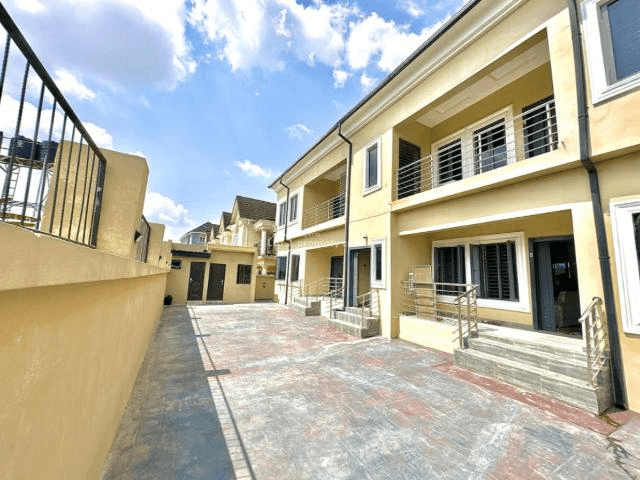
Entering the Mushin rental market without a clear strategy is a recipe for immediate financial regret and long-term domestic frustration.
Renters who rush into deals here often find themselves trapped in buildings with structural compromises or entangled with “family head” landlords who lack the liquidity to maintain basic services like pumping water.
However, for the prepared renter, Mushin offers a strategic logistical advantage that few other Lagos neighbourhoods can match at this price point, providing a central hub that keeps transit costs low and market access high.
This guide provides the deep, protective intelligence required to navigate Mushin’s unique rental landscape in 2026. It addresses the specific red flags that characterise the area’s ageing housing stock, the questions you must ask to avoid inheriting a predecessor’s electricity debt, the parts of the market that consistently fail to deliver on promises of “renovated” interiors, and the exact features that distinguish a truly habitable apartment from a polished but failing structure.

If you want to start with verified, inspected listings, browse apartments in Mushin on Expert Listing.
Who Should Be Renting in Mushin
A significant portion of renter problems in Mushin comes from a mismatch between what the area offers and what the renter was expecting. This is a high-density, commercially driven environment that prioritises movement and trade over residential serenity.
The area works exceptionally well for small-scale traders and entrepreneurs who source goods from the Ojuwoye or Mushin Olosha markets and need to eliminate the cost of long-distance haulage.
It is also an ideal base for mid-level artisans and technicians who service clients in both Ikeja and Surulere, as the central location allows them to reach either hub within twenty minutes during off-peak hours. Young professionals working in the medical sector at LUTH or surrounding health facilities in Idi-Araba find Mushin to be the most affordable way to live within a short commute of their workplace.
Additionally, budget-conscious individuals who work on Lagos Island but cannot afford the rents in Yaba or Ebute Metta use Mushin as a strategic transit point to catch the BRT or train services.
Conversely, Mushin is a poor fit for families with young children who require quiet, gated environments or immediate access to high-end private schools, as the area is dominated by street noise and heavy commercial traffic. It also fails to meet the expectations of remote workers who depend on a serene atmosphere for video calls, as the high density of small-scale manufacturing and constant street activity creates a permanent sound floor.
Those who value privacy and “estate-style” living will find the communal nature of most Mushin compounds intrusive and stressful.
If you are in the first group, read on. If you are in the second group, consider whether Mushin’s price advantage genuinely compensates for the daily friction before committing.
The Mushin Rental Market: How It Actually Works
The Mushin rental market is heavily dominated by informal, family-owned stock, often referred to as “family houses” that have been converted or extended into multi-tenant apartments.
Formal estate management is rare and usually restricted to the very fringes of the area near Ilupeju or newly developed “mini-flats” targeted at young professionals.
This means the majority of your interactions will be with family representatives or local street-level agents who handle multiple properties within a specific radius.
This informality creates a market where documentation is often inconsistent. You may encounter “Attorney-in-Fact” agreements rather than standard deeds, and it is vital to verify who actually has the right to collect rent. The upside of this informal structure is significant payment flexibility.
While the Lagos standard is a year’s rent upfront, many landlords in Mushin are open to six-monthly payments or even quarterly arrangements for existing tenants who have proven their reliability. This makes Mushin one of the most accessible markets for those who cannot easily access the large lump sums required in more formal neighbourhoods like Gbagada.
However, the risk of informality is high. Without standardised management, disputes over shared costs like security, waste management (LAWMA), and borehole electricity are common and often lead to friction between neighbours. The better end of the market consists of “purpose-built” modern apartments that are gated and have dedicated facility managers. These properties command a premium of 20% to 30% over the average stock, but this cost is usually justified by the presence of a transparent billing system for utilities and a more rigorous tenant screening process.
Red Flag 1: The Inherited Utility Debt Trap
The most frequent financial shock for new renters in Mushin is discovering massive, unpaid electricity bills tied to the apartment’s meter. Because many buildings use old “post-paid” meters shared across multiple units, a departing tenant can leave behind hundreds of thousands of Naira in debt that the Eko Electricity Distribution Company (EKEDC) will expect the new occupant to settle. In an informal market, landlords often promise to “sort it out” but rarely follow through once the rent is paid.
Questions to ask before committing: You must demand to see the last three months of utility bills, specifically the “Statement of Account” from the electricity provider. Do not accept a verbal assurance that the previous tenant cleared their balance.
Ask the neighbours in the same compound if the building is currently on a “load-shedding” arrangement due to debt. You should also ask specifically if the apartment has its own prepaid meter or if you will be sharing a bill with five other families, as the latter is a guaranteed source of future conflict.
Red Flag 2: Flash Flooding and Clogged Drainage Arteries
Mushin’s high density and ageing infrastructure mean that even moderate rainfall can lead to significant street flooding. While the area is not technically a “wetland” in the way parts of Lekki are, the sheer volume of uncollected waste in the gutters often causes water to back up into ground-floor apartments. Streets like Agege Motor Road and the various arteries around Olosha are notorious for this. A ground-floor unit that looks perfect in the dry season might become a swamp in June.
What to look for during a viewing: Look closely at the base of the exterior walls for a “waterline” – a distinct mark or discolouration about six inches to a foot from the ground. If you see peeling paint or green algae growth at the bottom of the walls, the building experiences periodic flooding. Pay attention to the height of the “soakaway” and the drainage channels in front of the house. If the house is lower than the road level, the risk is extreme. Expert Listing’s flood-risk data shows that certain pockets of Mushin are significantly more vulnerable than others based on elevation and drainage proximity.
Red Flag 3: The “Face-Me-I-Face-You” Conversion Risk
Many landlords in Mushin are currently partitioning older, large bungalows into “self-contained” or “mini-flat” units to maximise rent. While these look modern in photos, the structural integrity and plumbing are often compromised.
You might find a beautiful tiled room where the toilet doesn’t flush properly because the original pipes weren’t designed for ten separate bathrooms.
These “conversions” often suffer from poor ventilation and extreme heat because the new walls block the original airflow of the building.
What to look for during a viewing: Check the thickness of the internal walls by knocking on them; if they sound hollow or thin, they are likely partitions that offer zero soundproofing. Turn on the taps in the kitchen and bathroom simultaneously to check the water pressure. If the water flow drops significantly, the plumbing is inadequate for the number of units.
Open every window to ensure they actually lead to the outside and not just into a narrow, dark corridor created by the new construction.
Red Flag 4: Structural Neglect and “Paint-Over” Renovations
In the Mushin rental market, it is common for landlords to apply a fresh coat of bright paint to a building that has serious structural issues like leaking roofs or crumbling plaster. Because many of these properties are decades old, the cost of genuine maintenance is high, so owners opt for cosmetic fixes to lure tenants. Within three months of moving in, you may find that the ceiling is sagging or that moisture is seeping through the walls, ruining your furniture and electronics.
The protective steps: Never view an apartment only at night or in dim lighting. Use your phone’s flashlight to inspect the corners of the ceiling for damp patches that have been painted over. If the paint feels “tacky” or smells very fresh in only one specific corner, it is likely hiding a leak.
Press your finger against any wooden door frames or kitchen cabinets; if the wood feels soft, there is a termite or rot problem that a coat of varnish cannot fix. Verify with Expert Listing if the building has been flagged for structural concerns in previous inspections.
Red Flag 5: The “Omo Onile” and Multi-Agent Fee Scam
Due to the informal nature of property ownership in Mushin, multiple “agents” or even different members of the same family may claim to have the right to lease the same apartment. Renters are often pressured to pay a “booking fee” or “commitment fee” to a street agent, only to find out later that the actual landlord has already rented the unit to someone else.
In some cases, three different people may collect “Caution Fees” and “Legal Fees” for the same room before disappearing.
The protective steps: Never pay any money into a personal bank account that does not match the name on the tenancy agreement. Demand to meet the landlord or the recognised “Family Head” at the property itself before any transaction occurs.
Validating the agent’s credentials is non-negotiable; ask for their office address and do not conduct business solely on the street or in a bukka. Using Expert Listing’s pre-listing verification is the only structural protection against this risk, as we confirm the authority of the person listing the property before it ever appears on our platform.
What a Good Mushin Apartment Actually Looks Like
It is easy to read these red flags and conclude that Mushin is not worth considering, but that would be a mistake. The better end of the Mushin market offers exceptional value for money and a level of connectivity that is hard to find elsewhere in Lagos.

A good Mushin apartment in 2025/2026 typically sits in the more residential pockets toward the borders of Itire or Ilupeju, in a building that has been actively maintained by a resident landlord or a dedicated caretaker. A high-quality unit will have a dedicated borehole with a functional pumping schedule, an individual prepaid electricity meter that is clear of debt, and a gated compound with a professional security presence at night.
The management will have a clear, written breakdown of service charges, including LAWMA and security, rather than an ad-hoc “contribution” system.
The interior will feature proper aluminium window frames for sound insulation against street noise and a ceiling that shows no signs of previous water damage. None of these features is extraordinary; they are the baseline expectations of a properly managed rental property.
The better buildings in Mushin deliver them consistently, while the worse ones do not, and the small rent saving in a neglected building does not compensate for the daily stress of failed infrastructure.
Rent Red Flags: When the Price Is Too Low Even for Mushin
Mushin has genuinely lower rents relative to comparable Lagos addresses like Yaba or Surulere, but there is a floor below which an asking rent signals a problem rather than a deal. If a standard 1-bedroom (mini-flat) apartment is being offered at ₦400,000 per year in Mushin in 2025, you must ask why.
In this market, such a price usually means the building has serious structural problems, the area is prone to severe flooding that makes the house inaccessible for months, or the listing is not genuine and is designed to collect deposits from multiple victims.
It could also mean there is a deep-seated family dispute over the property that the incoming tenant will inherit, leading to harassment or even illegal eviction. The correct renter response to a suspiciously low price is not to move quickly before someone else takes it, but to ask specifically why the price is what it is. If the explanation involves “just helping people out” or “the landlord is a nice man,” be very cautious.
The confirmed market floor for a genuinely habitable 1-bedroom in Mushin with functional power and water backup in 2025/2026 is ₦650,000. Below this figure, the risk that something significant is wrong is high.
Negotiating Rent in Mushin
The Mushin rental market is one of the more negotiable markets in Lagos, provided you understand the landlord’s motivations. Because many owners are individual family members who value immediate cash flow over long-term corporate yields, they are often willing to trade a lower total rent for a faster, hassle-free transaction.
The most effective negotiation tool in Mushin is the speed of commitment combined with a clear professional profile. If you can show that you have a stable job and can pay the entire sum (including Caution and Legal fees) within forty-eight hours, you can often knock 10% to 15% off the annual rent. Offering to pay for eighteen months or two years upfront, while usually discouraged, is another powerful lever that can unlock significant discounts in this area, as many local landlords use these lump sums for their own business or building projects.
Demonstrating that you are a “quiet” tenant who will not bring trouble to the compound is also highly valued here. What rarely works is trying to negotiate based on the building’s flaws after you have already shown interest; landlords in Mushin are well aware of their properties’ shortcomings and often view such tactics as an insult rather than a bargaining point.
The realistic discount range for properties that have been vacant for more than a month is between 10% and 15%. For recently vacated, well-maintained buildings that are in high demand, the market rarely yields more than a 5% discount, as there is usually a queue of prospective tenants waiting to move in.
Ready to Search Verified Mushin Listings?
Every listing on Expert Listing is physically inspected before going live. Documentation is verified. Flood risk is mapped at the listing level. Listings are removed the moment they are rented or sold.
Browse verified apartments for rent in Mushin on Expert Listing.
Frequently Asked Questions
Is it safe to rent in Mushin, Lagos?
Safety in Mushin is highly dependent on the specific street and the type of building you choose. While the area has a reputation for volatility, most residents live peaceful lives by choosing gated compounds and avoiding the core commercial hubs like Olosha late at night. A well-secured building with a night guard provides a level of safety comparable to many other middle-income Lagos neighbourhoods.
What is the difference between renting in Palm Avenue versus Idi-Araba within Mushin?
Palm Avenue is more commercially vibrant and accessible, making it ideal for traders and those who rely on public transport, though it is significantly noisier. Idi-Araba is dominated by the presence of LUTH and is generally preferred by students and medical professionals, offering a slightly more residential feel but with higher demand and tighter space. Rent in Idi-Araba is often slightly higher due to its proximity to the hospital and university.
How much is a 1-bedroom flat in Mushin, Lagos?
As of late 2025 and heading into 2026, a standard 1-bedroom mini-flat in a decent building ranges between ₦650,000 and ₦900,000 per year. Newer developments or those on the border of Ilupeju can command up to ₦1,200,000. Anything significantly below these ranges should be inspected for structural or utility issues.
Do I need an agent to find a house in Mushin?
While it is possible to find houses by walking the streets and looking for “To Let” signs, it is highly risky due to the prevalence of fake agents. Using a verified platform ensures that the property exists and the person collecting your money has the right to do so. If you do use a local agent, never pay for anything until you have met the landlord.
What are the extra charges when renting in Mushin?
Beyond the basic rent, you should expect to pay an “Agency Fee” (10%), a “Legal Fee” (10%), and a “Caution Fee” (usually a flat rate or 10%). Some landlords also charge a “Service Charge” for waste disposal and security. Always get a written breakdown of these fees before making any payment.
How is the water supply in Mushin apartments?
Most modern or renovated apartments in Mushin rely on boreholes. The quality of water is generally good, but you must check if the building has an overhead tank and a functional pumping system. In older “family houses,” you might still find shared well water, which is less reliable and often requires manual fetching.