Gbagada vs Yaba: Which Is Better for Renting in Lagos?
Expert Listing
·
·
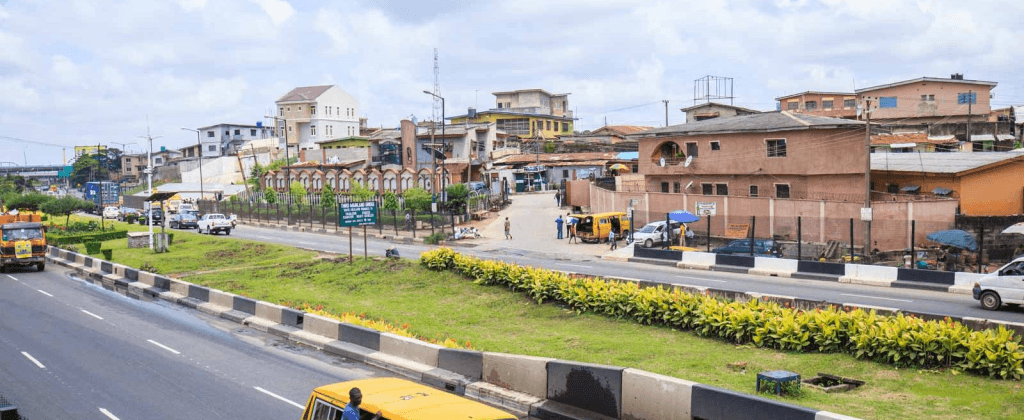
The debate between Gbagada and Yaba is perhaps the most enduring conversation in the Lagos Mainland rental market. For over a decade, young professionals, growing families, and tech entrepreneurs have found themselves at this specific crossroads.
Both neighbourhoods represent the “middle-class sweet spot” of Lagos – offering a strategic central location that balances access to the Island with the relatively lower cost of living associated with the Mainland. It is a choice that defines the daily experience of thousands of Lagosians, yet it is a comparison that many prospective tenants approach with the wrong metrics.
Most renters frame the Gbagada vs Yaba comparison as a battle of prestige or a simple matter of “vibe.” You will often hear people argue that Gbagada is “quieter and more family-oriented” while Yaba is “central and high-energy.” While these stereotypes hold some truth, they are superficial lenses through which to view a long-term financial and lifestyle commitment.
Choosing between these two hubs based solely on reputation often leads to “renter’s remorse” once the reality of daily traffic patterns, utility costs, and local infrastructure begins to set in.
The real question isn’t which neighbourhood is objectively “better,” but rather which one aligns with your specific trifecta of work location, disposable income, and lifestyle non-negotiables. A software developer working remotely has vastly different needs than a banker commuting to Marina or a trader managing logistics at Apapa. In 2026, as infrastructure developments like the Red Line Rail and upgraded drainage systems alter the landscape of the Mainland, the nuances of this choice have become even more critical to understand before signing a tenancy agreement.
This comprehensive guide will break down the 2026 realities of living in both Gbagada and Yaba. We will analyse verified rental data, real-time commute benchmarks, flooding risks, and the social infrastructure that defines each area. By the end of this deep dive, you will have a data-backed framework to decide which of these Lagos powerhouses deserves your next rent check.

The Short Answer
If you work in or on Gbagada or its immediate environs, like Anthony or Oshodi, Gbagada is the superior choice because it offers a structured residential environment with significantly less “inner-city” noise, making it the ideal retreat after a workday in a busy commercial hub.
If you work in or on Yaba, Ebute Metta, or the Yaba Tech-Hub corridor, staying in Yaba is the most logical recommendation to avoid the bottleneck of the Sabo-Onipanu axis, allowing you to leverage the neighbourhood’s high walkability and vibrant evening economy.
If you work on the Mainland CBDs like Ikeja or the commercial nerve centres of Victoria Island and Ikoyi, both areas are viable, but Gbagada offers a marginal advantage for Island commuters due to its direct proximity to the Third Mainland Bridge ramps, whereas Yaba serves Ikeja commuters better via the Herbert Macaulay and Ikorodu Road connections.
If you are choosing between the two primarily on lifestyle or address grounds, this guide will help you understand that while Yaba offers the raw energy of a university town and a burgeoning tech scene, Gbagada provides the “estate feel” and organised tranquillity that many upwardly mobile families prioritise in 2026.
Rent Comparison
The rent gap between Gbagada and Yaba has narrowed in recent years, but the drivers of value in each area remain distinct. In Yaba, the proximity to the University of Lagos (UNILAG) and Yaba College of Technology creates an aggressive floor for 1-bedroom and studio prices. In Gbagada, the demand is driven by families seeking “mini-estates” and gated communities like Medina, Gbagada Phase 1, and Phase 2.
Yaba rent (2026):
| Property Type | Annual Rent Range |
| 1-Bedroom Flat | ₦1,200,000 – ₦1,800,000 |
| 2-Bedroom Flat | ₦2,200,000 – ₦3,500,000 |
| 3-Bedroom Flat | ₦3,800,000 – ₦5,500,000 |
| 4-Bedroom Duplex/Penthouse | ₦6,500,000 – ₦9,500,000 |
Want to live in Yaba? Check our guide to renting an apartment in Yaba
Gbagada rent (2026):
| Property Type | Annual Rent Range |
| 1-Bedroom Flat | ₦1,000,000 – ₦1,600,000 |
| 2-Bedroom Flat | ₦2,000,000 – ₦3,200,000 |
| 3-Bedroom Flat | ₦3,500,000 – ₦5,000,000 |
| 4-Bedroom Duplex/Penthouse | ₦6,000,000 – ₦10,000,000 |
Want to live in Gbagada? Check our guide to renting an apartment in Gbagada
The data shows a fascinating trend: Yaba’s smaller units often command a premium over Gbagada due to the intense competition among students and young tech professionals. However, at the 4-bedroom duplex level, Gbagada takes the lead, particularly in premium zones like Millennium Estate, where the perceived security and “quietude” command a higher price point than comparable units in Yaba’s busy residential-commercial mix.
Why does Yaba command such a premium despite its density? The answer lies in its connectivity and “walkability.” In Yaba, you are rarely more than ten minutes away from a major transport node or a lifestyle hub. Gbagada’s premium, conversely, is built on exclusivity. Residents pay for the gate at the end of the street and the lack of through-traffic.
When calculating your total move-in cost, remember that Gbagada’s gated estates often come with mandatory “estate levies” ranging from ₦150,000 to ₦300,000 per annum, which cover security and waste management. In Yaba, service charges are often more “property-specific,” especially in the newer “serviced apartments” where generator levies can add 30% to 50% to your annual headline rent.
Commute Comparison
If you work in/on Gbagada:
Commuting from within Gbagada is a breeze, with most residents reaching their offices in under 10 minutes. However, if you live in Yaba and work in Gbagada, the morning commute involves navigating the Ikorodu Road stretch or the internal link roads through Shomolu. In light traffic, this takes 15 minutes. During peak hours, the bottleneck at Onipanu and Pedro can push this to 45 or 60 minutes as traffic crawls toward the Gbagada-Oworonshoki Expressway.
If you work in/on Yaba:
Living in Yaba allows for a “reverse commute” if you work near the schools or tech hubs, often manageable via foot or short shuttle. Commuting from Gbagada to Yaba in the morning is generally smoother than the reverse, as the bulk of traffic is heading toward the Island. You can expect a 20-minute drive in light traffic, rising to 40 minutes during peak hours. The “Yaba Left” intersection remains a significant point of congestion that affects both residents and visitors alike.
If you work on the Mainland (Ikeja/Oshodi):
Gbagada offers superior access to the Oshodi-Apapa Expressway, making it the better choice for those working in the industrial zones or toward Ikeja via Anthony. Yaba residents must navigate the denser traffic of Jibowu and Mushin to reach similar destinations. While the Red Line Rail has improved transit for Yaba, Gbagada’s road network remains more conducive for private vehicle owners heading toward the Mainland’s northern and western axes.
Verdict on commute: Gbagada wins for private car owners heading to the Island or Ikeja, while Yaba is the champion of public transit and internal mobility for the young professional.

Lifestyle and Social Infrastructure
The lifestyle in Yaba is defined by its proximity to academic institutions and the “Silicon Lagoon” tech ecosystem. It is a high-energy environment where the social scene revolves around quick-service restaurants, bars, and co-working spaces. Gbagada, meanwhile, has evolved from a purely residential “sleeper town” into a neighbourhood with its own distinct, though more relaxed, social circuit.
In Yaba, the social heartbeat is found at places like The Tea Room or the various eateries around Sabo and Montgomery Road. For shopping, the E-Centre on Commercial Avenue remains a staple, housing the Ozone Cinemas, which have served the area for decades. The nightlife is eclectic, with spots like The Backyard and numerous lounges catering to a younger, more bohemian crowd. Retail is dominated by street-level commerce and specialised hubs like the Tejuosho Market, offering an urban buzz that is absent in Gbagada.
Gbagada’s lifestyle is more spread out and family-centric. Panda Supermarket and Artee Group’s SPAR serve as the primary retail anchors. For dining out, residents frequent The Place Restaurant or Chidiebere Kitchen for local staples, while L’Abbe offers a more refined experience. The fitness culture is strong here, with many residents using the wide, paved streets of Gbagada Phase 2 for morning jogs, and established gyms like K-We Fitness provide structured environments. It is a lifestyle of weekend brunches and organised estate parties rather than the spontaneous street-level energy of Yaba.
Verdict on lifestyle: Yaba offers a superior, high-energy social scene for singles and extroverts, whereas Gbagada provides a curated, quieter lifestyle suited for families and introverts.

Flooding Risk
Flooding remains a critical concern for any Lagos resident. Yaba’s geography is generally higher than the coastal plains, but its ageing drainage infrastructure often leads to “flash flooding.” During the peak rain months of June and July, areas around Akoka and parts of Ebute Metta can experience significant waterlogging on the streets, though it usually recedes within hours of the rain stopping. The primary issue in Yaba is the blockage of secondary drains by plastic waste, which causes water to overflow onto the roads.
Gbagada has a more complex relationship with water. Being closer to the Lagos Lagoon and bounded by the wetlands of Oworonshoki, certain parts of Gbagada were historically prone to flooding. However, the construction of the System 1 drainage channel and recent road rehabilitations in Phase 1 and Phase 2 have significantly mitigated this. While the “Gbagada-Oshodi Expressway” might see some ponding during torrential downpours, the internal estates like Medina are relatively well-protected. Still, areas closer to the canal must be inspected carefully before renting.
At Expert Listing, we recognise that flooding is the number one “hidden” cost of renting in Lagos. This is why we map flood-risk signals at the individual listing level. A house might look perfect in December, but the reality in September could be very different. We always advise tenants to look for water marks on fences and ask neighbours about the “street’s personality” during the rainy season.
Verdict on flooding: Both areas have managed risks, but Gbagada’s modern estate planning gives it a slight edge in drainage efficiency over Yaba’s older, denser infrastructure.
Safety and Security
Security in Yaba is a mix of institutional presence and urban vigilance. The area is home to several police formations and is generally safe during the day due to high foot traffic. However, the density of the area and the proximity to major transport interchanges like Jibowu mean that “street-level” petty crime can be a factor late at night. Most residential buildings in Yaba have moved toward 24-hour manned gates and high perimeter fencing to combat this.
Gbagada’s security profile is its biggest selling point. The neighbourhood is famous for its “estate culture,” where almost every street is gated and requires a pass or a call-in for visitors after 7:00 PM. This controlled access significantly reduces the risk of opportunistic crime. Furthermore, the presence of the Charlie CP (Police Command) nearby and the active Residents’ Associations (RAs) in Phase 1 and Phase 2 ensure a more structured response to security threats. For families with children, the “closed-circuit” nature of Gbagada provides a peace of mind that Yaba’s more porous boundaries cannot match.
Verdict on security: Gbagada is the clear winner for those prioritising a controlled, gated environment with low through-traffic.
Schools
For families, the proximity to quality education is often the deciding factor. Yaba is the academic heart of Lagos, and this extends to primary and secondary education. The neighbourhood hosts some of the most historic and reputable schools in the country. Methodist Girls’ High School and Our Lady of Apostles, Yaba, are standout institutions with deep-rooted traditions and verified operating status in 2026.
Gbagada has responded to its growing middle-class population by hosting a variety of high-quality private schools that offer both Nigerian and British curricula. Grace Schools, located in the heart of Gbagada, is one of the most prominent educational landmarks on the Mainland. Additionally, Emerald Schools serves the community with modern facilities and a strong academic track record. These schools are designed for the modern Lagos parent, offering bus services that navigate the Gbagada estates efficiently.
The choice here depends on the type of schooling you prefer. Yaba offers legacy schools with sprawling campuses, while Gbagada offers modern, high-touch private education within a stone’s throw of residential gates.
Verdict on schools: Yaba wins for historic institutional depth, but Gbagada is more convenient for parents seeking modern private schooling within a gated community.

Healthcare
Healthcare accessibility in both areas is excellent, though the “vibe” of the facilities differs. Yaba benefits from its proximity to major public-private partnerships and legacy hospitals. Military Hospital Yaba is a major landmark providing comprehensive services. For private care, St. Dominic’s Hospital has been a trusted name in the Yaba/Akoka axis for decades, offering 24-hour emergency services and specialised care.
Gbagada is home to one of the busiest and most effective secondary health facilities in the state: the Gbagada General Hospital. While it is a public facility, it hosts the Cardiac and Renal Centre, making it a hub for specialised treatments. On the private side, R-Jolad Hospital has expanded significantly, becoming a multi-speciality facility that serves the Gbagada, Anthony, and Bariga communities with modern diagnostic tools and a high standard of patient care.
Travel time to a major hospital in both areas is typically under 15 minutes, provided you are within the main residential clusters. Gbagada residents have the advantage of R-Jolad’s multiple wings, which have reduced waiting times and improved the quality of private healthcare on the Gbagada-Oshodi axis.
Verdict on healthcare: It is a tie; both neighbourhoods are among the best-served in Lagos for both public and private medical emergencies.

Character and Feel
Yaba is “The City.” During working hours, it is a whirlwind of students rushing to lectures, dispatch riders navigating Sabo, and techies huddled over laptops in cafes. It feels productive, slightly chaotic, and deeply Nigerian. In the evenings, the character shifts to a social hub, with the smell of suya and the sound of music from local bars defining the atmosphere. It is an area for people who love the pulse of Lagos and don’t mind a bit of grit with their urban living.
Gbagada is “The Suburb.” During the day, the inner streets are remarkably quiet. You will see domestic staff running errands and retirees taking walks. It is a neighbourhood that values its “residential” status fiercely.
On weekends, the feel is one of domesticity – families heading to church, kids playing in paved driveways, and the low hum of generators behind acoustic enclosures. It is an area for people who want to shut the world out once they drive through their estate gate.
Verdict on character: This is entirely subjective; Yaba is for the “urbanite,” while Gbagada is for the “resident.”

The Decision Framework
Use this to make the call:
Choose Yaba if:
- You work in Yaba, Akoka, or Ebute Metta and want to avoid a daily commute.
- You are a young professional who values being close to the tech ecosystem and co-working spaces.
- You prefer a high-energy environment with walking access to cinemas, markets, and nightlife.
- You are looking for a studio or 1-bedroom flat where the “action” is just outside your door.
- You rely heavily on public transport or the new Red Line Rail for your daily movement.
Choose Gbagada if:
- You have a family and prioritise gated security and quiet streets for your children.
- You commute to Victoria Island or Ikoyi and want the fastest possible access to the Third Mainland Bridge.
- You prefer a “managed” environment where the Residents’ Association handles security and waste.
- You want more “house” for your money at the 3-bedroom and 4-bedroom duplex levels.
- You enjoy outdoor fitness like jogging or cycling in a low-traffic environment.
If budget is the deciding factor: Gbagada is generally the more economical choice for larger families, as you can often find a 3-bedroom flat for ₦3,500,000 that would cost ₦4,000,000 or more in the more constrained Yaba market. However, for a single professional on a tight budget, Yaba offers more diverse “mini-flat” options that, while smaller, keep you at the centre of the city’s economic life.
Ready to Search in Both Areas?
All listings on Expert Listing are verified by our team before they go live on the platform. We understand that Lagos real estate can be a minefield, which is why we map flood-risk signals at the individual listing level to ensure you aren’t surprised by the July rains. Furthermore, our “live-inventory” policy means that listings are removed the moment they are rented or sold, saving you the frustration of calling about unavailable properties.
Frequently Asked Questions
Is Gbagada more expensive than Yaba?
In 2026, the answer depends on the property size. For 1-bedroom flats, Yaba is often more expensive due to high demand from students and tech workers, with prices reaching ₦1.8 million. However, for larger 4-bedroom duplexes, Gbagada often commands higher prices, sometimes reaching ₦10 million in premium estates, because of the added value of gated security and a quieter residential environment.
How is the traffic from Gbagada to Victoria Island?
The commute is one of the best on the Mainland because Gbagada has multiple entry points to the Third Mainland Bridge. In light traffic, you can reach Victoria Island in 20–25 minutes. During peak morning hours (6:30 AM – 8:30 AM), this typically increases to 45–70 minutes, depending on the “Oworonshoki bottleneck”, which remains a factor in 2026.
Between Gbagada and Yaba, which area is safer for a young family?
Gbagada is generally considered safer for young families because of its extensive network of gated estates like Medina, Millennium, and Gbagada Phase 2. These areas restrict through-traffic and have dedicated security guards at street entrances. While Yaba has a high police presence, its open, high-density nature makes it more prone to the general bustle and petty risks of a major commercial hub.
Does it flood in Yaba?
Yaba does experience flash flooding, particularly in the Akoka and Ebute Metta axes, due to its ageing drainage system and high population density. The water usually clears within a few hours after a heavy downpour, but it can make commuting difficult during the peak rainy seasons of June and September. Expert Listing provides specific flood-risk data for Yaba listings to help you identify the driest streets.
Can I find serviced apartments in Gbagada?
Yes, Gbagada has seen a surge in serviced apartment developments, particularly in the “New Gbagada” and Phase 2 areas. These apartments typically include 24-hour security, treated water, and “pay-as-you-go” power solutions. Be prepared to pay a service charge of ₦500,000 to ₦1,000,000 per annum on top of your base rent for these facilities.
Between Gbagada and Yaba, which area has better electricity supply?
Both areas are served by Eko Electricity Distribution Company (EKEDC) and Ikeja Electric (IE), and supply is generally better than the Lagos average, especially in “Premium” or “Band A” feeders. However, Gbagada’s gated estates often have better-maintained internal transformers and wiring, leading to fewer localised faults compared to the older, more congested power infrastructure in many parts of Yaba.