Cheap Apartments for Rent in Jakande, Lagos: A Realistic Price Guide
Expert Listing
·
·
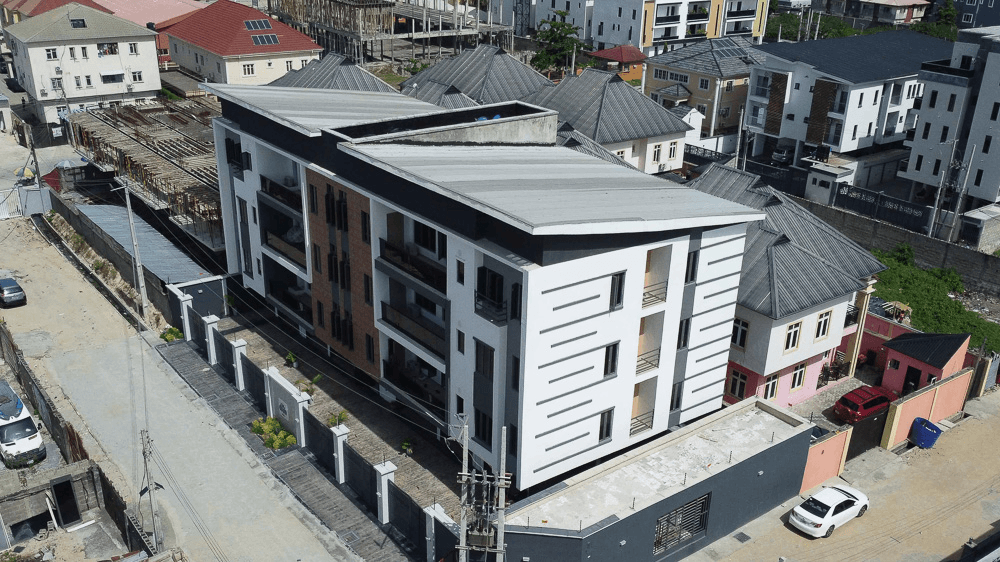
Jakande sits at a strategic crossroads within the Lekki rental market, serving as the unofficial boundary where the high-density commercial energy of Lekki Phase 1 begins to transition into the more residential, budget-friendly sprawl of the mid-Island corridor.
For renters priced out of the premium zones closer to the Adetokunbo Ademola axis, Jakande represents the first significant opportunity to secure island living without the extreme financial strain associated with the initial Lekki toll gate area.
It functions as a relief valve for the Lagos rental market, offering a middle ground that balances proximity to the Victoria Island business district with price points that remain accessible to middle-income earners.
The financial advantage of choosing Jakande becomes clear when conducting a direct like-for-like comparison with Agungi, the immediate premium neighbour to the east. A standard two-bedroom apartment that costs ₦4,500,000 per year in Agungi can typically be found for ₦2,800,000 to ₦3,500,000 in Jakande.
This represents a substantial annual saving of over ₦1,000,000 for the renter. Practically, this saving covers the cost of a year’s worth of estate service charges and diesel levies, or it allows a professional to upgrade from a cramped studio in a premium area to a spacious two-bedroom flat in Jakande while keeping their total housing expenditure stable.
This guide provides a definitive breakdown of the Jakande rental market in 2026. It moves beyond surface-level listings to examine the specific price bands that define the area, the infrastructure realities of different neighbourhoods, and the hidden costs that often catch budget-conscious renters by surprise. We cover the floor prices for habitable units, identify the specific streets where value is highest, and outline the critical red flags that distinguish a genuine bargain from a high-maintenance liability. By the end of this article, you will understand exactly what your budget buys in Jakande and how to avoid the common pitfalls of the mid-Island rental market.
Browse verified apartments in Jakande at current prices on Expert Listing:
What “Cheap” Actually Means in Jakande
In the context of the Lekki Peninsula, the term cheap is relative and often misunderstood. In Jakande, cheap does not imply the bottom-of-the-barrel pricing found on the distant fringes of the Mainland. Instead, it refers to the entry-level pricing for the Island corridor.
It is the point where infrastructure, security, and proximity to work finally align with a realistic budget for a working professional. Understanding what constitutes a bargain here requires looking at the market through the eyes of different renter demographics, as their expectations and definitions of value vary significantly.
For a renter relocating from a more expensive area like Lekki Phase 1, Jakande represents a deliberate trade-off for financial breathing room. To this group, cheap means a 35% to 45% reduction in annual rent. They are often willing to trade the paved, manicured streets of a gated Phase 1 estate for a slightly more rugged environment in exchange for an extra bedroom or a significantly lower service charge.
For these renters, the value is found in maintaining a similar internal apartment quality while drastically reducing the “location tax” paid to live three kilometres further west.
A renter moving from the Mainland, perhaps from areas like Yaba or Surulere, views Jakande through a different lens. To them, cheap means gaining access to the Island’s economic ecosystem at prices that mirror the upper-tier Mainland markets.
The ₦2,000,000 they might pay for a modern mini flat in a good part of the Mainland buys them a similar unit in Jakande, but with the added benefit of cutting their daily commute to Victoria Island by half.
For this demographic, Jakande is the bridge that makes a “live-work-play” lifestyle on the Island attainable without doubling their housing budget.

For the first-time renter in Lagos, Jakande is often the most logical entry point into the formal rental market. It offers a variety of housing formats, from basic self-contained units in older buildings to modern studios in newer developments. To the newcomer, cheap means the lowest possible price point for a self-contained unit that still offers a basic level of security and reliable water.
These entry-level units serve as a foundational step, allowing young professionals to establish a presence on the Island while they build their careers. These three perspectives together define the broad and varied scope of the Jakande budget market.
Jakande Rent Price Bands in 2026
The Jakande rental market is segmented into four distinct tiers based on the age of the property, the level of serviced facilities, and the specific street location.
Budget tier: below ₦1,200,000 per year
- What you get: This tier typically consists of older self-contained units or “room and parlour” arrangements in traditional buildings. You can expect basic finishes, manual water pumping systems, and no centralised generator. Road access in these areas is often unpaved and can become difficult during the peak of the rainy season.
- Who this suits: This price point is ideal for National Youth Service Corps (NYSC) members, students, or early-career professionals who spend most of their day out and only need a basic, functional place to sleep.
- What to be careful about: Watch for signs of dampness on the walls and check the height of the entrance to ensure the compound does not have a history of flash flooding during heavy downpours.
Mid-budget tier: ₦1,500,000 – ₦2,200,000 per year
- What you get: At the lower end of this band, you find renovated mini flats (one bedroom and a sitting room) in older stand-alone houses. At the upper end, you can secure brand-new, modern studios in mini-estates. These units usually feature better tiling, POP ceilings, and dedicated borehole water systems.
- Who this suits: Young couples or mid-level professionals who require a separate living area for remote work or hosting guests.
- What to be careful about: In this tier, the “service charge” can be a point of contention. Ensure you understand if the quoted rent includes waste management and security fees.
Mid-to-upper tier: ₦2,500,000 – ₦4,000,000 per year
- What you get: This band covers two-bedroom and three-bedroom apartments in well-managed estates or modern blocks of flats. These properties often feature 24-hour security, paved internal roads, and semi-automated water treatment plants. Most will have a “service charge” that covers common area maintenance.
- Who this suits: Established families or professionals who prioritise security and a structured living environment with reliable facility management.
- What to be careful about: The electricity billing system is crucial here. Confirm if the estate uses a central prepaid meter or if individual units have their own meters to avoid disputes over shared utility bills.
Serviced and short-let tier: ₦60,000 – ₦100,000 per night
- What you get: These are fully furnished apartments, including air conditioning, high-speed internet, and 24-hour power backup (usually through a combination of solar and inverter). They are often located in high-security pockets of Jakande.
- Who this suits: Business travellers, Nigerians in the diaspora visiting for a few weeks, or individuals in transition between permanent apartments.
- What to be careful about: Check the reviews specifically for the reliability of the internet and the actual hours of power provided, as “24-hour power” can sometimes exclude heavy appliance use during off-peak hours.
Where the Cheapest Habitable Apartments Are in Jakande
The geography of Jakande is a patchwork of established estates and rapidly developing streets, where the price of an apartment can fluctuate by hundreds of thousands of Naira based on which side of the road it sits.
Ilasan Housing Estate is one of the most recognisable locations for budget-conscious renters in the Jakande area. Originally a government-built scheme, it contains a high volume of older apartment blocks that have been subdivided or renovated. A standard mini-flat here typically ranges from ₦1,400,000 to ₦1,800,000 per year. While the buildings are older, the estate has a very high occupancy rate due to its proximity to the main Lekki-Epe Expressway, making it a favourite for those who rely on public transportation.

Fatai Idowu Arobieke Street and its surrounding arteries offer a mix of newer, privately developed apartments. This area is known for having a significant volume of modern studio apartments and one-bedroom units. Prices here are slightly higher, with studios starting around ₦1,500,000 and one-bedroom flats reaching ₦2,300,000. The infrastructure is relatively decent, though individual compounds manage their own water and power. This zone is popular with young professionals working in the nearby Circle Mall and Shoprite area.
Osapa London Boundary areas, specifically the streets bordering the more expensive Osapa neighbourhood, provide a unique value proposition. You can often find apartments that share the same security perimeter or proximity to amenities as Osapa but are technically categorised as Jakande, leading to lower rents. Two-bedroom apartments in this zone typically fall between ₦2,800,000 and ₦3,500,000. These streets are often better paved than the inner parts of Jakande, providing better access during the rainy season.
Wole Olateju Street (the Jakande extension side) features several mini-estates that offer a more communal living experience. These are often gated clusters of 6 to 12 units. A three-bedroom apartment in this area can be found for approximately ₦3,800,000, which is significantly lower than similar units in neighbouring Agungi. The rental stock here is generally well-maintained, and the proximity to local markets makes it a practical choice for families.
What the Cheapest Jakande Apartments Get Wrong (and How to Avoid It)
Renting at the lower end of the Jakande market requires a high degree of scepticism and a thorough inspection process to avoid recurring monthly costs that can quickly outpace the savings on rent.
No functional generator backup
In the budget segment of Jakande, the most common failure is the lack of a reliable power backup system. Many older buildings or cheaper new builds do not provide a central generator. This leaves the renter responsible for purchasing, fueling, and maintaining a personal generator. In Jakande, where the electrical grid can be inconsistent, this creates a significant daily burden. Without a formal management system, you may find yourself in a compound where neighbours’ generators are placed too close to your windows, leading to noise pollution and exhaust fumes entering your living space.
The question to ask: You must ask the landlord or the managing agent specifically about the generator policy. Does the building have a central generator? If so, what are the scheduled hours of operation? You should also ask how the diesel cost is shared, whether it is a fixed monthly fee or based on consumption. If there is no central generator, ask where you are permitted to place your own unit and if there are specific regulations regarding noise levels and exhaust piping.

No borehole: water delivery instead
The water supply in Jakande is not uniform. While many modern buildings have dedicated boreholes and filtration systems, some budget-tier properties rely on water delivery trucks or shared community wells that may not be properly treated. Living in a building dependent on water trucks means you are at the mercy of delivery schedules and fluctuating prices. It also means the water quality can vary from week to week, potentially leading to plumbing issues or skin irritations if the water has high iron content, which is common in some parts of the Island.
The question to ask: Ask to see the water treatment system. Is there a functional borehole on the premises? Open the taps during your viewing to check the colour and smell of the water. If the building uses a delivery service, ask how often the tanks are filled and what the monthly contribution for water is.
Unpaved or badly maintained access roads
Many of the cheapest apartments in Jakande are located on streets that have not yet been paved. While these roads may look manageable during the dry season, they can transform into muddy, impassable tracks during the heavy rains between June and September. This can lead to increased car maintenance costs due to suspension damage or require you to park your vehicle several streets away and trek to your house in the rain. Research shows that certain parts of the Ilasan axis are particularly prone to these road issues.
The question to ask: Don’t just look at the road directly in front of the house. Walk to the end of the street and back. Look for watermarks on the fences and gates, which are clear indicators of how high the water rises on the road during the rainy season. Ask neighbours about the typical condition of the road after a heavy downpour.
Flooding in the compound or the apartment
Flooding is a significant risk for budget renters in Jakande, especially for those in ground-floor units or older developments built before modern drainage standards were enforced. Some compounds are built in low-lying areas where water collects and cannot drain away quickly. This is not just a nuisance; it can lead to property damage and health risks. Expert Listing maps flood-risk signals at the individual listing level, which is the most reliable way to verify if a specific property has a history of drainage issues.
The question to ask: Look at the ground level of the apartment relative to the street. If the apartment is lower than the road, it is a high-risk unit. Check the bottom of the wardrobes and kitchen cabinets for signs of water damage or swelling, which often indicates that water has entered the unit in the past.
Agents without verified authority
The high demand for budget housing in Jakande attracts many unverified agents who may not have the legal authority to lease the property they are showing. These individuals often collect “inspection fees” or “caution deposits” and then disappear. In a fast-moving market, the pressure to pay quickly to “secure” a cheap apartment can lead to significant financial loss. This is particularly common with listings for “renovated” units that are offered at suspiciously low prices.
The question to ask: Before making any payment, ask to meet the landlord or a recognised legal representative. Request a copy of the tenancy agreement and ask for documented evidence that the agent has the authority to act on behalf of the owner. Always verify the agent’s identity and never pay cash; ensure all payments are made to a traceable bank account associated with the landlord or a registered real estate firm.
How to Get the Best Value in the Jakande Budget Market
Securing a high-value apartment in Jakande is about optimising your choices to ensure that your total cost of living remains low, rather than simply finding the lowest headline rent.
Set a realistic minimum for your infrastructure requirements. To ensure a basic level of comfort, you should look for a ₦1,800,000 floor figure for a mini flat if you require a generator-backed estate or a compound with a functional borehole. Settling for an apartment below this threshold often leads to “hidden” costs in the form of private water delivery and higher personal fuel consumption.
Prioritise newer stock within your budget. When searching in Jakande, try to filter for properties that are less than five years old. Newer buildings are more likely to have modern electrical wiring that can handle the load of air conditioners and better-designed drainage systems that prevent water from stagnating in the compound. Older buildings in this area often suffer from “creeping” maintenance issues that the landlord may be slow to address.
Factor in the full cost, including service charges. Never look at the rent in isolation. A budget apartment with a ₦1,500,000 rent but a ₦50,000 monthly service charge actually costs you ₦2,100,000 per year. For example, if the headline rent is ₦2,000,000 and the monthly levy is ₦30,000, your effective annual cost is ₦2,360,000. Always ask for the “total package” before comparing two properties.
Negotiate on apartments that have been sitting. In the Jakande market, a well-priced apartment usually rents within 10 days. If you find an apartment that has been on the market for 3 to 4 weeks, there is usually room for negotiation. For instance, an apartment with an asking price of ₦2,500,000 can often be negotiated down to ₦2,200,000 if you can show proof of funds and commit to making a prompt payment.
Use a platform with verified availability. The biggest time-waster in the Lagos rental market is calling about a cheap listing only to be told it was rented months ago. Expert Listing solves this by removing listings in real time, the moment they are rented or sold. Using a platform that verifies each listing before publication ensures that the “bargains” you see are actually available for you to inspect and lease.
Cheapest Apartment Types in Jakande and What They Include
Self-contained / Studio (₦1,000,000 – ₦1,600,000 per year)
These units consist of a single room that serves as both the bedroom and living area, with an attached kitchenette and bathroom. In Jakande, the lower end of this range gets you a unit in an older, unpaved street, while the upper end covers modern studios in mini-estates. These are perfect for single professionals who work long hours. Note that many of these units in Jakande are “compact,” so check if your furniture will fit before committing.
Mini flat (₦1,400,000 – ₦2,200,000 per year)
A mini flat in Jakande includes a separate bedroom and a living room, providing more privacy and space for a home office. At the ₦1,400,000 mark, you are looking at renovations in the Ilasan area, while ₦2,200,000 can secure a brand-new unit with high-quality tiling and better security. These units are highly sought after by young couples and are the fastest-moving rental stock in the area.
1-bedroom flat, budget (₦1,600,000 – ₦2,000,000 per year)
The budget one-bedroom flat differs from a mini flat by having a larger floor area and often a separate kitchen rather than a kitchenette. These are typically found in older, stand-alone buildings. While they offer more space for the money, they often lack the modern amenities like water heaters or fitted wardrobes found in the slightly more expensive estate-tier units.
1-bedroom flat, estate (₦2,200,000 – ₦2,800,000 per year)
These apartments are located within gated communities or serviced blocks. The price includes the benefit of better security, dedicated parking, and often a central generator. These units are ideal for those who want the “Lekki lifestyle” with paved roads and 24-hour gate security but only need a single bedroom. The infrastructure here is usually superior, with well-maintained drainage.

2-bedroom flat, budget (₦2,500,000 – ₦3,200,000 per year)
Budget two-bedroom flats in Jakande are often located in older government schemes or on the periphery of the main residential zones. They provide ample space for small families or friends sharing an apartment. While the internal finishes may be basic, they offer the best “price per square foot” in the area. Ensure you check the electricity billing, as these older buildings are sometimes on shared community meters.
Ready to Search Verified Cheap Apartments in Jakande?
Every listing on Expert Listing is verified before going live. Flood risk is mapped at the individual listing level. Listings are removed the moment they are rented or sold.
Browse verified budget apartments in Jakande on Expert Listing
Frequently Asked Questions
What is the cheapest rent in Jakande, Lagos, in 2026?
The absolute floor for a habitable self-contained unit in Jakande is currently around ₦1,000,000 per year. While you might find units advertised for less, they often come with significant infrastructure deficits, such as poor road access or a lack of basic water treatment. For a modern unit that meets standard Lagos professional expectations, you should budget closer to ₦1,400,000.
Can I find a 2-bedroom apartment in Jakande for under ₦2,500,000 per year?
Finding a quality two-bedroom apartment for under ₦2,500,000 in 2026 is becoming increasingly difficult in Jakande. Most habitable two-bedroom units now start at ₦2,800,000. Any unit listed below ₦2,500,000 should be inspected very carefully for structural issues, potential flooding, or extremely poor road access that could make daily commuting difficult.
Is cheap rent in Jakande worth it compared to Agungi?
Yes, it is often worth it if you are looking to maximise your disposable income. Since Jakande and Agungi are geographically adjacent, you enjoy much of the same local infrastructure and shopping amenities, such as Circle Mall. The primary difference is the “prestige” of the address and the quality of the immediate street paving. If you have a sturdy vehicle, the ₦1,000,000 annual savings are a significant advantage.
What should I watch out for when renting a cheap apartment in Jakande?
The three most critical things to watch out for are flood history, the method of water supply, and the reliability of power. You should also be wary of agents who demand large payments before you have met the landlord. Always check the property during or immediately after a rainstorm to see how the drainage handles the water, as this is the most common hidden problem in the area.
How do I avoid fake listings in Jakande?
To avoid fake listings, only use platforms like Expert Listing that have a strict verification process for every property. Never pay any “commitment fee” before seeing the property and verifying the documents. If a deal seems too good to be true, such as a modern three-bedroom flat for ₦2,000,000 in a prime location, it is almost certainly a scam.
Which part of Jakande has the cheapest apartments?
The Ilasan Housing Estate and the streets immediately surrounding the Jakande local market generally have the highest concentration of budget-friendly apartments. These areas benefit from high density, which keeps prices competitive, though the infrastructure in these specific pockets is often more “rugged” than the newer mini-estates found toward the Osapa boundary.