Cheap Apartments for Rent in Agungi, Lagos: A Realistic Price Guide
Expert Listing
·
·
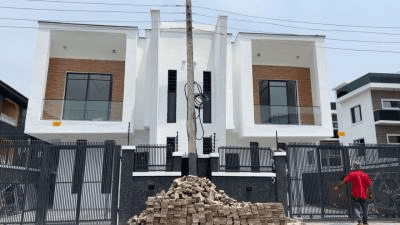
Agungi occupies a strategic middle ground within the Eti-Osa rental market, serving as a transitional zone between the high-cost luxury of Lekki Phase 1 and the more affordable, albeit further, residential hubs like Ajah. For budget-conscious renters, Agungi represents a sweet spot where proximity to the Victoria Island and Ikoyi business districts meets relatively moderate pricing.
While it is significantly more affordable than its premium neighbours to the North, it maintains a level of prestige and accessibility that sets it apart from the more chaotic fringes of the Lekki Peninsula. This makes it a primary destination for young professionals and small families who want the Island lifestyle without the crippling overhead of the most elite postal codes.
The financial advantage of choosing Agungi over a premium area like Lekki Phase 1 is quantifiable and significant. A standard two-bedroom apartment that currently commands ₦7,500,000 per year in Lekki Phase 1 can be found for ₦3,800,000 to ₦4,500,000 in Agungi. For the average renter, this saving of approximately ₦3,000,000 per year translates into a massive boost in disposable income or the ability to afford a higher standard of interior finishing than would be possible closer to the city centre. It allows a tenant to trade a ten-minute increase in commute time for a fifty % reduction in their primary living expense, a trade-off that has become increasingly attractive as transport infrastructure along the Lekki-Epe Expressway continues to see incremental improvements.
This guide provides a comprehensive breakdown of the Agungi rental market as it stands in 2026. Because the term “cheap” is subjective, we explore the specific price bands that define the area, from the entry-level self-contained units to the more structured serviced estates. We will detail what your money actually buys in terms of infrastructure, which specific streets offer the best value for money, and the critical pitfalls—such as drainage issues and power management, that often hide behind a low price tag. By the end of this guide, you will have the data necessary to identify where the value floor is located and how to secure a habitable, well-located apartment without overpaying.
Browse verified apartments in Agungi at current prices on Expert Listing:
What “Cheap” Actually Means in Agungi
Defining affordability in Agungi requires understanding the various demographics competing for space in this high-demand corridor. For some, Agungi is a budget alternative; for others, it is an aspirational step up. The definition of “cheap” shifts based on your previous residential context and your specific requirements for facilities like 24-hour power and paved access roads. Before looking at the raw numbers, it is helpful to frame the market through the eyes of different renter profiles.
For a renter relocating from a more expensive area like Lekki Phase 1 or Ikate, Agungi represents a clear cost-saving strategy. To this group, “cheap” means maintaining a similar level of interior quality, such as POP ceilings, fitted kitchens, and walk-in showers, while reducing their annual rent by 30% to 40%. They are often willing to tolerate slightly longer drive times or less polished streetscapes in exchange for a significantly lower “total cost of living.” For them, Agungi is a pragmatic choice that allows for wealth accumulation without sacrificing the basic comforts associated with the Lekki axis.
A renter relocating from the Lagos Mainland, perhaps from areas like Surulere or Yaba, views Agungi through a different lens. To them, “cheap” in Agungi might actually be more expensive than their previous rent, but it represents “cheap access” to the Island’s economic opportunities. The value here is not just in the bricks and mortar but in the reduction of commute times to Victoria Island and the social capital associated with an Island address. For these renters, Agungi is the most accessible entry point into a premium lifestyle, offering a modern aesthetic and a more organised environment than many Mainland neighbourhoods at a price point that is still within reach of a mid-level corporate salary.
For the first-time renter in Lagos, such as a recent graduate or a young entrepreneur, Agungi is often the ultimate entry point. In this context, “cheap” refers to the smallest habitable units, specifically self-contained apartments and mini flats. These renters are typically looking for the lowest possible price that still offers a degree of security and “island proximity.” For them, Agungi provides a variety of compact housing formats that are not as readily available or as modern in the older parts of Lagos. It serves as a launchpad, offering a respectable address and a manageable commute while they establish their careers.

Regardless of which category you fall into, navigating the Agungi budget market requires a keen eye for detail. The price variations within the area are often tied to very specific local factors, such as the elevation of a particular street or the quality of a building’s drainage system.
Agungi Rent Price Bands in 2026
The Agungi rental market is divided into four distinct tiers, each offering a different balance of cost and convenience.
Budget tier: below ₦1,500,000 per year
- What you get: This price point typically secures a self-contained apartment or a basic studio in an older building or a more interior part of Agungi. These units usually feature modest finishes, basic tiling, and standard plumbing. Power is primarily dependent on the public grid and personal generators (I-better-pass-my-neighbour), as these buildings rarely provide central power. Water is usually supplied via a basic borehole system without advanced filtration.
- Who this suits: This tier is ideal for National Youth Service Corps (NYSC) members, entry-level workers, or individuals who spend most of their day at the office and only need a functional place to sleep.
- What to be careful about: Buildings in this bracket are often located on unpaved streets that become difficult to navigate during the peak of the rainy season. Security is usually limited to the building’s main gate, with no professional guards.
Mid-budget tier: ₦1,800,000 – ₦2,800,000 per year
- What you get: This is the most common range for mini flats (one bedroom and a parlour) and high-end self-contained units in newer developments. At the upper end of this band, you can find 1-bedroom apartments with better finishing, such as water heaters, pre-installed wardrobes, and perhaps a small balcony. Road access is generally better, though not always fully paved.
- Who this suits: Young couples or established professionals who require more space and a higher level of privacy.
- What to be careful about: Service charges in this bracket can be erratic. Ensure you clarify the cost of waste management and security levies, as these are often added on top of the headline rent.
Mid-to-upper tier: ₦3,500,000 – ₦5,500,000 per year
- What you get: This band covers 2-bedroom and 3-bedroom apartments within established estates or well-managed stand-alone buildings. You can expect 24-hour security, treated water, and potentially a central generator (though diesel costs are usually extra). The apartments feature modern aesthetics, including marble-style tiles and quality kitchen cabinetry.
- Who this suits: Small families or professionals who prioritise a secure environment and stable infrastructure for remote work.
- What to be careful about: Verify the “actual” hours of power provided by the central generator. Some landlords promise 24 hours but only deliver 12 to 15 hours during periods of high diesel prices.
Serviced and short-let tier: ₦600,000 – ₦1,200,000 per month
- What you get: These are fully furnished apartments, ranging from studio units to 3-bedroom flats, with all utilities included. This covers high-speed internet, premium cable TV, cleaning services, and guaranteed power. These units are found in the most accessible parts of Agungi, often very close to the Lekki-Epe Expressway.
- Who this suits: Business travellers, expatriates on short-term assignments, or individuals in transition who need a move-in-ready solution without the long-term commitment of a yearly lease.
Where the Cheapest Habitable Apartments Are in Agungi
Location within Agungi is the single biggest determinant of price and daily comfort. The area is divided into several “zones,” with those closest to the expressway and those on higher ground commanding higher prices, while the more interior or low-lying streets offer more budget-friendly options.
The Agungi-Ajiran Road axis is one of the most popular locations for those seeking a balance of price and accessibility. This area features a high volume of modern mini flats and self-contained units. Because it is a major thoroughfare within the community, apartments here tend to be slightly more expensive than those on the side streets, but the trade-off is better security and easier access to public transportation. Realistic prices here for a mini flat range from ₦2,200,000 to ₦2,600,000 per year. The road itself is mostly paved, which is a significant advantage during the rainy season.

Bakare Estate is a well-known residential pocket within Agungi that offers a more structured living environment. While it is not a “cheap” estate in the traditional sense, it contains several older blocks where 2-bedroom apartments can be found at the lower end of the mid-tier price range, often between ₦3,500,000 and ₦4,000,000 per year. The estate is favoured for its security and relatively stable water supply. It is an excellent choice for families who want a controlled environment without the astronomical fees found in Lekki Phase 1.
For those looking for the absolute lowest prices, the streets further toward the Alpha Beach Road end of Agungi offer more options. Areas around Pieteria Street and its offshoots contain many of the budget-tier apartments mentioned earlier. Here, you can find self-contained units for as low as ₦1,200,000 per year. However, renters must be prepared for unpaved roads and potential drainage issues. This zone requires careful inspection of the compound’s elevation to ensure it does not hold water during heavy downpours.
Friendship Estate is another notable mention. It sits in a slightly more elevated part of Agungi, making it a safer bet for those concerned about flooding. The rental stock here is a mix of older bungalows and newer apartment blocks. A 1-bedroom apartment in this area typically goes for ₦2,500,000 to ₦3,000,000. The estate has a functional community association that manages waste and security, providing a level of organisation that justifies the slightly higher service charges.
Proximity to schools like the British International School (which is a short drive away) or local options like Pampers Private School makes Agungi attractive for families. For medical needs, the LifePointe Hospital provides reliable healthcare services within the immediate vicinity, ensuring that budget renters do not have to travel far for essential services.
What the Cheapest Agungi Apartments Get Wrong (and How to Avoid It)
The budget rental market in Agungi is filled with hidden costs and structural compromises. What looks like a bargain in the dry month of January can become a logistical nightmare by the peak of the rainy season in June. Understanding these common failure modes is essential for any renter looking to secure a truly habitable home.
No functional generator backup
In the lower price brackets of Agungi, “central power” is often a myth or a poorly executed promise. Many budget buildings do not provide a central generator, leaving tenants to rely entirely on the national grid (EKEDC) or their own small generators. In buildings that do claim to have a generator, the management is often informal. There may be no set schedule, or the generator may be frequently “under repair” because the landlord does not have a dedicated fund for maintenance and diesel. This leads to a low quality of life, especially for those who work from home or have young children.
The question to ask: Does the building have a dedicated generator for all tenants, or is it for “common areas” only? If there is a generator, what are the specific hours of operation? You should ask to see the diesel contribution ledger for the last three months. This will tell you if the tenants are actually paying and if the generator is being used. If the management is informal, ask who is responsible for buying diesel and what happens if the generator breaks down.
No borehole: water delivery instead
While most buildings in Agungi have boreholes, the quality of the water varies wildly. In some budget-tier developments, the borehole might be shallow, resulting in “colored” or salty water that is unsuitable for bathing or laundry. In the worst-case scenarios, a building may have a non-functional borehole, forcing tenants to buy water from delivery trucks (meruwa). This is a hidden recurring cost that can add ₦20,000 to ₦40,000 to your monthly expenses.
The question to ask: Ask the current tenants about the water quality. Turn on the taps during your viewing and check for any brownish tint or unusual smell. Ask if there is a central water treatment plant and how often the filters are changed. If the building relies on water trucks, factor that cost into your budget before signing the lease.
Unpaved or badly maintained access roads
Agungi is a patchwork of paved and unpaved roads. Many of the most affordable apartments are located on “earth roads” that turn into mud traps during the rainy season. A street that looks perfectly fine in the dry season can become impassable for smaller cars after a single heavy downpour. This can lead to increased car maintenance costs and significant delays in your daily commute.
The question to ask: Do not just view the apartment; walk the entire length of the street. Look for high-water marks on the fences and walls of neighbouring buildings. These marks are a permanent record of how high the water rises during a flood. If the street is unpaved, ask the neighbours how the road holds up in July and August.
Flooding in the compound or the apartment
Flooding is a genuine concern in several parts of Eti-Osa, and Agungi is no exception. In budget developments, developers often skip the necessary land filling and drainage infrastructure to save costs. This results in compounds that collect water, which can eventually seep into ground-floor apartments. Expert Listing maps flood-risk signals at the individual listing level, which is the most reliable way to verify a property’s history before you even visit.
The question to ask: Specifically ask if the compound has ever flooded. Look at the skirting boards inside the apartment; if they are swollen or the paint is peeling at the base, it is a sign of rising dampness or previous flooding. Avoid ground-floor units in low-lying areas of Agungi if you want to be completely safe.

Agents without verified authority
The high demand for “cheap” apartments in Agungi attracts many unverified agents. These individuals may show you a property they do not have the authority to lease, collect a “caution fee” or “legal fee,” and then disappear. In a market where apartments move within days, the pressure to pay quickly is high, making it easy for scammers to operate.
The question to ask: Always request to meet the landlord or a legally recognised attorney before making any payment. Ask for documented evidence of authority to lease the property. Never pay into a personal account of an agent; payments should ideally go to the landlord or a reputable property management company. Expert Listing verifies all agents and listings to prevent this specific risk.
How to Get the Best Value in the Agungi Budget Market
Securing a great deal in Agungi is about optimisation, not just finding the lowest number. By applying a few strategic principles, you can find a home that offers superior value without exceeding your budget.
Set a realistic minimum for your infrastructure requirements. In Agungi, you should aim for a budget floor of at least ₦2,000,000 for a mini flat if you want to ensure the building is within an area with some form of organised security and functional drainage. Going below this figure often means sacrificing basic habitability, such as a paved road or a reliable water source. It is better to pay ₦200,000 more for a building that won’t require you to fix your car suspension every six months.
Prioritise newer stock within your budget. The rental market in Agungi has seen a surge of “modern” developments in the last five years. When searching, try to filter for buildings that are less than five years old. Newer stock is more likely to have contemporary electrical wiring that can handle modern appliances and drainage systems built to current (and hopefully better) standards. Older buildings often suffer from “settling” issues, leaking roofs, and outdated plumbing that can lead to constant repair bills for the tenant.
Factor in the full cost, including service charges. The “headline rent” is only part of the story. In Agungi, service charges can range from ₦300,000 to ₦800,000 per year, depending on the facilities. For example, if the headline rent is ₦2,500,000 and the monthly service charge is ₦50,000, your effective annual cost is ₦3,100,000. Always ask for a breakdown of what the service charge covers; security, waste, water, and “diesel deposit” are the standard components.
Negotiate on apartments that have been sitting. While the Agungi market is fast, apartments that have been listed for more than three weeks are often negotiable. If an apartment has an asking price of ₦3,000,000 but has not been taken, the landlord might be open to an offer of ₦2,700,000 or ₦2,800,000, especially if you can prove you are a stable, professional tenant willing to pay the full two years’ rent upfront. Professional landlords value the “quality” of a tenant as much as the amount of rent paid.
Use a platform with verified availability. The biggest time-waster in the Lagos rental market is the “stale listing.” Many platforms are littered with apartments that were rented out months ago but are kept online to attract leads. Expert Listing solves this by removing listings in real time, the moment they are rented or sold. This ensures that every phone call you make is for a property that is actually available, preventing the frustration of being told an apartment is “gone” just as you are about to pay.
Cheapest Apartment Types in Agungi and What They Include
The Agungi market offers a variety of housing formats designed to cater to different budget levels. Understanding the physical inclusions of each type will help you manage your expectations during your search.
Self-contained apartments and studios in Agungi typically range from ₦1,200,000 to ₦1,600,000 per year. These units consist of a single room that serves as both the bedroom and living area, with an attached kitchenette and bathroom. At this price point, you should expect basic tiling and a standard shower. They are most suitable for single individuals who are just starting their careers or those who prioritise a low-cost base on the Island. In Agungi, these are often found in the upper floors of multi-unit buildings or as “boys’ quarters” in larger compounds.
Mini flats are the most sought-after units in Agungi, with prices ranging from ₦1,800,000 to ₦2,800,000 per year. A mini flat includes a separate bedroom and a living room, providing a much higher degree of privacy than a self-contained unit. The higher end of this range will include “executive” mini flats, which might feature a guest toilet, a more spacious kitchen, and better-quality finishes like POP ceilings and water heaters. These are the standard choices for young professionals and newly married couples.
Budget 1-bedroom flats are priced between ₦1,800,000 and ₦2,400,000 per year. While similar to mini flats, these are often located in older, unserviced buildings. They offer more square footage than a modern mini flat but may lack the “shine” of newer developments. These units are ideal for those who need more space for furniture or a home office but cannot afford the premium prices of newer estate-style apartments. Infrastructure here is usually basic, with no central power.
Estate 1-bedroom flats command a premium, ranging from ₦2,500,000 to ₦3,500,000 per year. These are found within gated communities like Bakare Estate or similar enclaves. The price includes the benefit of better security, paved internal roads, and often a more reliable water treatment system. These units suit individuals who prioritise safety and an organised environment over raw space. The service charge in these estates is typically higher but provides a significantly better living experience.
Budget 2-bedroom flats in Agungi can be found for ₦3,500,000 to ₦4,500,000 per year. These are usually in stand-alone buildings or older compounds. They offer two separate bedrooms, often both en-suite, a living room, and a dining area. While they may not have the bells and whistles of a serviced estate, they provide ample space for a small family or for two professionals to share. At this price point, you should verify the road access and the functionality of the borehole system, as these are the areas where budget 2-bedroom units most often fall short.

Ready to Search Verified Cheap Apartments in Agungi?
Every listing on Expert Listing is verified before going live. Flood risk is mapped at the individual listing level. Listings are removed the moment they are rented or sold.
Browse verified budget apartments in Agungi on Expert Listing:
Frequently Asked Questions
Is cheap rent in Agungi worth it compared to Lekki Phase 1?
Yes, for many renters, Agungi offers a much better value proposition than Lekki Phase 1. While Lekki Phase 1 provides more lifestyle amenities and shorter commutes to Victoria Island, the rent is often double what you would pay in Agungi for the same amount of space. If you can tolerate an extra 15 to 20 minutes in traffic, the millions of Naira saved in annual rent can be used for other investments or to significantly improve your quality of life. Agungi still provides access to quality schools like Pampers Private School and modern healthcare at LifePointe Hospital, making it a very viable alternative.
Can I find a mini flat in Agungi for under ₦1,500,000 per year?
In 2026, it is extremely difficult to find a habitable mini flat in Agungi for under ₦1,500,000. Most mini flats now start at ₦1,800,000 and can go up to ₦2,800,000 for serviced units. Anything listed below ₦1,500,000 is likely a self-contained unit or a mini flat in a very poor state of repair, potentially in a flood-prone area or a building with severe structural issues. We recommend budgeting at least ₦2,000,000 for a mini flat to ensure a basic standard of comfort and safety.
What is the cheapest rent in Agungi, Lagos, in 2026?
The cheapest entry point for a habitable apartment in Agungi is approximately ₦1,200,000 per year for a basic self-contained unit. These are typically found in more interior locations or older buildings. While you might see lower figures advertised, they often come with significant trade-offs, such as a lack of security, poor road access, or a lack of a functional water supply. For a standard that most professionals would find acceptable, you should expect to spend between ₦1,500,000 and ₦2,500,000, depending on the apartment type.
How much is the average service charge for budget apartments in Agungi?
For budget-tier apartments, service charges usually range between ₦150,000 and ₦350,000 per year. This typically covers security guards, waste disposal (LAWMA), cleaning of common areas, and water pumping. It usually does not include “diesel deposits” for a generator. In more structured or mid-tier apartments, the service charge can rise to ₦500,000 or more, especially if there is a central generator or a dedicated water treatment plant.
Does Agungi flood during the rainy season?
Like many parts of the Lekki corridor, Agungi has areas that are prone to flash flooding during heavy rains. However, the risk is not uniform. Higher-ground areas and established estates with functional drainage systems remain relatively dry. The most important precaution is to avoid low-lying buildings and streets with no visible drainage. Checking for water marks on fences and using the flood-risk mapping on Expert Listing are the best ways to identify safe properties before you sign a lease.
Are there good schools for children in Agungi?
Agungi is well-served by several reputable educational institutions. Parents often choose schools like Pampers Private School for primary education, which is located conveniently within the area. For secondary education, the British International School is a relatively short drive away in Oniru. There are also numerous smaller, private nursery and primary schools scattered throughout the residential estates, providing plenty of options for families living in the area.