Gbagada vs Maryland: Which Is Better for Renting in Lagos?
Expert Listing
·
·
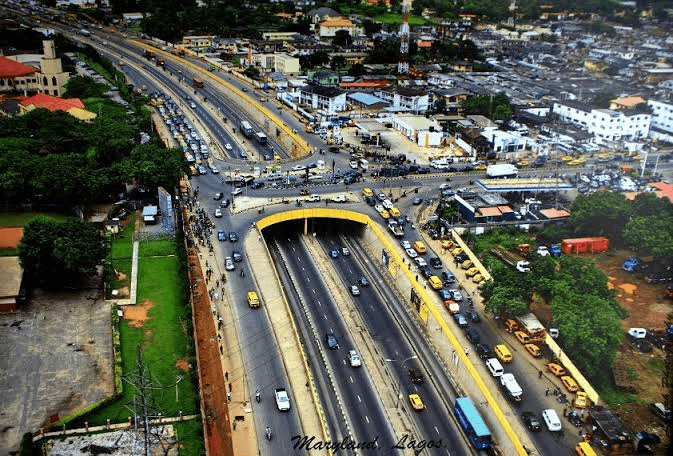
The search for the perfect rental apartment on the Lagos Mainland often narrows down to a head-to-head battle between Gbagada and Maryland. These two neighbourhoods are frequently pitted against each other because they occupy a similar strategic “middle ground” in Lagos geography.
Both offer a buffer between the intense commercial energy of Ikeja and the rapid transit routes leading toward the Island. For many upwardly mobile professionals and growing families, the choice between these two areas represents the most significant crossroads in their housing journey within the 2026 rental market.
Most house hunters frame this comparison wrongly by focusing solely on “prestige” or social status. In the past, Maryland was viewed as the more established, upscale choice, while Gbagada was seen as a purely residential alternative. However, the modernisation of Gbagada’s gated estates and the commercialisation of Maryland’s main arteries have blurred these lines.
Comparing them based on which name sounds “fancier” at a dinner party is a mistake that leads to long-term tenant dissatisfaction because it ignores the daily realities of Lagos living.
The real question isn’t which area is more prestigious, but rather which area aligns with your specific work location, your household budget, and your actual lifestyle needs. A beautiful three-bedroom apartment in Maryland might feel like a prison if your office is in Deeper Life, Gbagada, and you have to navigate the Maryland intersection during peak hours.
Conversely, saving on rent in Gbagada might be a false economy if you spend your weekends at the malls and social hubs that are more easily accessible from Maryland.
This comprehensive guide will break down the 2026 rental realities of both neighbourhoods. We will look at verified rent figures, granular commute data, flood risks, and the availability of essential social infrastructure like schools and hospitals. By the end of this comparison, you will have a clear, data-backed framework to decide which of these Mainland icons should be your next home.

The Short Answer
If you work in or on Gbagada, particularly within the Phase 1, Phase 2, or Millennium Estate axes, renting in Gbagada is the only logical choice. The internal road networks within Gbagada allow for hyper-local commutes that bypass the major Lagos bottlenecks, saving you hours of transit time every week and significantly reducing your fuel or transportation costs.
If you work in or on Maryland, or the adjacent Ikeja and Anthony areas, Maryland is your best bet. Living in Maryland gives you immediate access to the Ikeja business district and the airport road, making it the superior choice for professionals whose careers are centred around the heart of the Mainland’s commercial activities or those who travel frequently.
If you work on the Mainland in general, but your job requires frequent trips to Victoria Island or Lekki, Gbagada offers a slight edge due to its immediate proximity to the Third Mainland Bridge. However, if your work takes you toward the Lagos-Ibadan Expressway or the deeper parts of Ikeja, Maryland provides more diverse exit routes to avoid being trapped by a single point of failure in the road network.
If you are choosing between the two primarily on lifestyle or address grounds, this guide will help you understand that Maryland offers a more “urban-connected” feel with proximity to modern retail, while Gbagada provides a more “contained-residential” atmosphere that prioritises estate-style security and quietude over nightlife and shopping convenience.

Rent Comparison
The rent gap between Gbagada and Maryland in 2026 is driven by land scarcity and the commercial value of the land. Maryland, being closer to the Ikeja hub and the GRA, typically commands a higher baseline price for older, more spacious apartments. Gbagada, however, has seen a surge in “New Build” serviced apartments that are pushing its price points closer to Maryland’s levels, especially in premium estates.
Maryland rent (2026):
| Property Type | Annual Rent Range |
| 1-Bedroom Flat | ₦1,800,000 – ₦2,500,000 |
| 2-Bedroom Flat | ₦3,000,000 – ₦4,500,000 |
| 3-Bedroom Flat | ₦5,000,000 – ₦7,500,000 |
| 4-Bedroom Duplex/Penthouse | ₦9,000,000 – ₦15,000,000 |
Want to live in Maryland? Check our guide to renting an apartment in Maryland
Gbagada rent (2026):
| Property Type | Annual Rent Range |
| 1-Bedroom Flat | ₦1,200,000 – ₦2,200,000 |
| 2-Bedroom Flat | ₦2,500,000 – ₦4,000,000 |
| 3-Bedroom Flat | ₦4,000,000 – ₦6,500,000 |
| 4-Bedroom Duplex/Penthouse | ₦7,500,000 – ₦12,000,000 |
Want to live in Gbagada? Check our guide to renting an apartment in Gbagada
There is a noticeable percentage gap of approximately 15% to 20% between comparable units in these two areas. Maryland commands this premium because of its central positioning; it serves as a gateway between the Lagos-Ikorodu Road and the Airport road, making it prime real estate for those who value being at the centre of the Mainland’s infrastructure. Gbagada remains slightly more affordable because it is perceived as a “destination” neighbourhood rather than a transit hub, though the gap is closing as Gbagada becomes the preferred choice for young families fleeing the higher costs of the Island.
It is important to note that the total cost of living in these areas often exceeds the headline rent. In Maryland, many apartments are in older, larger compounds where security and water maintenance are shared informally, but the newer developments in Gbagada are almost exclusively serviced. For a serviced 3-bedroom flat in Gbagada Phase 2, you should expect a 25% to 35% uplift on the rent to cover service charges, which include 24/7 security, waste management, and common area lighting. In Maryland, while headline rents are higher, the service charges in older buildings might be lower, though generator levies can be unpredictable.
Commute Comparison
The commute is often the deciding factor for Lagosians. In 2026, despite improvements in road infrastructure, the intersection at Maryland and the bottleneck at the Gbagada-Oworonshoki axis remain the primary stressors for residents.
If you work in/on Gbagada:
If you live in Gbagada and work there, your commute is negligible, often under 10 minutes. However, if you live in Maryland and work in Gbagada, the morning commute is relatively smooth as you are moving against the heavy traffic flow toward Ikeja. In light traffic, this takes 8 minutes. During peak hours, the Maryland-Anthony-Gbagada route can take 20 to 30 minutes due to the convergence of vehicles at the Anthony interchange.
If you work in/on Maryland:
Residents of Maryland can reach their offices in minutes, especially if they work near the Mende or Onigbongbo axis. For a Gbagada resident working in Maryland, the morning commute is more challenging. You must navigate the Gbagada-Oworonshoki Expressway and exit at Anthony. In light traffic, this is a 10-minute drive. During peak hours, this can stretch to 45 minutes because the Anthony-Maryland stretch becomes a major collection point for traffic heading toward Ikeja and the Airport.
If you work on the Mainland (CBD/Ikeja):
Maryland has the clear advantage here. Being essentially adjacent to Ikeja, a Maryland resident can reach the Allen Avenue or Ikeja CBD area in 15 to 20 minutes, even during moderate traffic. A Gbagada resident must first cross the Anthony bridge and navigate the Maryland traffic before even entering Ikeja, adding at least 20 minutes to the daily morning journey compared to their Maryland counterpart.
Verdict on commute: Maryland offers superior multi-directional access to the Mainland’s commercial hubs, while Gbagada is more optimised for those heading toward the Island.

Lifestyle and Social Infrastructure
In 2026, the lifestyle preferences of residents in these two areas are distinct. Maryland feels like a bustling urban centre, while Gbagada feels like a collection of quiet suburbs connected by a main expressway.
Maryland’s lifestyle is anchored by the Maryland Mall (known for its “Big Black Box” aesthetic), which houses a variety of retail stores, a cinema, and essential services. Dining in Maryland is diverse, with established spots like The Place Restaurant and various eateries within the mall. For fitness and leisure, residents often utilise the facilities in nearby Ikeja GRA or the Maryland Recreation Centre. The social scene in Maryland is more active on weeknights due to the high volume of professionals stopping by after work.
Gbagada’s lifestyle is more spread out. It lacks a single massive mall like Maryland’s, but compensates with high-quality neighbourhood hubs. The Gbagada Grassroots Sports Complex is a major centre for fitness and community interaction. For dining, Gbagada has seen a rise in “cool” spots like Petit Paris Cafe and Dominos/Coldstone outlets that serve as social anchors. The lifestyle here is decidedly more family-oriented, with weekends spent at home or at private estate clubhouses.
The honest gap between the two is that Maryland leads in retail and cinema accessibility, while Gbagada leads in community-based sports and quiet, residential living. Maryland is for the person who wants to walk to a bar or mall; Gbagada is for the person who wants a quiet street for an evening jog.
Verdict on lifestyle: Maryland wins for retail and nightlife accessibility, whereas Gbagada offers a better “community-residential” feel.

Flooding Risk
Flooding remains a critical concern in Lagos, and both areas have specific vulnerabilities that renters must investigate. The 2026 drainage master plan has mitigated some issues, but the seasonal patterns in April–July and September–October still test the infrastructure.
Maryland’s flooding risk is largely concentrated around the Mende area. Because Mende sits at a lower elevation relative to the Maryland hill, it has historically acted as a basin for runoff. While many parts of Maryland remain dry, specific streets in Mende can experience significant flash flooding during heavy downpours. The main Maryland expressway and the higher parts near the Independence Tunnel are generally safe and drain quickly.
Gbagada was built on reclaimed land, which naturally places it at a higher risk if drainage systems are blocked. The most notorious areas for flooding in Gbagada are parts of Gbagada Phase 2 and certain streets in Medina Estate. However, Gbagada’s primary advantage is its wide, planned drainage channels that lead toward the lagoon. When these are maintained, the water clears rapidly. In contrast, smaller pockets like Ifako-Gbagada can suffer from poor street-level drainage.
It is vital to verify flood risk at the individual listing level, as one street may stay dry while the next one floods. At Expert Listing, we map flood-risk signals at the listing level to ensure you aren’t surprised during the first rainy season in your new home.
Verdict on flooding: Both areas have high-risk pockets (Mende in Maryland and Phase 2 in Gbagada), but the “uphill” sections of Maryland are generally more secure.
Safety and Security
Security in 2026 remains a top priority for Lagos residents, and both Gbagada and Maryland offer relatively high levels of safety compared to other Mainland areas, though their approaches differ.
Maryland benefits from an “institutional” security presence. Its proximity to the Ikeja Military Cantonment and various police divisional headquarters ensures a high level of patrol activity and a rapid response time. The presence of major banks and commercial headquarters along the Maryland-Ikorodu road also means private security guards and CCTV coverage are dense along the main arteries. However, the high volume of transient traffic can make the area feel less “private.”
Gbagada’s security is defined by its gated estate model. Areas like Millennium Estate, Upscale Gbagada, and parts of Phase 1 have strictly controlled access points where visitors must be cleared by residents. This “inner-circle” security is highly effective for families and high-profile individuals who want to minimise unsolicited visitors. The security gap matters most for families; if you want a neighbourhood where kids can play on the street within a gated perimeter, Gbagada’s estates offer a level of peace that Maryland’s more open street layout struggles to match.
Verdict on security: Gbagada’s gated estates offer better personal/residential security, while Maryland offers better institutional/commercial security.
Schools
For families, the proximity to quality education is often the “tie-breaker” in the Gbagada vs Maryland debate. Both areas are blessed with reputable institutions that have served the Lagos middle class for decades.
In Maryland, parents have access to some of the most established schools on the Mainland. Maryland Continental Schools and the nearby Grace Schools in Gbagada/Gbagada-border provide high-quality British and Nigerian curricula. Because Maryland is so central, it also serves as a convenient pickup point for buses heading to the premium schools in Ikeja GRA.
Gbagada has become an educational hub in its own right. Emerald Schools operates a reputable facility serving the area, and Corona Schools has a presence nearby that is easily accessible to Gbagada residents. The concentration of schools within Gbagada means that children living in the estates often have very short commute times, which is a significant boost to their quality of life.
Gbagada has slightly stronger school infrastructure because the neighbourhood was designed with residential life in mind, leading to more “neighbourhood schools” that children can attend without crossing major expressways.
Verdict on schools: Gbagada is marginally better for families due to the higher density of schools within residential estate boundaries.

Healthcare
Access to healthcare in 2026 is robust in both neighbourhoods, with several private facilities offering specialised services.
Maryland is served by the well-known St. Ives Healthcare, which has a strong reputation for family medicine and fertility services. Additionally, its proximity to Ikeja means that residents are only 10–15 minutes away from the Lagos State University Teaching Hospital (LASUTH) in case of major emergencies.
Gbagada is home to the Gbagada General Hospital, one of the best-run public hospitals in the state, which also features a specialised Burns and Trauma centre. For private care, R-Jolad Hospital is a staple of the community, offering comprehensive services with a modern facility that has been significantly upgraded in recent years.
The travel time from either area to a major private hospital is usually under 10 minutes, assuming you are using the facilities within the neighbourhood. Maryland residents have a slight advantage for emergency public care due to the straight-line access to Ikeja’s medical corridor.
Verdict on healthcare: It’s a tie; both neighbourhoods feature excellent private hospitals and have nearby access to major public teaching hospitals.
Character and Feel
Maryland, during working hours, is a high-energy transit and commercial hub. The air is filled with the hum of the Ikorodu Road traffic and the movement of thousands of commuters. In the evenings and on weekends, the “inner” parts of Maryland, like Shonibare Estate (which is technically bordering it) or the quieter parts of Mende, become very peaceful. It suits professionals who want to feel they are in the “centre of the action” and value having urban amenities at their doorstep.
Gbagada has a distinctly “mixed-suburban” feel. Even during the peak of the workday, the interior of the estates remains remarkably quiet. There is a sense of pride among Gbagada residents; it feels like a self-contained town where people know their neighbours. It suits the professional who wants to “shut off” the noise of Lagos once they drive through their estate gates. It is a neighbourhood of joggers, church-goers, and families.
The character of Maryland is “Connected Urbanism,” while the character of Gbagada is “Secure Residential.” Choosing between them is a matter of whether you want to live in the city (Maryland) or near the city (Gbagada).
Verdict on character: Subjective; Maryland feels more metropolitan, while Gbagada feels more like a traditional residential community.
The Decision Framework
Use this to make the call:
Choose Maryland if:
- Your office is located in Ikeja, Allen Avenue, or near the Airport.
- You prefer living in an area with a major shopping mall within walking distance.
- You don’t mind a higher “metropolitan” noise level in exchange for central access.
- You are looking for older, more spacious apartments with higher ceilings.
- You travel frequently and need to reach the International Airport quickly.
Choose Gbagada if:
- You work on the Island (VI/Lekki) but cannot afford Island rents.
- You prioritise living in a gated estate with restricted visitor access.
- You have school-aged children and want them to have a short, estate-based commute.
- You prefer a quieter, more residential atmosphere for weekend relaxation.
- You are looking for modern, newly built “serviced” apartments.
If budget is the deciding factor, Gbagada is the clear winner for value. You will generally get a newer apartment with better modern finishing for 15% less than a comparable unit in Maryland. While Maryland offers prestige, Gbagada offers a more efficient “price-per-square-foot” ratio for the modern tenant in 2026.
Ready to Search in Both Areas?
Finding the right home requires more than just picking a neighbourhood; you need a listing you can trust. All listings on Expert Listing are verified by our team before going live to protect you from fraud. Furthermore, flood risk is mapped at the individual listing level, and our platform ensures that listings are removed the moment they are rented or sold, so you never waste time on “ghost” properties.
Frequently Asked Questions
Is Gbagada more expensive than Maryland?
No, in 2026, Maryland generally remains more expensive than Gbagada by about 15% to 20% for comparable properties. A 3-bedroom flat in Maryland can go as high as ₦7.5 million, whereas a similar unit in Gbagada Phase 2 typically peaks at around ₦6.5 million. The premium in Maryland is due to its central Ikeja-adjacent location and its status as a commercial transit hub.
Between Gbagada and Maryland, which area is better for someone working on Victoria Island?
Gbagada is significantly better for Victoria Island workers. Gbagada sits directly on the Oworonshoki Expressway, which leads straight onto the Third Mainland Bridge. In light traffic, you can reach VI in 20 minutes. A resident in Maryland has to first navigate the Maryland/Anthony bottleneck before they even reach the Gbagada start point, adding significant time to their daily commute.
Does Maryland flood more than Gbagada?
Both areas have specific flood-prone zones. Maryland’s primary risk area is Mende, which sits in a geographical depression. Gbagada’s risk is centred around parts of Phase 2 and Medina Estate due to its history as reclaimed land. However, Gbagada’s modern drainage channels generally allow water to recede faster than the older street-level drains found in parts of Maryland.
Are there good hospitals in Gbagada?
Yes, Gbagada is home to R-Jolad Hospital, one of the most popular and comprehensive private hospitals on the Mainland. It also houses the Gbagada General Hospital, which is widely regarded as one of the best public healthcare facilities in Lagos State, specifically for trauma and emergency care.
Which area is safer for families between Gbagada and Maryland?
Gbagada is generally considered safer for families due to its gated estate structure. Neighbourhoods like Millennium Estate and Gbagada Phase 1 utilise manned gates and visitor clearance systems. While Maryland has institutional security due to the nearby military cantonment, its open-road layout makes it harder to achieve the same level of neighbourhood-wide access control found in Gbagada.
What is the best mall near Gbagada?
Gbagada does not have a large-scale shopping mall within its boundaries, though it has several large supermarkets like Artee and various hubs. Most Gbagada residents drive 10 to 15 minutes to the Maryland Mall or the Ikeja City Mall for cinema and high-end retail shopping. This is one of the trade-offs for Gbagada’s quieter, residential feel.